Packaging Technology: Closure solution
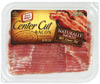
There is good reason why Kraft’s Oscar Mayer division chose a specific reclosable packaging application for its 12-ounce bacon — traditional packaging no longer addressed customers’ frustrations tied to the messiness of opening, closing and handling their packaged bacon. Thus, an innovative and practical solution was in order, which is why Oscar Mayer selected a system including a thermoformed tray, reclosable snap-fit lid and easy-peel flexible film.
The demand for convenient food packaging has been in an exponential growth curve for years now. And the packaging industry has stepped up with ever more improvements. Flexible packaging with a resealable feature suitable for a range of meat protein products is fast becoming the norm, which is validated with in practically every supermarket shopping trip. Notably, the first zipper storage bag was patented in 1954.
Consider that meat cases abound with all manner of products. Flexible packaging concepts with reclosable features rank among the most convenient options.
More is demanded of packaging than convenience, however. Other benefits include extended shelf life, food-safety assurances and product freshness at the outset and beyond.
Confirmation comes from the International Dairy-Deli-Bakery Association. Its What’s In Store 2009 report reveals that American deli packaging trends center on convenience, attractiveness, food safety and quality preservation or enhancement.
The latest packaging trend focuses on environmental sustainability, which has moved up on the consumer demand scale these days that are fast becoming defined by the “green” movement.
Packaging design engineers are not unmindful of the movement and its consequences either. They understand the benefits of considering product-to-package ratios in their R&D programs. A formula that measures the weight of package against the product inside is critical in determining the environmental footprint of packaging.
A life-cycle inventory (LCI) study conducted by Franklin Associates, an independent research firm, involving eight packaging systems comprising six deli-meat packages and two for breakfast cereal pinpointed a lesser environmental footprint associated with flexible resealable packaging compared to rigid alternatives.
According to the LCI study findings, products packaged in flexible pouches with resealable closure had lower energy consumption, solid waste generation and greenhouse gas emissions than the rigid systems included in the analysis.
Further, although energy accounted for less than 17 percent of total energy for all systems, the results show that transportation energy requirements for the reusable rigid containers are higher than those for the flexible packaging systems.
Looking for a reprint of this article?
From high-res PDFs to custom plaques, order your copy today!