Provisioner logo
Provisioner logo
search
cart
facebook twitter linkedin youtube
  • Sign In
  • Create Account
  • Sign Out
  • My Account
Provisioner logo
Provisioner logo
  • NEWS
    • Industry News
    • Supplier News
    • Case Studies
    • Recalls
    • Regulations
    • New Consumer Products
  • EXCLUSIVES
    • Newsletters
    • Source Book
    • Sponsored Insights
    • Events
    • Webinars
    • Classifieds
    • White Papers
    • Provisioner Store
    • Market Research
  • MEAT PROCESSING
    • SUSTAINABILITY
    • Processing
    • Packaging
    • Ingredients
    • Formulation
    • Food Safety
    • Special Reports
    • Commentary
  • PROFILES
    • Processor Profiles
    • Processor of the Year
    • Top 100 Processors
  • MEDIA
    • Videos
    • Podcasts
  • DIRECTORY
  • MIHOF
  • INDEPENDENT PROCESSOR
  • EMAG
    • eMagazine
    • ARCHIVE ISSUES
    • Contact
    • Advertise
  • JOIN!
Food SafetySeafood

Oyster industry, FDA battle Vibrios

By David P. Green
January 6, 2010

By David P. Green, North Carolina State University

When the U.S. Food and Drug Administration announced in October 2009 that, beginning with the 2011 season, it would require post-harvest treatment of live Gulf Coast oysters harvested in summer months for control of pathogenic Vibrios, the industry was taken by surprise. Gulf Coast processors and politicians rallied around the cause and went straight to Washington D.C. to voice their opposition to the plan. Consequently the FDA has agreed to work with the industry on potential post-harvest treatments, such as high-pressure processing and freezing techniques. While the industry is pleased that the FDA has paused to reflect on its raw oyster policy, they still insist that traditional Gulf Coast oysters must be made available to consumers under any future plan.

What’s the issue?
Vibrio species are ubiquitous to the marine environment. Current methods used for classifying harvesting waters do not correlate to the presence or levels of the environmental Vibrios. The primary human illnesses caused by Vibrios are wound infection, primary septicemia and gastroenteritis. Both Vibrio vulnificus and Vibrio parahaemolyticus cases occur sporadically the former almost always sporadic, while the latter also occurs in outbreaks. Epidemiological data has shown that 91 percent of primary septicemia and 86 percent of the wound infections occur from April through October, with 48 percent of those with primary septicemia reporting pre-existing liver disease. Fatality rates were only 1 percent for gastroenteritis, but were 5 percent for wound infection and 44 percent for septic disease. The FDA cited the state of California, which prohibited Gulf Coast oysters from entering the state in 2003 unless they had undergone post-harvest processing, in reducing the number of deaths attributed to raw oyster consumption to zero in the past six years compared to 40 reported deaths between 1991 and 2001.
What’s at stake?
The proposed policy change may affect one-quarter of the annual harvest from the Gulf Coast states. According to industry, the FDA plan would effectively ban the sale of live oysters for up to eight months per year. Repercussions for the harvesting industry and wholesale distributors go well beyond the Gulf Coast states and would affect consumers across the entire nation. Various state shellfish authorities are working to better prepare their industry members for the potential change in the FDA oyster policy. Many industry members are looking to adopt available methods or identify new post-harvest treatment techniques. Any post-harvest treatment method must be validated to reduce the presence of Vibrio to non-detectable levels.
What’s the solution?
Currently the industry is relying on temperature control and refrigeration to reduce human infections. Considerable effort also has been directed toward consumer-education programs designed to alert at-risk consumers, but these efforts have failed to reduce the number of reported illnesses. Other solutions acceptable to the FDA have been freezing and frozen storage, high hydrostatic pressure and heat treatment. The FDA requested industry to increase its capacity to perform post-harvest treatments for control of Vibrio in raw oysters. And now that the Gulf Coast industry appears to have the capacity to meet the post-harvest treatment demand, the FDA has moved to take action. While the issues are still being hotly debated from the waterfront to the Congressional halls, the Gulf Coast industry and wholesale distributors should no longer be surprised that the agency still intends to require post-harvest processing in the near future.

David P. Green is Professor and Extension Seafood Specialist in the Department of Food, Bioprocessing and Nutrition Sciences at North Carolina State University. For more information contact him at dpg@ncsu.edu.

KEYWORDS: FDA

Share This Story

Looking for a reprint of this article?
From high-res PDFs to custom plaques, order your copy today!

North Carolina State University

Recommended Content

JOIN TODAY
to unlock your recommendations.

Already have an account? Sign In

  • Double Charburger

    Premiumization drives burger category

    Shoppers seek out premium meat offerings to fulfill...
    Beef
    By: Sammy Bredar
  • JJS Adult Pekin duck

    Poultry Report 2025: Convenience propels poultry at retail

    Despite continued economic pressures, the poultry...
    Chicken
    By: Sammy Bredar
You must login or register in order to post a comment.

Report Abusive Comment

Manage My Account
  • eMagazine Subscriptions
  • Manage My Preferences
  • Newsletters
  • Online Registration
  • Subscription Customer Service
  • Connect with The National Provisioner

More Videos

Sponsored Content

Sponsored Content is a special paid section where industry companies provide high quality, objective, non-commercial content around topics of interest to the The National Provisioner audience. All Sponsored Content is supplied by the advertising company and any opinions expressed in this article are those of the author and not necessarily reflect the views of The National Provisioner or its parent company, BNP Media. Interested in participating in our Sponsored Content section? Contact your local rep!

close
  • A smiling man carrying a grocery basket is reaching down to pick up a package of meat in a grocery store.
    Sponsored byPIC

    The Green Light: New Data Shows 12-to-1 Support for Pork from PRRS-Resistant Pigs

  • Close up of a grocery cart full of groceries, a cropped image of a couple pushing the cart and a blurred background of the vegetable aisle.
    Sponsored byPIC

    New Market Research Finds Consumers in Eight Key Pork Markets Are Likely to Purchase Pork from Gene-Edited Pigs

  • Close up of a young pig with a blurred background.
    Sponsored byPIC

    New Research Forecasts Significant Economic and Market Impacts with PRRS-Resistant Pig Adoption

Popular Stories

Various new Primal snack sticks on a table amongst pencils, apples, a pair of glasses, lunch bags and a water bottle.

Protein demand drives snacking occasions

Spam Dog

Hormel rolls out Spam hot dog for foodservice applications

Several cuts of beef, pork and chicken on a wooden board, cast iron pan and salt.

Validated thermal lethality data and a new tool for ensuring safety of RTE meats

2026 Top 100 Meat & Poultry Processors Report

Events

June 11, 2026

From Fresh to Frozen in 3 Minutes Flat: Unlocking the Secrets to Temperature Control

Join Tony Vacaro, Foods Industry Manager, and Emile Klein, Foods Market Strategy Manager at Air Products and Chemicals, Inc. , as they tackle key questions surrounding heat removal in food processing. 

January 1, 2030

Webinar Sponsorship Information

For webinar sponsorship information, visit www.bnpevents.com/webinars or email webinars@bnpmedia.com.

View All Submit An Event

Products

Food Crime: An Introduction to Deviance in the Food Industry

Food Crime: An Introduction to Deviance in the Food Industry

See More Products
From Fresh to Frozen in 3 Minutes Flat: Unlocking the Secrets to Temperature Control Webinar Sponsored by Air Products

Related Articles

  • Shellfish tag

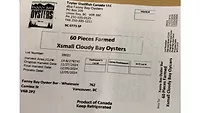
    Taylor Shellfish Canada issues oyster recall

    See More
  • Beef Industry Continues Battle With E. Coli

    See More
  • 2020_corona_image_np.jpg

    U.S. Department of Labor and FDA develop checklist to protect food industry employees amid the Coronavirus pandemic

    See More

Related Products

See More Products
  • food-crime.jpg

    Food Crime: An Introduction to Deviance in the Food Industry

  • The 10 Principles of Food Industry Sustainability

  • food safety.jpg

    Food Safety in the Seafood Industry: A Practical Guide for ISO 22000 and FSSC 22000 Implementation

See More Products
×

Stay ahead of the curve. Unlock a dose of cutting-edge insights.

Receive our premium content directly to your inbox.

SIGN-UP TODAY
  • RESOURCES
    • Advertise
    • Contact Us
    • Directories
    • Store
    • Want More
  • SIGN UP TODAY
    • Create Account
    • eMagazine
    • Newsletter
    • Customer Service
    • Manage Preferences
  • SERVICES
    • Marketing Services
    • Reprints
    • Market Research
    • List Rental
    • Survey/Respondent Access
  • STAY CONNECTED
    • LinkedIn
    • Facebook
    • YouTube
    • X (Twitter)
  • PRIVACY
    • PRIVACY POLICY
    • TERMS & CONDITIONS
    • DO NOT SELL MY PERSONAL INFORMATION
    • PRIVACY REQUEST
    • ACCESSIBILITY

Copyright ©2026. All Rights Reserved BNP Media, Inc. and BNP Media II, LLC.

Design, CMS, Hosting & Web Development :: ePublishing