Provisioner logo
Provisioner logo
search
cart
facebook twitter linkedin youtube
  • Sign In
  • Create Account
  • Sign Out
  • My Account
Provisioner logo
Provisioner logo
  • NEWS
    • Industry News
    • Supplier News
    • Case Studies
    • Recalls
    • Regulations
    • New Consumer Products
  • EXCLUSIVES
    • Newsletters
    • Source Book
    • Sponsored Insights
    • Events
    • Webinars
    • Classifieds
    • White Papers
    • Provisioner Store
    • Market Research
  • MEAT PROCESSING
    • SUSTAINABILITY
    • Processing
    • Packaging
    • Ingredients
    • Formulation
    • Food Safety
    • Special Reports
    • Commentary
  • PROFILES
    • Processor Profiles
    • Processor of the Year
    • Top 100 Processors
  • MEDIA
    • Videos
    • Podcasts
  • DIRECTORY
  • MIHOF
  • INDEPENDENT PROCESSOR
  • EMAG
    • eMagazine
    • ARCHIVE ISSUES
    • Contact
    • Advertise
  • JOIN!
Food SafetyPlant Design/Management

Food Safety

Re-thinking CIP design

By Megan Pellegrini
September 20, 2013

So, which comes first, clean-in-place systems or plant design? All too often, it is the plant design that comes first, and then processors have to retrofit — at great cost — their equipment to be clean-in-place (CIP).

Although meat and poultry processors aren’t affected directly by the Food Safety Modernization Act’s upcoming regulations on HACCP documentation (due to already following HACCP procedures for 20 years under USDA-FSIS), it never hurts to reassess the sanitary design of their CIP or open-plant cleaning (OPC) systems.

In its most common form, CIP involves the pressure-washing of pipelines or processing equipment, or alternatively, spray-cleaning of transportation tankers and fixed tanks and processing vessels of all types in the production facility, says Dale A. Seiberling, a food industry speaker and former Ohio State University instructor in dairy technology.

“Spray-cleaning extends to include the cleaning of large spray dryers, evaporators, bins, cyclone separators and ductwork in those segments of the food-processing industry that use such equipment,” he says. This technology has been applied in a few instances to what might be considered open-plant cleaning. 

“For example, in the dry cereal industry, more than 30 years ago one manufacturer wanted to reduce the labor, reduce the time and improve the efficacy of cleaning the dry cereal process,” he says. “The end result is that an area the size of a football field and 100 feet in height, with cereal production equipment arranged on space frames with open floor grating is wet washed inside and out in approximately five and a half hours, whenever required.”

In recent years, new pumps, valves and chemicals have been created that processors use with their CIP or OPC systems to improve food safety, says Tim Bowser, Ph.D., food process engineer, Oklahoma State University, based in Stillwater, Okla.

“There have been a lot of innovations, such as surface coating and finishes that are smoother and/or have antimicrobial characteristics or anti-stick [hydrophobic] qualities, variable-speed drives [VSD] for better pump motor control, new sensors for verification of automated CIP procedures, new materials and methods of construction, better integration of controls and wireless technology, and new valves that are easier to clean and maintain,” he says.

  • In particular, food safety has been improved with new technologies, he says, that include:
  • Automated controls that make cleaning cycle execution almost flawless,
  • Automated controls, equipment and sensors that significantly reduce cross-contamination,
  • New surface finishes and technologies that make parts easier and faster to clean,
  • Better chemical technology that is more effective on soils, and
  • Better welding and finishing equipment that makes installations faster and cleaner.

However, the “real need is not for new technology but rather the application of ‘CIP-able’ design to all aspects of the process and the equipment involved,” notes Seiberling.

Bowser agrees that one of the biggest challenges for CIP systems is to educate processors about their importance before they design their plants.

“People don’t think of CIP when designing their plants, but it should be one of their biggest issues,” says Bowser. He notes that, for example, many plants today have issues with drainage because they tend to only contain one level.

“We need to re-think the paradigm of where to locate cleaning processes,” he says. “It’s a huge physical issue because of the way the drainage circulates as a result.”

Other remaining challenges that affect CIP are the need to “reduce the cost of installations, especially the costs of operation and cycle time, material-handling issues and improve environmental impact,” says Bowser.

 At the end of the day, “the application of CIP technology is dependent on the processors’ need and/or desire to clean a processing system to the highest degree achievable by the combination of mechanical action and flow of chemical solutions,” says Seiberling. 

KEYWORDS: Clean-in-place meat and poultry processors sanitary meat plant design

Share This Story

Looking for a reprint of this article?
From high-res PDFs to custom plaques, order your copy today!

Megan pellegrini
Megan Pellegrini is a contributing writer.

Recommended Content

JOIN TODAY
to unlock your recommendations.

Already have an account? Sign In

  • Double Charburger

    Premiumization drives burger category

    Shoppers seek out premium meat offerings to fulfill...
    Beef
    By: Sammy Bredar
  • JJS Adult Pekin duck

    Poultry Report 2025: Convenience propels poultry at retail

    Despite continued economic pressures, the poultry...
    Turkey
    By: Sammy Bredar
You must login or register in order to post a comment.

Report Abusive Comment

Manage My Account
  • eMagazine Subscriptions
  • Manage My Preferences
  • Newsletters
  • Online Registration
  • Subscription Customer Service
  • Connect with The National Provisioner

More Videos

Sponsored Content

Sponsored Content is a special paid section where industry companies provide high quality, objective, non-commercial content around topics of interest to the The National Provisioner audience. All Sponsored Content is supplied by the advertising company and any opinions expressed in this article are those of the author and not necessarily reflect the views of The National Provisioner or its parent company, BNP Media. Interested in participating in our Sponsored Content section? Contact your local rep!

close
  • A smiling man carrying a grocery basket is reaching down to pick up a package of meat in a grocery store.
    Sponsored byPIC

    The Green Light: New Data Shows 12-to-1 Support for Pork from PRRS-Resistant Pigs

  • Close up of a grocery cart full of groceries, a cropped image of a couple pushing the cart and a blurred background of the vegetable aisle.
    Sponsored byPIC

    New Market Research Finds Consumers in Eight Key Pork Markets Are Likely to Purchase Pork from Gene-Edited Pigs

  • Close up of a young pig with a blurred background.
    Sponsored byPIC

    New Research Forecasts Significant Economic and Market Impacts with PRRS-Resistant Pig Adoption

Popular Stories

JBS USA logo

JBS USA closing pair of processing facilities

Various new Primal snack sticks on a table amongst pencils, apples, a pair of glasses, lunch bags and a water bottle.

Protein demand drives snacking occasions

Several cuts of beef, pork and chicken on a wooden board, cast iron pan and salt.

Validated thermal lethality data and a new tool for ensuring safety of RTE meats

2026 Top 100 Meat & Poultry Processors Report

Events

January 1, 2030

Webinar Sponsorship Information

For webinar sponsorship information, visit www.bnpevents.com/webinars or email webinars@bnpmedia.com.

View All Submit An Event

Products

Food Crime: An Introduction to Deviance in the Food Industry

Food Crime: An Introduction to Deviance in the Food Industry

See More Products
From Fresh to Frozen in 3 Minutes Flat: Unlocking the Secrets to Temperature Control Webinar Sponsored by Air Products

Related Articles

  • The challenges of CIP/OPC

    See More
  • Construction of New Meat Facility

    Sanitary design in meat and poultry facilities

    See More
  • Grilled Sausage Links

    The 2017 Sausage Report: Thinking outside the bun

    See More

Related Products

See More Products
  • Food Plant Sanitation: Design, Maintenance, and Good Manufacturing Practices, Second Edition

  • Handbook of Food Products Manufacturing: Health, Meat, Milk, Poultry, Seafood, and Vegetables, Volume 2

  • salmonela.jpg

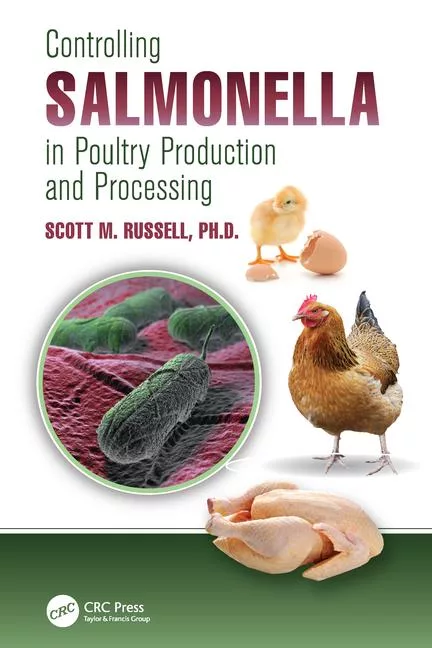
    Controlling Salmonella in Poultry Production and Processing

See More Products

Events

View AllSubmit An Event
  • March 1, 2010

    Food Plant of the Future: Advancing Food Safety through Sanitary Design

    On demand Food and beverage companies work hard to consistently deliver safe products because they understand that the stakes are extremely high for the public and for their companies.
  • June 1, 2009

    Food Plant of the Future: Using Design to Increase Productivity and Drive Down Unit Costs

    On demand The need for food and beverage processors to drive down unit costs never ends. How can new/retrofitted plants be designed to optimize productivity?
View AllSubmit An Event
×

Stay ahead of the curve. Unlock a dose of cutting-edge insights.

Receive our premium content directly to your inbox.

SIGN-UP TODAY
  • RESOURCES
    • Advertise
    • Contact Us
    • Directories
    • Store
    • Want More
  • SIGN UP TODAY
    • Create Account
    • eMagazine
    • Newsletter
    • Customer Service
    • Manage Preferences
  • SERVICES
    • Marketing Services
    • Reprints
    • Market Research
    • List Rental
    • Survey/Respondent Access
  • STAY CONNECTED
    • LinkedIn
    • Facebook
    • YouTube
    • X (Twitter)
  • PRIVACY
    • PRIVACY POLICY
    • TERMS & CONDITIONS
    • DO NOT SELL MY PERSONAL INFORMATION
    • PRIVACY REQUEST
    • ACCESSIBILITY

Copyright ©2026. All Rights Reserved BNP Media, Inc. and BNP Media II, LLC.

Design, CMS, Hosting & Web Development :: ePublishing