Food Safety
Sanitary design in meat and poultry facilities
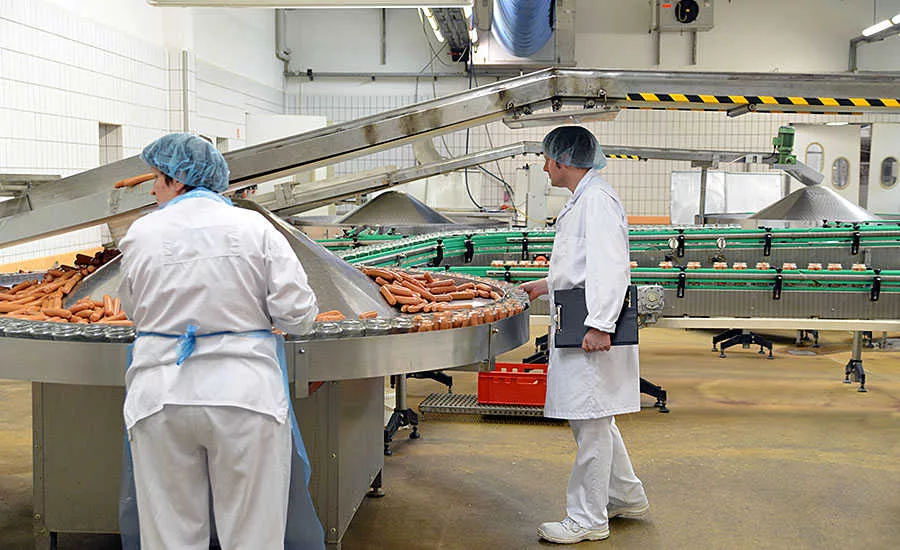
Designed right: Automation and easy-to-clean equipment are key components to sanitary design.
For a second year in a row, beef recalls are up and on pace to eclipse last year’s figure. By November 2019, 27 recalls were ordered (compared with 31 overall in 2018, totaling 13 million pounds of beef), according to the U.S. Department of Agriculture (USDA). Poultry (including eggs) and pork also had their share of recalls — 34 and 25, respectively. And these numbers aren’t unique. With some exceptions, meat and poultry recalls during the 2010s averaged similar results, as well.
Sanitation-design technology and streamlined equipment factor into food safety, but increased prioritization will hopefully lead to cleaner results.
Proper sanitation and food-safety measures are certainly regulated and recognized. Hygienic design, after all, is not a mystery. Since 2011, the North American Meat Institute (NAMI) has promoted its 10 Principles of Sanitary Design (revised in 2013). Developed with an equipment design task force, the principles address how food equipment must be cleanable to a microbial level, made of compatible materials and accessible for inspection, maintenance, cleaning and sanitation, among other factors.
Equipment manufacturers are using cleaner designs to meet multiple needs. “First, cleaner and simpler designs lead to less expensive manufacturing costs,” says John E. Johnson, Ph.D., an adjunct professor of business and managing director of Epsilon Industries. “Second, the equipment becomes less complicated to clean and sanitize. Third, a point which sometimes gets overlooked is how to design equipment to allow maintenance to service to equipment efficiently.”
Tool-free breakdown and assembly of equipment such as boot scrubbers leads to less contamination. “Reduction of parts, tools and niches contribute to more serviceable and cleanable equipment,” Johnson says.
Real-time data monitoring and reporting with sanitation checks is another tool to manage equipment, but its cost remains a challenge. “These are the programs that take significant time and resources to launch and maintain,” says Johnson. “Eventually, the data is only as good as those inputting the data.”
Automating design
New facilities present an opportunity to processors to install new equipment and more automation. “Automated design is very important,” says Angela Anandappa, Ph.D., executive director at Alliance for Advanced Sanitation, based in Chicago. “But in general, automation is necessary for new plants or renovations. Because we live in 2019, we have access to new technology.”
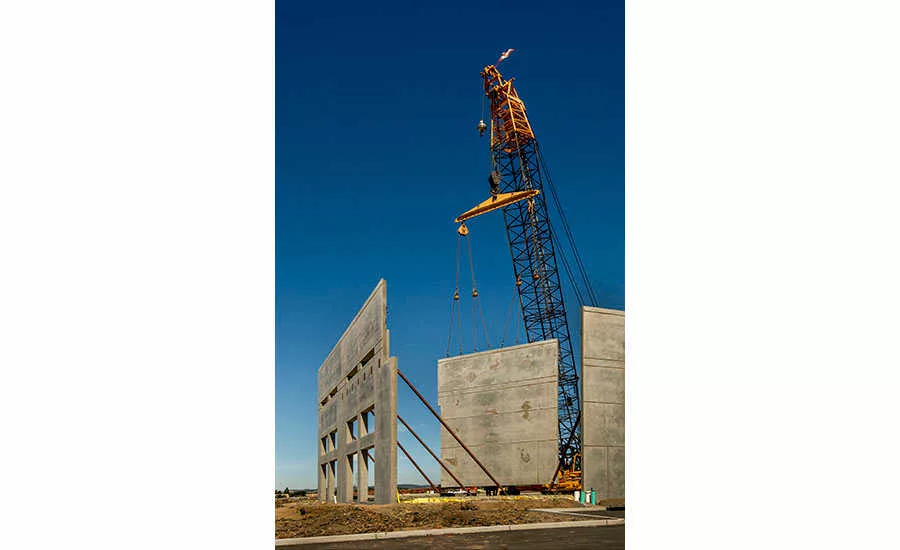
New plants should be built to run for 50 years, so they present an opportunity to invest in new technology at the ground level, even if it will later be outdated, says Anandappa.
“The food industry is behind other industries,” she says. “Why? People are afraid to invest the way they should. They have to sell a quality product, but they don’t prioritize sanitary design and cut corners all the time.”
After a foodborne outbreak has occurred, Whole Genome Sequencing — technology that identifies the DNA of an organism — is a promising technology that can track down the root source of a contamination by pairing a pathogen’s genomic information with its geographic location.
"Do all the studies you want, but if you don’t do the recommendations, recalls will eventually happen."
Angela Anandappa, Ph.D. Alliance for Advanced Sanitation
“Whole Genome Sequencing is coming into play more on a regulatory/enforcement aspect, but it has the potential in being implemented to monitor sanitation effectiveness either before or during processing,” says Rafael E. Rivera, manager of food-safety and production programs for the U.S. Poultry and Egg Association, based in Tucker, Ga. “It can also be used as a monitor of microbiological factors that can affect quality factors such as shelf life. There is still much to learn about its capabilities, so adoption is slow.”
Minimizing labor and resources
Even with a clean design and increased automation, plants always have to grapple with a reliable labor force. “Many companies are experimenting with contract labor, but at the end of the day, minimizing turnover can produce consistent results for an effective cleaning and sanitation program,” Rivera says.
Labor challenges will continue to exist, even with a robust job market. “Labor and associated costs will continue to rise, and processes will be constrained by the reliability of an employable workforce,” Johnson says. “Labor resources will be limiting to efficient processes as well and natural resources such as water.”
Water plays a crucial role in sanitation, of course, but needs to be conserved.
“Every company has the need to limit water mainly because of cost, and a plant wants to be judicious in the use of this resource,” says Rivera. “So, this will factor into how cleaning will take place. You might see more dry cleaning in many facilities in places where people just washed debris off, for example.”
Regulators themselves aren’t necessarily a safeguard, either, for design modifications. “The words ‘hygienic design’ are used many times in regulations, but regulators don’t always understand hygienic design,” Anandappa says. “They can’t spot design issues, so companies can get away with mistakes if they are not seen. They are looking for Salmonella, Listeria, allergen issues, etc.”
Large companies generally do a good job of investing in new technology and equipment, while smaller companies may lack the resources to invest in preventative measures, Anandappa says.
The worst-case scenario? “Do all the studies you want, but if you don’t do the recommendations, recalls will eventually happen,” says Anandappa. “And your company might kill someone or cause them to have kidney failure.”
The risks of inaction are obvious. But the tools to prevent foodborne outbreaks are also more accessible than ever today.
“Overall, the industry, both processors and equipment manufacturers, are moving toward better facility layouts and equipment designs,” Johnson says. “Costs and benefits need to be weighed to determine if technologies will be incorporated and a robust plan needs to be well thought out for the use of the data.” NP
Looking for a reprint of this article?
From high-res PDFs to custom plaques, order your copy today!