Are you the weakest link in the sanitary design chain?
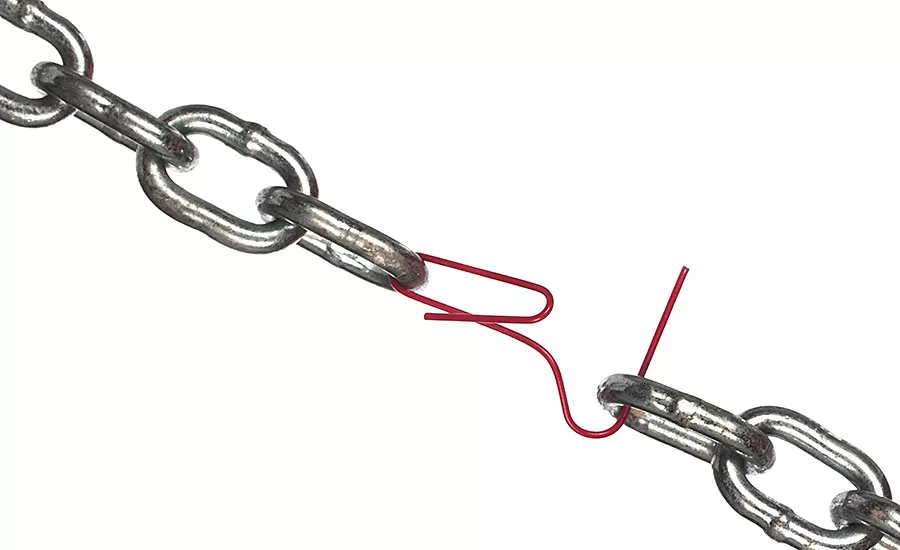
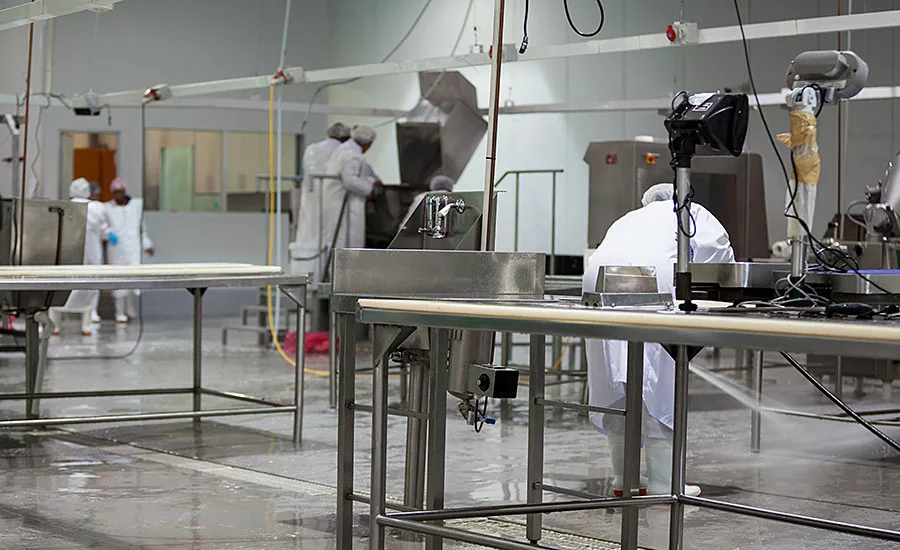
Being the weakest link in any organization or supply chain is not an award one should strive for. But the axiom “a team, organization or process is only as good as its weakest link” is true, as is the processes of food safety and sanitation are only as good as the weakest links. These links can be categorized into objective (mechanical) and subjective (human) areas. So how can the weakest links in the sanitary food supply chain be identified and continually improved? This article will focus on five areas critical to the integrity of the food safety supply chain: equipment and facility design, mechanical maintenance and repair, sanitation processes, training and end users.
Equipment and facility design
Articles, research and reference materials have covered the science behind equipment and facility design. Continued efforts by designers and builders add to the body of knowledge available for improved equipment and processes. What is missing then if we have this wealth of experience and knowledge? Communication and application of scientific principles are two areas lacking when addressing sanitary equipment and facility design.
The disconnect between equipment and facility design is rooted in segmented or siloed communication. When a project begins it may seem as if all stakeholders are involved or properly represented. Through my experiences and anecdotal data, sufficient representation by those parties affected by sanitation processes are not always fully engaged with the design of equipment or facilities. Additionally, the proper design and building of equipment and facilities does not translate into their operation or cleanliness.
New or modified production lines are typically installed over a weekend. When individuals show up to operate, maintain and sanitize the equipment, it seems to be a crash course in learning. There is little time committed to properly understanding the function of the equipment, let alone the disassembly or set up of the equipment. Our industry has become much better in advanced instructions for stakeholders responsible for the equipment.
Mechanical maintenance and repair
Designing equipment, facilities and production lines can be relatively straightforward when sitting in the comforts of an office. On SolidWorks or AutoCAD programs, processes can be animated to simulate production and interaction of workers. Unfortunately, not a significant amount of time is committed to the ease of repair and accessibility for mechanics and those responsible for sanitizing equipment.
Time is money when repairing, breaking down, cleaning or setting up equipment, and it should be to everyone’s benefit to make those processes safe and efficient. Equipment should be easily repaired and accessible for individuals working on and around the areas. Crawling around on cold wet surfaces or squeezing between a wall and conveyor diminishes the effectiveness of people performing maintenance or sanitation. Along with environmental challenges is the complexity of the equipment.
Equipment is designed specifically to perform unique operations. Blenders, grinders, conveyors, formers, ovens, freezers, etc. are pieces of equipment that must be maintained and cleaned daily to ensure safe food production. Millions of pounds of product pass through and over equipment surfaces transferring and carrying the surface materials along the production chain. Therefore, it is critical to ensure a proper starting point in which product will be exposed throughout the production cycle.
Sanitation processes
It may be easy to defer cleaning to outside contractors and rely on their expertise to clean equipment and facilities. The difficult position many contract sanitation workers or in-house crews are faced with is not being involved with the planning and executing stages of line layouts and production schedules. I think many corporate stakeholders have not understood the sanitation process. A good example would be to ask any sanitation worker if there is enough hot water at 4 a.m. to ensure an effective cleaning cycle.
Anyone spending time on a sanitation shift might see this situation play out. I was made aware of the need for a change in industry mindset in the early 1990s by a sanitation manager producing a global branded product. “Sanitation has always been referred to as cleanup or at the end of production. But really, we are the start of the process. This facility and equipment will only be as good as when we finish a well-defined and executed sanitation process.” All too often, we think out of sight, out of mind.
Before you make production line changes, think about how the sanitation crew will interact with the equipment. The environment in which they operate is challenging as we rely on effective cleaning in a compressed time frame. When the cleaning element is considered in the overall design process, consistent cleanups can be improved. Such improvement can be aided with continual communication and training.
Training
When I was the general manager at a case-ready facility, I met on a weekly basis with the sanitation crew to check the ongoing KPIs, NRs (if any), and collaborate on how to improve the sanitation process. This effort took an understanding of production and sanitation crews’ needs to maximize the sanitation process. The training was not easy and relied on commitments by all stakeholders.
An understanding of the overall sanitation process is critical for a comprehensive food safety plan. Often, sanitation focus is directed on individual production lines or equipment and overlooks the bigger picture by not viewing the entire facility. Many questions need to be answered. They include schedule of production stop times, type of products and residuals, drain capabilities, hot water capacity, air makeup system and wastewater system effectiveness.
By taking a holistic approach, the links in this section of the food safety chain can be strengthened. Up to this point, processors and suppliers control the food safety links in their areas of responsibilities. Controlling the food safety chain cannot be delegated only to processors. It is easy to point fingers and claim others are responsible for ensuring complete food safety through the stage of consumption by individuals. In reality, consumers need to ensure their section of the food safety chain is not the weakest link.
End users
The supply chain has held the integrity of its links together and the finished product arrives at the end user. Is that the end, and everyone up to this point can pat each other on the back and say, “well done?” No; the end users are key stakeholders. Whether the finished product is going to a casual service restaurant (CSR), grocery store or directly to consumers, this link can undermine the efforts of other stakeholders throughout the food safety chain.
CSRs need to evaluate their processes for safe food handling just as processors. Are the back of the stores’ preparation facilities and equipment designed to ensure safe food handling? What responsibilities do the consumers need to take? An equal or greater amount of food safety needs to be assumed by consumers. Use by and expiration dates need to be heeded. Proper cooking instructions must be followed. And cleanliness of preparation surfaces and tools required by each item is critical. Although we typically focus on meat products, food safety is universal, and we should all care about how our food is prepared throughout the food chain.
Summary
This article has presented equipment and facilities’ food safety from a different perspective. Recent news has focused on block chain and its important role on tracing origins of materials. Whether block chain, supply chain or any other type of chain, its strength and integrity are measured by its weakest links.
Robust programs and processes have been and continue to be implemented by stakeholders representing various links these chains. Challenges for stakeholders are to reflect on their specific link in the food safety chain. Applying science, technology and food safety principles can prevent you and your organization from being the weakest link. NP
Looking for a reprint of this article?
From high-res PDFs to custom plaques, order your copy today!