Food Safety Report 2026
Food safety programs prioritize prevention, verification, and traceability
July 8, 2026
Food Safety Report 2026
Food safety programs prioritize prevention, verification, and traceability
July 8, 2026Poultry processors hold OEM equipment suppliers to new and updated industrial sanitation standards, especially with the increasing implementation of more automated systems as opposed to previous manual processes.

Food safety risks in meat and poultry processing rarely stem from a single failure. Pathogen control, sanitation execution, supplier documentation and equipment design all influence whether a processor identifies and addresses hazards before they reach finished product.
Across processing operations, food safety strategies are becoming increasingly interconnected. Rather than focusing primarily on end-product testing, processors are prioritizing environmental monitoring programs, strengthening sanitation verification, improving traceability systems and evaluating how equipment design affects cleanability and contamination risk. Together, these efforts support a more proactive approach to food safety management across the plant.
Looking beyond finished-product testing
Pathogen control remains a top priority for processors, particularly as facilities balance production demands with food safety requirements.
“Though meat and poultry producers face individual risks specific to their facilities, there are several themes in the industry including pathogen control, potential cross-contamination from processing steps, and foreign material contamination risks that tend to be top of mind for producers today,” said Christina Barnes, senior manager, microbiology R&D, Neogen.
Barnes noted that processors must manage pathogen risks in both the production environment and finished products while maintaining throughput and meeting shelf-life requirements. Facilities also face the possibility of foreign material contamination, which can create downstream consequences for both consumers and manufacturers.
Environmental monitoring programs have become a key tool for managing those risks. According to Erin Crowley, head of global thought leadership at Neogen, microbial contamination is not distributed evenly throughout a production lot, and many food safety incidents trace back to failures in prerequisite programs rather than critical control points.
“The processing plant environment and other food associated environments are important sources of pathogen and spoilage organism contamination,” Crowley said. “As a result, the attention has shifted from only testing final product to raw materials and production environment to prevent contamination of the final product.”
Environmental monitoring helps processors identify potential contamination sources and evaluate environmental risks before they become broader food safety issues. Crowley said comprehensive programs help facilities focus resources on areas that pose the greatest risk while supporting both food safety and product quality objectives.
Looking for a reprint of this article?
From high-res PDFs to custom plaques, order your copy today!
Regulatory expectations have evolved alongside environmental monitoring practices. “As a response, we are seeing regulatory frameworks updating regulations to include more specific requirements for monitoring of the process environment. In the end, the implementation of science-based measures are critical to avoid contamination from reaching the final product and ultimately, the consumer,” Crowley said.
Data analysis is increasingly serving as the bridge between food safety programs. Environmental monitoring, sanitation verification and traceability systems all generate information that can help processors identify trends, investigate root causes and respond more quickly when risks emerge. Crowley said processors continue to explore ways to use data aggregation to support root-cause investigations, evaluate seasonal variation and make predictive decisions before contamination occurs.
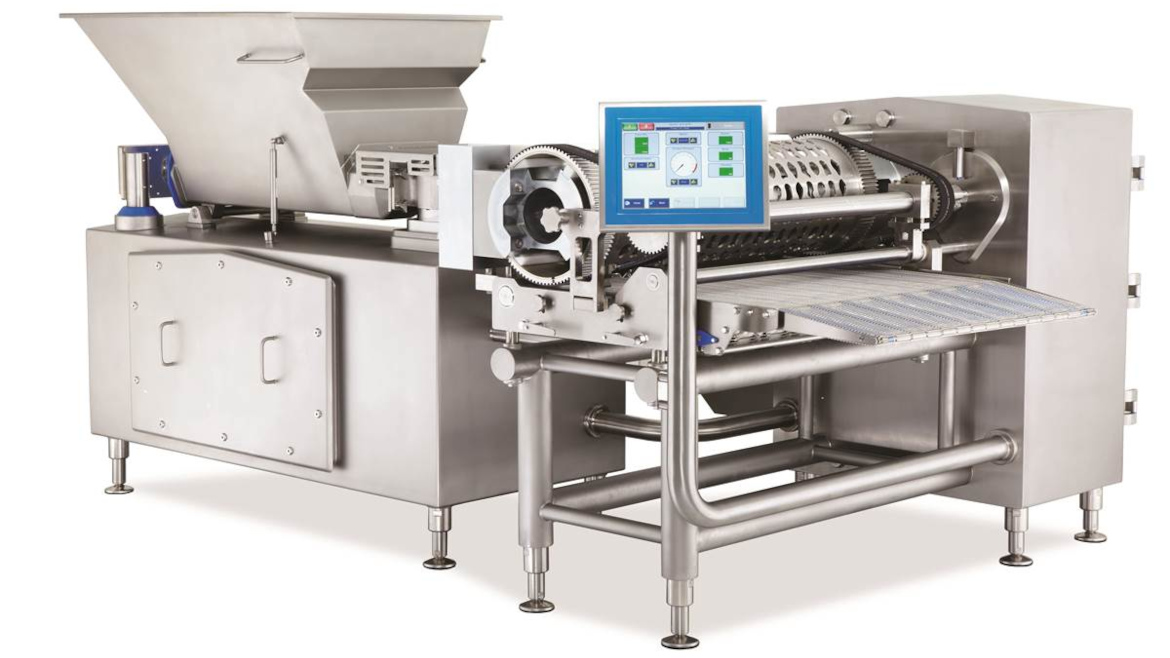
OEM suppliers, like Provisur, develop next-generation equipment with food safety as the highest priority, which means designing for cleanability, leakage reduction, effective machine guarding, and sanitation as all fundamental pillars. Image courtesy of Provisur
Sanitation programs require more than cleaning
While environmental monitoring helps identify risks, sanitation programs remain one of the most important defenses against contamination.
Scott King, vice president of food safety at Fortrex, said many facilities still view sanitation too narrowly. “Sanitation is often thought about in a silo,” King said.
Instead, King recommends treating sanitation as part of a broader hygienic risk management strategy. That approach incorporates hygienic zoning, Good Manufacturing Practices, sanitary design, sanitation programs and food safety verification efforts into a single framework.
Labor availability presents another challenge. “There are fewer and fewer experienced sanitation professionals available in the industry,” King said.
Finding, training and retaining sanitation employees remains difficult, particularly for overnight shifts and other demanding production environments. King said facilities need managers and supervisors who understand sanitation fundamentals and can effectively support and retain team members.
Processors are also placing greater emphasis on both validation and verification to confirm that sanitation programs are working as intended. King said advanced validation and verification methods are becoming faster, more cost effective and more widely available as regulatory and customer expectations continue to increase. In ready-to-eat operations, processors are placing particular emphasis on quantitative analytical methods that help verify cleaning effectiveness and support pathogen control objectives.
Looking ahead, King expects technology to continue improving sanitation programs. However, he emphasized that fundamentals remain essential. “New technologies for understanding and analyzing data are providing a more rapid generation of insights that make us more efficient in truly understanding how effective our sanitation practices are.”
Documentation and traceability
Food safety programs extend well beyond the production floor. For many meat and poultry processors, supplier documentation and recordkeeping create some of the most persistent compliance challenges.
Fabiola Negrón, director of food safety at Registrar Corp., said incomplete or delayed supplier documentation can create verification gaps that affect compliance decisions.
Recordkeeping practices can also create problems when records become outdated, incomplete or difficult to retrieve during inspections.
“These issues directly affect traceability, as effective traceability depends on accurate, complete, and connected records across the supply chain,” Negrón said. “When information is missing or not properly linked, it becomes difficult to quickly trace products or demonstrate compliance during audits or recall situations.”
Although FDA’s Food Safety Modernization Act does not directly apply to meat and poultry products regulated by USDA-FSIS, Negrón said the law has influenced broader industry expectations, particularly for companies operating under both FDA and USDA oversight. As a result, many processors have adopted more preventive approaches, expanded supply-chain controls and invested in enhanced traceability and documentation systems.
Negrón said processors can improve compliance readiness by standardizing documentation, integrating systems and using digital tools to support traceability and recordkeeping.
“Digital traceability and compliance tools can automate data capture, recordkeeping, and reporting, making information more accurate and readily accessible during audits or recalls,” she said.
Negrón noted that artificial intelligence can support document creation, review and risk identification when used appropriately, though human oversight is necessary.
Designing food safety into equipment
Sanitary equipment design has become increasingly important as processors seek to reduce harborage points, improve cleaning efficiency and support environmental monitoring and sanitation objectives throughout production.
Bill Dillon, product specialist at Provisur Technologies, said processors evaluating new equipment pay close attention to cleanability and sanitation features, looking to OEMs to provide options for accessibility to food-contact surfaces and clean-in-place (CIP) capabilities.
Design decisions can reduce areas where moisture, residue or product buildup may accumulate while simplifying cleaning and inspection procedures. “Minimizing mating surfaces and using solid materials, in contrast to hollow tubing, is a definite consideration for OEMs when designing new processing equipment,” Dillon said.
Processors’ expectations around sanitary design continue to evolve as facilities adopt more automated production systems and manufacturers update sanitary standards.
Dillon said operator training and maintenance also play a crucial role in food safety performance. “The role of operator and maintenance training is instrumental in ensuring safe and thorough machine operation, as well as effective sanitation,” he said.
Equipment suppliers increasingly incorporate food safety considerations directly into product development. Cleanability, leakage reduction, machine guarding and sanitation requirements now influence design decisions from the earliest stages of development.
“For OEM suppliers developing next-generation equipment, food safety is the highest priority,” Dillon said. “Designing for cleanability, leakage reduction, effective machine guarding, and sanitation are all fundamental pillars in the design of new equipment.”
In the face of evolving regulatory expectations, labor challenges and operational complexity, food safety programs are becoming more integrated across operations. Together, environmental monitoring, sanitation, traceability and sanitary equipment design all form the foundation of preventive food safety strategies designed to identify risks earlier, strengthen verification efforts and support continuous improvement.