Trays continue to innovate
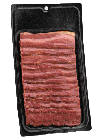
Protein packaging, without a doubt, has come a long way, and it continues to evolve as the needs of processors expand. The advent of prepared foods and ready-to-eat meals is simply the latest challenge posed to the packaging that holds the product.
Today’s tray packaging must be tough, yet versatile, in order to handle a wide variety of products that are, by no means, dry bulk items. Commodity cuts of meat shed liquid while in the package, while some value-added items come ready-packed with marinades, brines, sauces and other liquid-based ingredients sealed inside the package.
The popularity of plastic trays is, without question, enormous. But phasing into the market has been the desire of processors to deliver products that build upon that foundation. One of the more recent tray-packaging innovations allows for a safer product, says Marc Gaddis, vice president of R&D for Sadler’s Smokehouse.
“Our new Dinner for Two items are in a formed tray that is made on the line,” Gaddis explains. “The product is placed in an inline formed tray with a skin film that forms a steam chamber when you microwave it — it’s the type of package that allows us to high-pressure pasteurize it.”
Sadler’s uses post-packaging high-pressure pasteurization on the Dinner for Two line to ensure the food safety of the product before it goes to market. As processors become aware of the positive enhancements these types of packages can bring to their product lines, their popularity grows.
Yet, in spite of the wide variety of tray packages available to processors today, the category doesn’t appear to have reached a plateau on the innovation side — at least not via the desires of processors. Count Sadler’s among those who believe there is room for further innovation in the tray arena.
At one time, Sadler’s used a paperboard tray for some of its products, but made the switch to formed plastic trays because of the inability of the paperboard product to withstand the processing demands Sadler’s placed on it. But Gaddis hasn’t given up on paperboard as a viable option, particularly given its environmental benefitz.
“I would like to see a paperboard, recyclable tray that would hold up to a water environment, such as refrigerated and high-pressure pasteurization situations,” he explains. With the proper innovations, Gaddis explains that paperboard trays could come back in to play, given the environmental benefits of that type of product.
Looking for a reprint of this article?
From high-res PDFs to custom plaques, order your copy today!