Provisioner logo
Provisioner logo
search
cart
facebook twitter linkedin youtube
  • Sign In
  • Create Account
  • Sign Out
  • My Account
Provisioner logo
Provisioner logo
  • NEWS
    • Industry News
    • Supplier News
    • Case Studies
    • Recalls
    • Regulations
    • New Consumer Products
  • EXCLUSIVES
    • Newsletters
    • Source Book
    • Sponsored Insights
    • Events
    • Webinars
    • Classifieds
    • White Papers
    • Provisioner Store
    • Market Research
  • MEAT PROCESSING
    • SUSTAINABILITY
    • Processing
    • Packaging
    • Ingredients
    • Formulation
    • Food Safety
    • Special Reports
    • Commentary
  • PROFILES
    • Processor Profiles
    • Processor of the Year
    • Top 100 Processors
  • MEDIA
    • Videos
    • Podcasts
  • DIRECTORY
  • MIHOF
  • INDEPENDENT PROCESSOR
  • EMAG
    • eMagazine
    • ARCHIVE ISSUES
    • Contact
    • Advertise
  • JOIN!
Meat and Poultry ProcessingPlant Design/ManagementSustainability

Easier to be 'green'
October 1, 2010

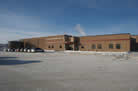
Hormel’s brand new Progressive Processing plant in Dubuque, Iowa, opened earlier this year and recently became one of the first new-construction manufacturing facilities to earn gold-level LEED certification. Given that Hormel has put itself squarely in the spotlight among processors maintaining and advancing a sustainable strategy, Chad Sayles, manager of mechanical and electrical engineering, sat down with Andy Hanacek, editor-in-chief of The National Provisioner, to discuss ways in which meat- and poultry-processors can continue to design more environmentally friendly, “green” facilities.

  • Editor’s Note: What follows is the complete conversation between Hanacek and Sayles—a ProvisionerOnline.com exclusive—including those questions and answers found in The National Provisioner publication, along with a bevy of questions not published in print due to editorial space constraints. We bring these answers to you in this format, knowing that information on sustainability and green facility design is valuable, particularly from the perspective of a processor.
Hanacek: First of all, congratulations on the LEED certification—what does this mean for Hormel, the industry and sustainability, from your perspective “in the trenches?”
 
Sayles: I think the certification brings that third-party verification that we have designed a state-of-the-art facility that implements technologies that have never been implemented together in the same place before, to bring the most sustainable and environmentally responsible facility we can, and make it ready to grow with Hormel’s needs in the future.

Hanacek: From the overall point of view, what was the single biggest challenge for Hormel in designing a prepared foods/meat processing facility to meet the qualifications of a LEED-certified facility?


Sayles: No. 1, by far, the LEED-certification process was never developed for a manufacturing facility, and certainly not a refrigerated food-manufacturing facility. The criteria were developed with commercial offices, libraries, schools, etc. in mind. So a lot of the things you have in a manufacturing plant don’t apply to the criteria, and the challenge was for us to figure out how to make our systems comply with or exceed that criteria, even though they were specialized.
The energy model we had to develop to demonstrate that our facility was more energy-efficient than a base building, it’s really hard to develop a base building that matches Progressive Processing. There aren’t hundreds of these buildings making products in microwave trays to which you could compare your energy consumption.
 
Whereas if you’re building a two-story office building with so many square feet, you have tens of thousands of buildings to compare.
The No. 2 challenge would be that it had just never been done before [for this type of facility]. There wasn’t someone you could approach and ask how to get through the LEED-certification process for a refrigerated food-processing facility, because to our knowledge no one else had done that. There had been manufacturing facilities and food-distribution types of facilities, but not a facility that was close to what we were planning. There wasn’t a handbook, per se, that we could follow along to do it.

Hanacek: What are some of the cost differences involved in going from a green-field site to a green facility, rather than building a “typical” plant? Is it a big difference or just more an awareness and study-driven process?

Sayles: We believe in our case there was really a minimal cost difference, because we at Hormel have a long history and tradition of energy conservation and the things that are now collected under the label of “green building.” We’ve done most of those things anyway, so going into a new facility, we would have implemented most of this technology anyway, because we believe it’s good business to do so — that energy-saving designs will save us energy for the life of that building.

Hormel tends to be in its buildings for a very long time. At the [grand opening] press conference, I made the comment to the effect of, we could have had the same press conference 28 years ago at the opening of the new Austin [Minn.] plant and had the same discussion, it’s just that none of this was in the vocabulary at the time.
 
So for manufacturers or people who [are just getting into sustainable building], I’d say the additional cost would be in the upgraded technology — the energy-efficient lighting systems, the variable-speed drive for the pumping system, the heat-recovery system. Those would be the additional costs going in.

Hanacek: And the ROI is pretty good in terms of the costs there too, right?

Sayles: Right, and I made this point at the grand opening too: that it’s much better to build a new facility, where you have nothing, and you choose Option A or Option B, and Option B saves you a substantial amount of energy, rather than going into an old facility that has a working system and have to replace that. The economics aren’t as favorable to do that, so the right thing to do is to do it the best you can the first time.

Hanacek: Obviously, construction materials aside, can processors use any of these green tools to, say, retrofit current facilities? What are some of the ways in which a processor could incorporate some of these sustainable practices into their facilities?

Sayles: From the energy-management standpoint, there are things like high-efficiency lighting that you can do in a facility of any age. You can evaluate the amount of kilowatt-hours your lighting system takes, look at the best available technology and build a business case to replace anything that’s probably more than five years old because of the way the technology has changed. Lighting, waste, heat recovery, manufacturing in general has a lot of processes that use heat to cook or process, and a lot of that heat is wasted out an exhaust stack—you can try to recover that and use it in the plant.

Then, water conservation is huge. Anyplace that you have water that makes its way to the drains, is there any way to collect and use it again? Is there a way to close the loop, or maybe not even need the water in the first place? There are a lot of ways in our industry to retrofit existing facilities, again it’s simply more challenging and often more costly.
 
Not everything is around energy though, when we’re talking about green building. We’re also talking about creating a healthy work environment for the employees, using other natural resources wisely—such as using recycled construction materials. You can’t go back and rebuild the building with recycled content, but you can make sure you are recycling all the material that moves through your facility that you can.
 
But the healthy environment is very important. At our facility, we have a lot of natural daylight that is allowed into the plant, and that gets a lot of talk from an energy-conservation standpoint, but it’s actually just as valuable from the standpoint of people liking natural daylight: It’s a healthy environment. The facility also has substantially more fresh air provided, whether it’s office space or in the manufacturing/storage areas, than would be required by any building code. Fresh air in the building also makes it a healthier environment.

Hanacek: Are there now enough resources in terms of companies, equipment and technology that a processor doesn’t have to design or develop these strategies and processes on their own?

Sayles: Yes and no. The lighting, the use of natural light via skylights, those are technologies for which there are a lot of great manufacturers and consultants who would be very qualified to help a processor. When it comes to looking at your particular process in something like, say, waste heat recovery, there are people who sell heat exchange equipment that wasn’t available a few years ago, but having the equipment is only half the battle. The rest of it is understanding your process enough and knowing what your process can do and where you can use that recovered waste heat. You can’t depend on someone just to walk in off the street and tell you to use this heat exchanger to grab all your heat off the blancher or inedible rendering cooker or whatever. There are people who sell the equipment, but you must understand how to apply it to your process. We’re a similar industry, but plant to plant and company to company, there are significant processing differences.

Hanacek: Where do you think there is further room for the technology of sustainability to improve in the meat industry?

Sayles: I think it’s going to improve in water conservation and energy reduction but also recovery. Again, it’s manufacturing in general, not just food manufacturing, as opposed to the commercial building industry. In food manufacturing, you have to consume energy to manufacture product, and there are a lot of opportunities to capture and reuse some of that.

I think the things that will happen with technology, the lighting and controls area is just phenomenal—think of how computers continue to grow. The things we are able to do at Progressive Processing in the control of systems allow us to do what we do sustainably. If this was 25, 30, 40 years ago and we didn’t have that computer in the background monitoring outside and inside light levels and deciding how to stage the lights, what we’d have would not be effective. You’d have to have a guy standing at the switch turning it on and off as the sun moved up and down, and I think the biggest opportunity for advancement, is through the controls aspect.
 
The core ideas behind most of what we’ve done have been around a long time. It’s that level of control technology, combined with other technology, that has allowed us to implement in a cost-effective manner now what guys 20 years before us wanted to implement.

Hanacek: With regard to green facility design, how can a meat-processing facility minimize its emissions and impact on the local environment? How far has emissions control technology come thus far in this particular area?

Sayles: New equipment in our facilities such as boilers and processing ovens are designed with the latest combustion control technologies resulting in lower emissions. Older equipment is retrofitted as needed. The technology used for this combustion control is the same as used in other industries and continues to improve. But, the most effective way to reduce emissions is to reduce the energy consumed in the plant. Efforts to design processes to be energy-efficient, utilize the most energy-efficient equipment available and recover energy for a secondary use have significantly reduced the energy consumed and therefore reduced emissions.
KEYWORDS: emissions Hormel LEED certification sustainability

Share This Story

Looking for a reprint of this article?
From high-res PDFs to custom plaques, order your copy today!

Recommended Content

JOIN TODAY
to unlock your recommendations.

Already have an account? Sign In

  • Double Charburger

    Premiumization drives burger category

    Shoppers seek out premium meat offerings to fulfill...
    Special Reports
    By: Sammy Bredar
  • JJS Adult Pekin duck

    Poultry Report 2025: Convenience propels poultry at retail

    Despite continued economic pressures, the poultry...
    Turkey
    By: Sammy Bredar
You must login or register in order to post a comment.

Report Abusive Comment

Manage My Account
  • eMagazine Subscriptions
  • Manage My Preferences
  • Newsletters
  • Online Registration
  • Subscription Customer Service
  • Connect with The National Provisioner

More Videos

Sponsored Content

Sponsored Content is a special paid section where industry companies provide high quality, objective, non-commercial content around topics of interest to the The National Provisioner audience. All Sponsored Content is supplied by the advertising company and any opinions expressed in this article are those of the author and not necessarily reflect the views of The National Provisioner or its parent company, BNP Media. Interested in participating in our Sponsored Content section? Contact your local rep!

close
  • A smiling man carrying a grocery basket is reaching down to pick up a package of meat in a grocery store.
    Sponsored byPIC

    The Green Light: New Data Shows 12-to-1 Support for Pork from PRRS-Resistant Pigs

  • Close up of a grocery cart full of groceries, a cropped image of a couple pushing the cart and a blurred background of the vegetable aisle.
    Sponsored byPIC

    New Market Research Finds Consumers in Eight Key Pork Markets Are Likely to Purchase Pork from Gene-Edited Pigs

  • Close up of a young pig with a blurred background.
    Sponsored byPIC

    New Research Forecasts Significant Economic and Market Impacts with PRRS-Resistant Pig Adoption

Popular Stories

Various new Primal snack sticks on a table amongst pencils, apples, a pair of glasses, lunch bags and a water bottle.

Protein demand drives snacking occasions

Spam Dog

Hormel rolls out Spam hot dog for foodservice applications

Several cuts of beef, pork and chicken on a wooden board, cast iron pan and salt.

Validated thermal lethality data and a new tool for ensuring safety of RTE meats

2026 Top 100 Meat & Poultry Processors Report

Events

June 11, 2026

From Fresh to Frozen in 3 Minutes Flat: Unlocking the Secrets to Temperature Control

Join Tony Vacaro, Foods Industry Manager, and Emile Klein, Foods Market Strategy Manager at Air Products and Chemicals, Inc. , as they tackle key questions surrounding heat removal in food processing. 

January 1, 2030

Webinar Sponsorship Information

For webinar sponsorship information, visit www.bnpevents.com/webinars or email webinars@bnpmedia.com.

View All Submit An Event

Products

Food Crime: An Introduction to Deviance in the Food Industry

Food Crime: An Introduction to Deviance in the Food Industry

See More Products
From Fresh to Frozen in 3 Minutes Flat: Unlocking the Secrets to Temperature Control Webinar Sponsored by Air Products

Related Articles

  • noax industrial PCs are now easier to use thanks to NSetup

    See More
  • Markem ecommerce

    Markem-Imaje makes it easier to manage coding via e-commerce portal

    See More
  • Paratherm introduces sleeker, easier-to-use website

    See More

Related Products

See More Products
  • food-crime.jpg

    Food Crime: An Introduction to Deviance in the Food Industry

  • GlobalData_logo_blue_header.png

    Frozen Meat (Meat) Market in the United States of America - Outlook to 2023...

  • GlobalData_logo_blue_header.png

    Cooked Meats - Packaged (Meat) Market in the United States of America - Outlook to 2023

See More Products

Events

View AllSubmit An Event
  • January 25, 2023

    Biosecurity: Preparedness Must Be Perpetual

    In recent times, our industry has been guarding against the potential threat of African swine fever and dealing with several outbreaks of highly pathogenic avian influenza. It is apparent that biosecurity is a constant need, not just a one and done plan. The American Feed Industry Association’s Nutrition Committee is hosting a program on this topic in conjunction with the 2023 International Production & Processing Expo, taking place Jan. 24-26. "Biosecurity: Preparedness Must Be Perpetual” will highlight the need for continued focus on biosecurity for the animal agriculture industry.
  • June 1, 2009

    Food Plant of the Future: Using Design to Increase Productivity and Drive Down Unit Costs

    On demand The need for food and beverage processors to drive down unit costs never ends. How can new/retrofitted plants be designed to optimize productivity?
View AllSubmit An Event
×

Stay ahead of the curve. Unlock a dose of cutting-edge insights.

Receive our premium content directly to your inbox.

SIGN-UP TODAY
  • RESOURCES
    • Advertise
    • Contact Us
    • Directories
    • Store
    • Want More
  • SIGN UP TODAY
    • Create Account
    • eMagazine
    • Newsletter
    • Customer Service
    • Manage Preferences
  • SERVICES
    • Marketing Services
    • Reprints
    • Market Research
    • List Rental
    • Survey/Respondent Access
  • STAY CONNECTED
    • LinkedIn
    • Facebook
    • YouTube
    • X (Twitter)
  • PRIVACY
    • PRIVACY POLICY
    • TERMS & CONDITIONS
    • DO NOT SELL MY PERSONAL INFORMATION
    • PRIVACY REQUEST
    • ACCESSIBILITY

Copyright ©2026. All Rights Reserved BNP Media, Inc. and BNP Media II, LLC.

Design, CMS, Hosting & Web Development :: ePublishing