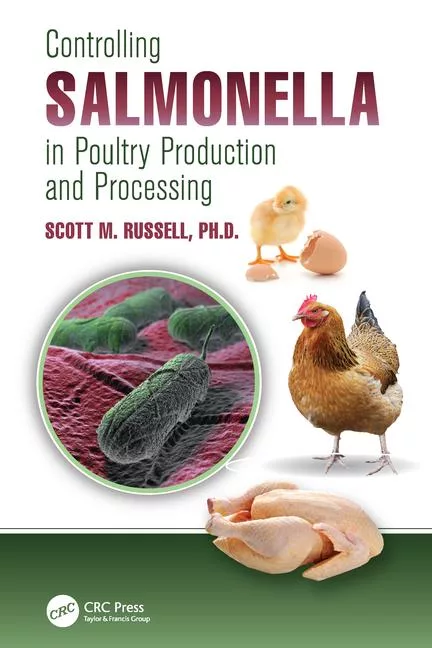
Germ Warfare: New wash reduces Salmonella in poultry
Studies have revealed that when chickens arrive at processing facilities, they generally have high populations of bacteria, which can include Campylobacter or Salmonella, in their viscera and externally on feathers and skin. During processing, such contamination will inevitably be transferred to the processing equipment, other carcasses and potentially to final products. Many of the pathogen-intervention strategies for poultry involve the use of antimicrobial chemicals in rinses or washes; however, the efficacy of most chemical intervention treatments is reduced by the presence of organic matter. More effective antimicrobial treatments are desired that are practical, cost-effective, safe to use and not neutralized by organic matter.
With funding from Georgia’s Traditional Industries Program for Food Processing, researchers with the University of Georgia’s Center for Food Safety, under the direction of Dr. Michael Doyle, recently completed the first year of a two-year study to develop an alternative chemical treatment to reduce Salmonella (in particular, Salmonella Enteritidis) contamination on poultry skin and features during production and transport while not adversely affecting animal health, growth rates or product quality.
A patent application on antimicrobial composition and use has been submitted. Doyle says more than 40 companies, both nationally and internationally, have expressed an interest in the treatment, and the University of Georgia Research Foundation is in the process of negotiating licensing the technology. NP
This article was reprinted from PoultryTech, a publication of the Agricultural Technology Research Program of the Georgia Tech Research Institute, a program conducted in cooperation with the Georgia Poultry Federation, with funding from the Georgia Legislature.
Looking for a reprint of this article?
From high-res PDFs to custom plaques, order your copy today!