Processing Technology
Employee education is the answer
The quality of training is a crucial factor in the performance of meat and poultry workers, but properly educating employees can be a big undertaking.

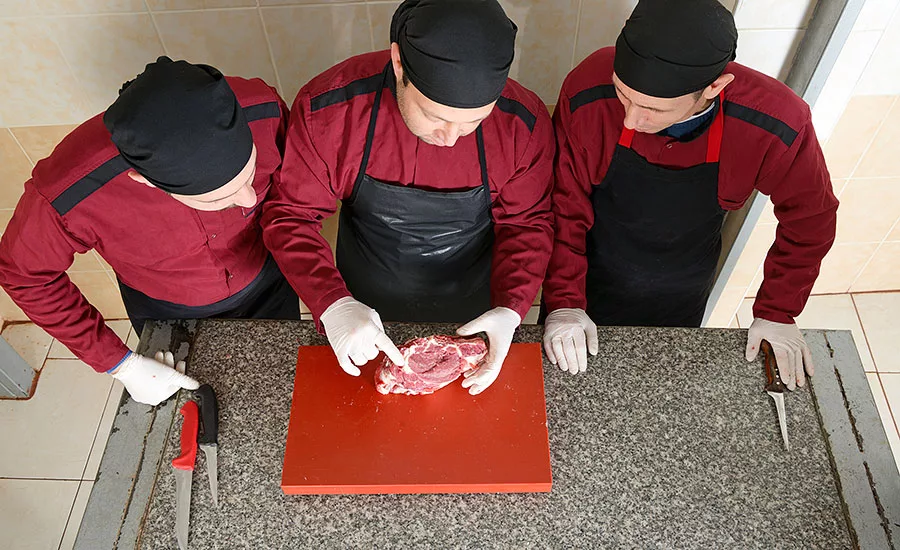
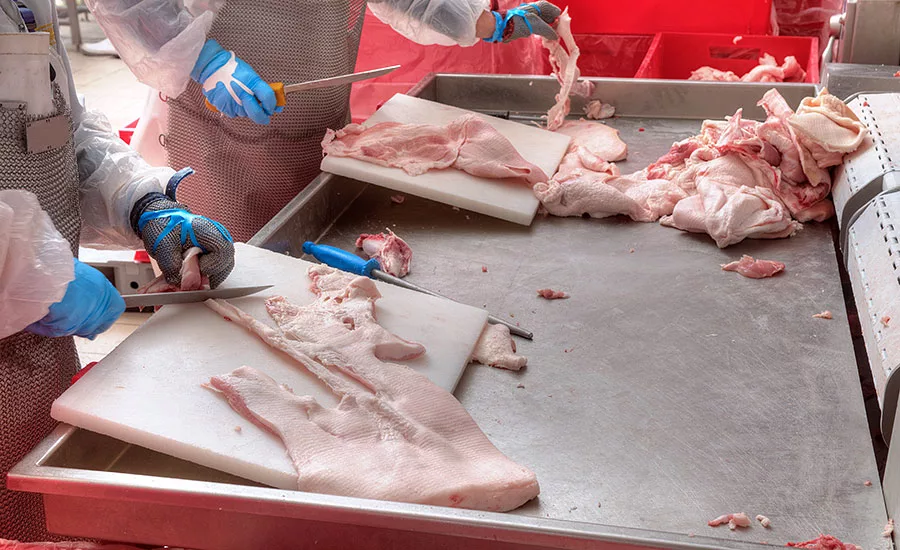
Employing workers who have the competency to produce high-quality quality meat and poultry in an efficient and safe manner is a foremost aim of protein plant operators. But developing the necessary skill sets is no easy task.
With high employee turnover rates, a number of workers who don’t speak English and few instructional resources, many processors face large obstacles in developing optimal work forces.
Nevertheless, with proper planning, using the right training tools and, perhaps most importantly, upper management committing to training, employees can become and remain proficient.
That is crucial as the immense expense from product recalls — along with the potentially negative health, safety and revenue consequences from inadequate training — far outweigh an investment in education.
“Plant management should develop a strong culture of worker safety with robust training, monitoring and improvement processes,” says Yvonne C. Anding, senior lead auditor, supply chain food safety, for NSF International, an Ann Arbor, Mich.-based food safety auditing firm and standards developer.
“Job-specific training should go hand in hand with overall food safety training.”
But leveraging the proper training system and getting workers to learn and adhere to procedures can be onerous.
Tools of the trade
Employees often find it tedious to watch training videos and use online systems prevalent in many plants, says Angela Fraser, associate professor and food safety specialist in the Department of Food, Nutrition and Packaging Sciences at Clemson University, in Clemson, S.C.
Face-to-face communication with supervisors and trainers often generates more behavioral changes because it provides opportunities for discussion, she says.
“Videos and online tools are fine for persons at the supervisory or management levels who are more educated and committed to the plant operations,” Fraser says. “But lower-level workers tend to tune out the information from such one-way interactions.”
The best results occur when training methods are fresh and interesting, and that often requires the use of a variety of educational tools and methods, says Martin Bucknavage, senior food safety extension associate at Pennsylvania State University in University Park and a food processing plant trainer.
In addition to in-person instruction, training vehicles can include posters and other visual aids, games and role-playing, he says. “Using different techniques helps prevent workers from getting bored,” Bucknavage says.
For the best results, companies also should design education programs that meet the comprehension levels of each individual, he says.
“Talking about simple measures to persons who already are highly trained will result in apathy,” Bucknavage says. “Trainers also can talk over the heads of new employees by using unfamiliar jargon.”
The most effective instructors, meanwhile, typically are full-time plant employees, rather than trainers from outside organization. Employees better understand their company’s operations and the most important issues to address, Fraser says. Workers also tend to identify with and pay more attention to their colleagues.
Foster feedback
With plants often employing many foreign-born workers, it also is pivotal that trainers communicate in workers’ native languages to foster better comprehension and encourage feedback, Fraser says.
It is advantageous for processors to learn firsthand why employees may not be following procedures so they can devise appropriate solutions. A lack of hand-washing, for instance, can result from plants placing sinks in inconvenient locations, or using water that is too hot or cold, or caustic soap, she says.
“Management needs to be creative to grab and hold workers’ attention and get results,” Fraser says. “That includes asking workers about the instructional methods that best resonate with them.”
Employees, meanwhile, can better understand the importance of food safety and other issues through the use of interactive training tools that provide real time examples and incorporate news, pictures and market surveys, Anding says.
Managers should talk with their employees about plant procedures on a regular basis, she says, noting they can have group meetings and other on-site discussions.
“Engagement of the entire plant team is essential to ensure job responsibilities are being met,” Anding says. “The more often it occurs, the more comfortable employees are with the method of information exchange.”
Among the most effective training tools, she says, are employer-produced videos as the in-house vehicles enable workers to better understand and relate to the issues they face in their specific facilities and jobs.
A never-ending mission
It is crucial for training to remain an ongoing process after workers receive initial instruction. The frequent review of methodologies helps employees retain and expand their knowledge of operating techniques and procedures, Bucknavage says.
“There is the assumption among some plant operators that they only need to train workers once and then they are good to go, but the information must continually be driven home,” he says. “Operators also must always monitor where there are performance gaps and then make sure there is additional training to fill those gaps.”
While standard topics for new employees may include such basics as what to wear, how to fill out time sheets and proper hand-washing techniques, operators also should cover vital elements unique to their plants without overloading employees with data, Fraser says.
Follow-up instruction can happen at the beginning of shifts or at monthly group meetings, she says.
Operators also can enhance employee performance by monitoring workers on the plant floor and giving training refreshers on the spot when necessary, Fraser says.
“Training does not have to be formal, be it should be continuous and done in a way that does not create fear,” she says. “It is important to treat workers with dignity, while also making them feel valuable.”
Operators can further boost morale by asking for feedback on training programs and acting on their suggestions, Fraser says.
“Using staff to develop training for their job responsibilities and implementing a ‘train the trainer’ model helps engage employees,” Anding says. “Area supervisors or floor leads are perfect for this type of responsibility.”
Having managers set a good example is another way to get workers to more readily adhere to measures, Bucknavage says.
“If employees see their supervisors are not committed, they won’t be committed,” he says. “A couple of bad managers can disrupt the system.”
Under review
While leveraging potent training programs is a crucial element in a successful education initiative, also pivotal is auditing systems that review whether employees are maintaining the necessary skills and knowledge, Bucknavage says.
“The systems keep everyone honest and on their toes,” he says. “The goal is to always look for issues that need attending.”
Plant managers can detect such issues by watching workers on the floor and scrutinizing operations, Bucknavage says.
Third-party auditors also can effectively measure worker performance and, if necessary, recommend corrective actions, he says. Scrutiny by different sets of eyes from outside organizations often is prudent as plant managers can sometimes be blind to daily occurrences, Bucknavage says.
To further monitor the effectiveness of training, plant operators can give employees a test at the end of each education session, Anding says, and implement a buddy system that couples new employees with seasoned workers. The veterans, she notes, help ensure the newcomers correctly implement operating procedures.
“Having a 90-day probation evaluation period that assesses objective and subjective measurements also is a strong method to ensure quality,” she says.
While formal initial training and follow-up instructions can result in efficient and safe plant operations, companies will not reach ideal effectiveness without a senior-level commitment to extensive training. And that may require a change of mindset, Fraser says.
“A lot of meat and poultry processors don’t want to train employees because of fear that the workers will leave the job after a week or month,” she says. “I’ve heard operators say, ‘Why should I invest my resources in training so they can then go work for my competitors or somewhere else?’”
While having to work long hours with relatively low pay in a harsh environment often results in large worker turnover rates, corporate investments in training still can lead to large paybacks.
For best results, human resource personnel in collaboration with senior managers and floor supervisors, should collaborate in formulating effective training systems, Anding says.
“Committing to a frequency of training as well as implementing competency levels can serve to meet the needs of both short-term and long-term business objectives,” she says. “These training commitments should be treated as a key performance indicator for a profit-making business.” NP
Looking for a reprint of this article?
From high-res PDFs to custom plaques, order your copy today!