Provisioner logo
Provisioner logo
search
cart
facebook twitter linkedin youtube
  • Sign In
  • Create Account
  • Sign Out
  • My Account
Provisioner logo
Provisioner logo
  • NEWS
    • Industry News
    • Supplier News
    • Case Studies
    • Recalls
    • Regulations
    • New Consumer Products
  • EXCLUSIVES
    • Newsletters
    • Source Book
    • Sponsored Insights
    • Events
    • Webinars
    • Classifieds
    • White Papers
    • Provisioner Store
    • Market Research
  • MEAT PROCESSING
    • SUSTAINABILITY
    • Processing
    • Packaging
    • Ingredients
    • Formulation
    • Food Safety
    • Special Reports
    • Commentary
  • PROFILES
    • Processor Profiles
    • Processor of the Year
    • Top 100 Processors
  • MEDIA
    • Videos
    • Podcasts
  • DIRECTORY
  • MIHOF
  • INDEPENDENT PROCESSOR
  • EMAG
    • eMagazine
    • ARCHIVE ISSUES
    • Contact
    • Advertise
  • JOIN!
Meat and Poultry Industry NewsMeat and Poultry ProcessingBeef

Meat Science Review

Superoxide Dismutase Activity and beef tenderness

Evaluating the relationship between Superoxide Dismutase 
Activity and Tenderness of USDA Prime and Select-grade beef.
By Nicolas Herrera, Michael D. Chao, Emery Wilkerson, Chris R. Calkins
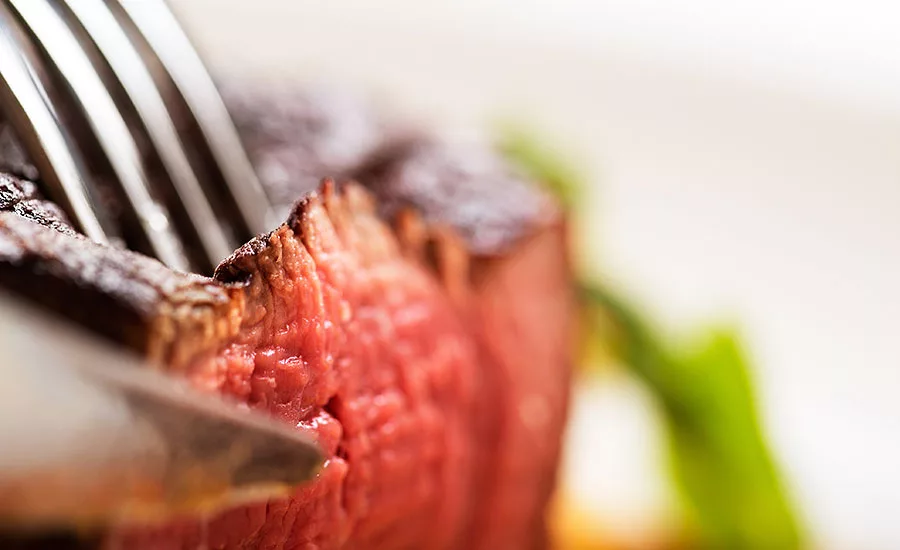
It has long been known Prime-grade beef is often more tender than Select-grade beef, but the biological factors for the difference have not been well-defined.
Differences in superoxide dismutase activity, as indicators of oxidative stress, could be related to tenderness differences in Prime-grade and Select-grade beef.
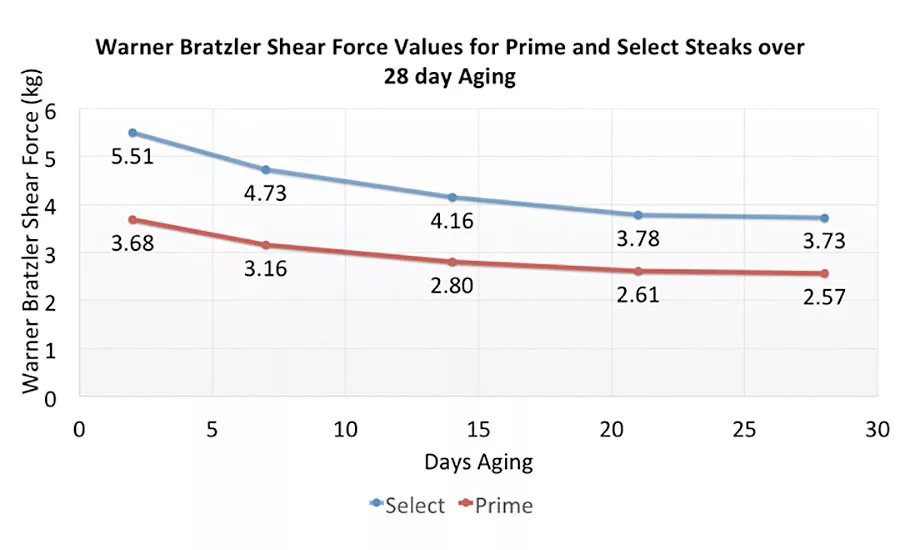
Comparison of Warner Bratzler Shear Force Values for Prime and Select Steaks
As expected, Prime-grade steaks had a significantly lower shear force than Select-grade steaks.
It has long been known Prime-grade beef is often more tender than Select-grade beef, but the biological factors for the difference have not been well-defined.
Comparison of Warner Bratzler Shear Force Values for Prime and Select Steaks
June 16, 2017

It has long been known Prime-grade beef is often more tender than Select-grade beef. The biological factors explaining for the tenderness differences, however, have not been well-defined. This project was conducted to evaluate a new hypothesis that may explain the tenderness difference between high- and low-marbled steaks. 

Finishing diets typically contain lipids which could increase overall oxidative reactions stress in live cattle. For cattle with more marbling, there may be an inherent increase in oxidative properties caused by production of reactive oxygen species (ROS). Research has shown animals generate ROS in response to oxidative stress. The most predominant ROS are superoxide, peroxide and hydroxyl radicals. These compounds have a chemical structure consisting of a single “unpaired” electron, making them highly reactive in the body. As such, their presence could disrupt typical postmortem changes in muscle, possibly promoting further protein degradation and enhancing tenderness. The mechanism of these changes remains to be uncovered. 

Knowing that ROS are highly reactive and dissipate immediately upon reaction, their presence in meat is difficult to measure. The body produces enzymes such as superoxide dismutase to counter ROS. This naturally occurring enzyme acts to reduce the active superoxide radical to a more stable state. Thus, muscle that has been exposed to ROS in the living state could be expected to exhibit elevated superoxide dismutase activity post-mortem. Therefore, superoxide dismutase activity might be an indicator of the long-term presence of ROS in living muscle. 

We hypothesized Prime-grade beef would have higher levels of superoxide dismutase than Select-grade beef. These differences in superoxide dismutase activity, as indicators of oxidative stress, could be related to tenderness. To test this, 72 beef strip loins (36 USDA Prime-grade cattle and 36 Select-grade cattle) were collected from a commercial meatpacking plant. Each loin was cut into five pairs of steaks (a one-inch thick steak and a ½-in thick steak). At random, each pair of steaks was aged 2, 7, 14, 21 or 28 days. The thicker steaks were cooked to 158 F, and six cooled cores were analyzed using Warner-Bratzler shear force. The ½-inch samples were used to quantify superoxide dismutase activity in the muscle tissue.

As expected, Prime-grade steaks had a significantly lower shear force than Select-grade steaks (Figure 1). Select-grade steaks had a greater response to aging effects (greater change in Warner-Bratzler shear force) than Prime-grade steaks over the 28-day aging process. In other words, the improvement in tenderness over time was greater for Select-grade beef than Prime-grade beef with the Select steaks having similar shear force to the Prime grade steaks by 28. However, no significant difference was observed between quality grades for superoxide dismutase activity.

The data continue to support the fact that meat with higher levels of marbling exhibit lower amounts of shear force and are thus perceived as more tender. The presence and effect of ROS, however, was not evident in this study. Perhaps, there are other enzymes which could be measured to further show the previous presence of ROS. Alternatively, the hypothesis could simply be invalid. Although the true mechanism of oxidative stress and quality grades and their effects on beef tenderness are still unclear, results from this study provide conceptual foundation for a new research perspective on meat tenderization. NP

KEYWORDS: American Meat Science Association (AMSA) beef tenderness marbling meat science review

Share This Story

Looking for a reprint of this article?
From high-res PDFs to custom plaques, order your copy today!


Nicolas Herrera, University of Nebraska-Lincoln
Michael D. Chao, University of Nebraska-Lincoln
Emery Wilkerson, University of Nebraska-Lincoln
Dr. Chris Calkins is a professor of Animal Science at the University of Nebraska and can be reached at ccalkins1@unl.edu.

Recommended Content

JOIN TODAY
to unlock your recommendations.

Already have an account? Sign In

  • Double Charburger

    Premiumization drives burger category

    Shoppers seek out premium meat offerings to fulfill...
    Meat and Poultry Industry News
    By: Sammy Bredar
  • JJS Adult Pekin duck

    Poultry Report 2025: Convenience propels poultry at retail

    Despite continued economic pressures, the poultry...
    Meat and Poultry Industry News
    By: Sammy Bredar
You must login or register in order to post a comment.

Report Abusive Comment

Manage My Account
  • eMagazine Subscriptions
  • Manage My Preferences
  • Newsletters
  • Online Registration
  • Subscription Customer Service
  • Connect with The National Provisioner

More Videos

Sponsored Content

Sponsored Content is a special paid section where industry companies provide high quality, objective, non-commercial content around topics of interest to the The National Provisioner audience. All Sponsored Content is supplied by the advertising company and any opinions expressed in this article are those of the author and not necessarily reflect the views of The National Provisioner or its parent company, BNP Media. Interested in participating in our Sponsored Content section? Contact your local rep!

close
  • A smiling man carrying a grocery basket is reaching down to pick up a package of meat in a grocery store.
    Sponsored byPIC

    The Green Light: New Data Shows 12-to-1 Support for Pork from PRRS-Resistant Pigs

  • Close up of a grocery cart full of groceries, a cropped image of a couple pushing the cart and a blurred background of the vegetable aisle.
    Sponsored byPIC

    New Market Research Finds Consumers in Eight Key Pork Markets Are Likely to Purchase Pork from Gene-Edited Pigs

  • Close up of a young pig with a blurred background.
    Sponsored byPIC

    New Research Forecasts Significant Economic and Market Impacts with PRRS-Resistant Pig Adoption

Popular Stories

JBS USA logo

JBS USA closing pair of processing facilities

Various new Primal snack sticks on a table amongst pencils, apples, a pair of glasses, lunch bags and a water bottle.

Protein demand drives snacking occasions

Several cuts of beef, pork and chicken on a wooden board, cast iron pan and salt.

Validated thermal lethality data and a new tool for ensuring safety of RTE meats

2026 Top 100 Meat & Poultry Processors Report

Events

January 1, 2030

Webinar Sponsorship Information

For webinar sponsorship information, visit www.bnpevents.com/webinars or email webinars@bnpmedia.com.

View All Submit An Event

Products

Food Crime: An Introduction to Deviance in the Food Industry

Food Crime: An Introduction to Deviance in the Food Industry

See More Products
From Fresh to Frozen in 3 Minutes Flat: Unlocking the Secrets to Temperature Control Webinar Sponsored by Air Products

Related Articles

  • Knife and Fork Cutting Tender Piece of Beef

    Beef tenderness and physiological maturity

    See More
  • Close up of calves on animal farm eating food. Meat industry concept.

    Beef tenderness development is influenced by zinc and ractopamine hydrochloride supplementation

    See More
  • Meat Science Review: Beyond tenderness, beef eaters crave exceptional flavor

    See More

Related Products

See More Products
  • meat.jpg

    Non-Thermal Processing Technologies for the Meat, Fish, and Poultry Industries

  • fermented.jpg

    Handbook of Fermented Meat and Poultry, 2nd Edition

See More Products
×

Stay ahead of the curve. Unlock a dose of cutting-edge insights.

Receive our premium content directly to your inbox.

SIGN-UP TODAY
  • RESOURCES
    • Advertise
    • Contact Us
    • Directories
    • Store
    • Want More
  • SIGN UP TODAY
    • Create Account
    • eMagazine
    • Newsletter
    • Customer Service
    • Manage Preferences
  • SERVICES
    • Marketing Services
    • Reprints
    • Market Research
    • List Rental
    • Survey/Respondent Access
  • STAY CONNECTED
    • LinkedIn
    • Facebook
    • YouTube
    • X (Twitter)
  • PRIVACY
    • PRIVACY POLICY
    • TERMS & CONDITIONS
    • DO NOT SELL MY PERSONAL INFORMATION
    • PRIVACY REQUEST
    • ACCESSIBILITY

Copyright ©2026. All Rights Reserved BNP Media, Inc. and BNP Media II, LLC.

Design, CMS, Hosting & Web Development :: ePublishing