Prime Cuts
Q&A on foodservice trends for 2018
The restaurant industry is going through some stressful times, as leaders scramble to adjust to consumer needs.
In any industry, the tried-and-true standbys only stay popular for so long without a little reinvention. When it comes to the restaurants, consumers expect to have their needs met each time they go out for a meal. Those needs, however are continually changing and go well beyond the quality of the food. People want to feel good about what they’re eating. If restaurants need to change their menu offerings to reflect those needs, then it falls to the meat and poultry processors of the country to be ready for those changes.
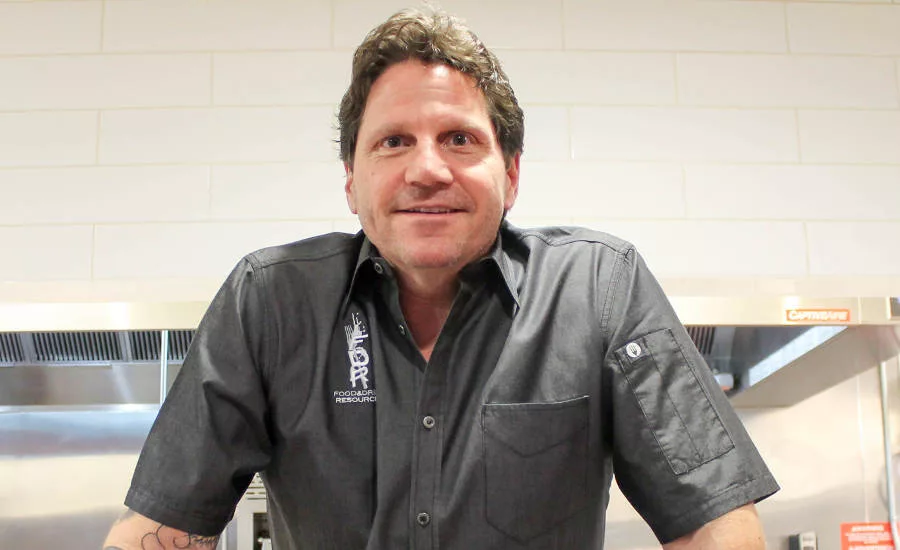
Food & Drink Resources is an agency that works with many top restaurants and top food processors to help develop and market new products and recipes. Ric Scicchitano, managing partner at FDR, spoke with me recently to discuss the big trends that will be impacting the restaurant industry in 2018 and beyond.
What is meat’s place at the restaurant plate in 2018?
You can find pockets of the country where proteins are not becoming the center of the plate. But from a broad consumer perspective, it still is the main item. There is some press out there about flexitarians who are making sure that vegetarian items are the center of the plate, and meat becomes the accompaniment — a slow-cooked piece of meat of a perfectly crisp belly or something — that has a smaller portion to it. Those are emerging trends, no doubt about it, but from just the broad stroke across the country, meat is still dominant. It’s still the center of the plate. It’s not being replaced.
What do you see as some of the biggest trends for 2018?
2018 is going to be a repeat of past years, and it’s being driven by the younger demographics now. There is the question of sustainability, being good stewards of the planet. While folks are still making dietary decisions around things that taste good, there is more of an expectation of, “How was this animal treated? How was this product processed? Has it been heavily processed? Am I eating whole muscle meats or processed deli meats?”
I’m not sure “trend” is the right word. It’s an evolution. Consumers are expecting that their proteins come from a cleaner source. The days of having nitrites and nitrates in food, there is a tipping point there. People are making menu decisions because they don’t want to put those chemicals, those salts into their bodies. That trend which started a few years ago, I think is only going to increase in speed, increase in applications on menus. You can look across quite a few QSR players, companies that are in the sandwich space, that are opting for less processed meats, no –ites and –ates.
In the early years, when a few big brands or big box retailers said that they were going ABF or nitrate- and nitrite-free, some of the smaller restaurant chains couldn’t touch it. They couldn’t afford it, didn’t have access to it. But now that the big titans in the industry have moved food producers to clean up their products and process their products less, now you have the smaller chains and the smaller brands — which is really the mass of the industry, which is where 80% of the volume is — to say, “I want to jump on the bandwagon too.” In 2018 we’ll certainly see more momentum toward that. That’s been certainly driven by generations that are younger than the Boomers.
Is there any particular protein that may have a real opportunity in 2018?
This is one that I think will still continue to grow, and I’m really happy to see it. Lamb has really come on. Years ago, lamb was reserved for a Greek restaurant here, or if a steakhouse was doing a lamb lollipop chop. There is interest and popularity around Mediterranean food getting a bigger share. People are moving more toward shawarma, which is a gyro type meal, and lamb is a major component of that. I think lamb has hit a tipping point where it has more broad appeal than it has in previous years, again being driven by Millennials.
Look at what’s happening in Australia. The Australian Lamb Board is doing a great of saying they’re bringing into the country grass-fed lamb and beef, so they’re hitting on that niche as well. Lamb is the one protein to me — clearly, beef, chicken and pork are the big drivers, and probably in that order — lamb is making a serious play right now. It’s even more widely seen on fast-casual menus; I’m waiting to see when Arby’s finally puts lamb on the menu, because they’re certainly making some good noise with venison now.
What do you expect from the other proteins?
Turkey is interesting. People say, “Where does turkey get a play on the menu?” I just don’t see it breaking out of the chains of being used by the heavy sandwich players. Processed turkey meat, whole muscle meats, cooked sous vide turkey meat, for fast-casual sandwich shops, that seems to be still where it’s anchored.
Chicken continues to evolve. Where chicken has always been a chicken breast play, wings are hot. There are concepts being built around them today. But chicken thighs and boneless chicken things are getting more mention. I think the dark meat of the chicken is starting to get some play more. Look at what’s happening to the population of the U.S. The U.S. is taking on a lot more of a Latin culture, with the Latin cuisine and the influx of people who are coming into our country. They are folks who actually prefer leg meat and thigh meat over breast meat. Where breast meat was traditionally a driver in this country, the bone-in and bone-out dark meat of chicken continues to see more mentions.
Another point is, bone-in meat in general. Pig wings are small ends of the rib with the meat still on that are flash-fried and can be treated like a chicken wing. I think there’s a resurgence of that product coming back, because it marries the chicken wing business. Whatever you can do with a chicken, you can do with a small pork bone.
The other point I’d like to make on chicken wings is, because there is a lot of volatility in the market, a lot of brands are looking to manage their risk a little and say, “If I have to supplement my menu and not drive so much on a chicken bone product, what other proteins are something I can keep in my fryer, toss in a mixing bowl and keep up with the skill-set of my kitchen staff so they can execute it?” A small end pork bone brings that kind of alternative protein without changing the skills in the kitchen.
What do you see for beef trends?
I think you’re going to see more innovation around burgers in general. There is a lot of discussion with people fiddling with the right ratios of ground beef. How much brisket do you throw in there, or do you continue with 100 percent chuck? I think there is going to be a lot of debate back and forth as chefs want to get creative about their beef blends, and I think consumers will go to it. If you can tell a story about what’s in your ground beef, that makes for a good story. Burgers are so ubiquitous right now, how do you differentiate your burger? Blends are one way to do it.
On a broader scale, for those chains and big restaurant brands that are still serving a frozen beef patty, they’re getting the wake-up call that fresh beef matters. It’s just a remarkably different product. Hand-formed in house versus something that’s been pre-pattied by the manufacturer, that’s another place. You’re going to see more and more restaurant chains continuing to up their burger game.
The restaurant industry is struggling right now from a traffic standpoint. There are so many choices out there, and people’s dollars are a little thinner, so restaurants are seeing fewer people come in in a year-over-year basis. They’re seeing that the people who are “winning” at this are the burger players and the chicken players, and those who are winning in the burger category are actually stealing shares from people who are losing in this space. If you don’t have a fresh product, you’re probably trailing the play. If you’re not doing something original or creative with your burger, if you’re not putting a runny yolk on your burger, if you’re not doing something great with the grill, if you’re not adding pickled vegetables to it, if you’re not working with some interesting cheeses, these new concepts are taking business away from you. If you have a terrible bun, forget it, because the bun is the deal breaker for a good burger or bad burger.
Do you see any specific sectors of the foodservice industry that are poised for growth in 2018, or ones that might be struggling?
It’s interesting times for foodservice. There are segments within the industry, like casual dining, that have really seen some softening in their traffic and sales, so that will continue to be a challenge. The ones that are winning right now are the ones that have a compelling menu offering, the ones that can differentiate themselves. More importantly, it has to do with value and cost. People are making dining decisions today based on where they can afford to eat.
There is more success happening with QSR restaurants now. They’re seeing sales and traffic increasing, and they’re doing it through really good innovation and also through really good pricing. The $4, $5, $6 lunch or the $7, $8 dinner, those folks are winning. That middle space where they’re trying to make dinner at $12 or $13 or lunches at $10, they’re seeing some struggles now. Then when you get to the high-end steakhouses, they’re doing well. The QSR side is winning through value, and the fine dining side is winning by just knocking it out of the park and not so much with a cash-conscious consumer. It’s the people in the middle who are trying to figure out what they need to be. They’re a little too expensive for lunch, but not quite fancy enough for dinner.
What are some things that processors can do to be better partners with the restaurants and chains they work with?
All processors really have to understand these newer concepts coming out. The new-generation CEOs and founders who are creating these companies, when they’re making their menus and creating their brands, are asking questions up front. “I want a cleaner-label product. I don’t want an ingredient statement that I’m embarrassed to post on my website. I want to use whole-muscle meats. I want to use fresh products.” I think producers need to be aware that this trend is not going away. It’s only going to grow in expectation, so be prepared for it.
Offer alternatives and be able to help brands navigate volatile markets. I use the bone-in chicken wing as an example. If you’re a chicken wing company, you’re watching the cost of your food spike materially to where it can change your economic model in a matter of 30 days, because the percent that a chicken wing can change is tremendous.
Help brands discover the alternatives, and be creative on how to shift to different parts of the animal or even switch proteins. Maybe this isn’t the time of year to offer pork. It’s better to offer beef or vice versa. Also, maybe try to get lamb in there a little bit more, because lamb is an interesting play right now. There’s a great supply coming in from overseas and being done domestically, and I think that offers a great alternatives to brands that wouldn’t even be considering lamb anymore. Continue to let people running brands, both large-scale and small-scale, be aware of trends.
Looking for a reprint of this article?
From high-res PDFs to custom plaques, order your copy today!