Provisioner logo
Provisioner logo
search
cart
facebook twitter linkedin youtube
  • Sign In
  • Create Account
  • Sign Out
  • My Account
Provisioner logo
Provisioner logo
  • NEWS
    • Industry News
    • Supplier News
    • Case Studies
    • Recalls
    • Regulations
    • New Consumer Products
  • EXCLUSIVES
    • Newsletters
    • Source Book
    • Sponsored Insights
    • Events
    • Webinars
    • Classifieds
    • White Papers
    • Provisioner Store
    • Market Research
  • MEAT PROCESSING
    • SUSTAINABILITY
    • Processing
    • Packaging
    • Ingredients
    • Formulation
    • Food Safety
    • Special Reports
    • Commentary
  • PROFILES
    • Processor Profiles
    • Processor of the Year
    • Top 100 Processors
  • MEDIA
    • Videos
    • Podcasts
  • DIRECTORY
  • MIHOF
  • INDEPENDENT PROCESSOR
  • EMAG
    • eMagazine
    • ARCHIVE ISSUES
    • Contact
    • Advertise
  • JOIN!
Meat and Poultry Industry News

2009 Poultry Processors Workshop report

May 14, 2009

By Sam Gazdziak
The 2009 Poultry Processor Workshop, sponsored by the U.S. Poultry & Egg Association's Poultry & Egg Institute, brought processors, suppliers and educators from around the country to discuss critical topics to the poultry industry. Salmonella was a frequently discussed topic, both in terms of industry action and governmental regulations. Along with that were discussions of new technology for the industry, export trends and consumer and customer expectations.

Dana Weatherford, vice president of Agri Stats, noted that almost every segment of the poultry industry lost money for all or most months of 2008. While some industries struggled early in 2009, he noted that the market was starting to improve as the price of grain stabilized.

Brian Coan, senior purchasing supervisor for Chik-fil-A, noted that the five areas that the foodservice industry focuses on are value, healthier options, convenience, environmental stewardship and community stewardship. From their protein suppliers, the foodservice operators want quality, consistency, competitive pricing, growth potential and added value.

“As a customer, we would like to see systems and processes in place that give us the peace of mind that you're doing the right thing,” he said, including bing up to speed on the latest equipment and having good process controls. Suppliers must be able to adhere to specifications, and their quality assurance staff should be involved in the production process.

Coan also stressed the importance of communication between suppliers and customers. “We'll pay for quality, but we want a consistent-quality product as well. “We don't ever want a supplier to be afraid to bring us a good solution to a problem that we may have, or a way to boost efficiency.

Speaking for the consumer was Michael Kowalcyk of the Center for Foodborne Illness Research & Prevention. Kowalcyk. He pointed out USDA research that stated foodborne illnesses accounted for one of every 100 hospitalizations and one of every 500 deaths.

“Using conservative estimates, the USDA attributes the annual cost of five pathogens (Campylobacter, Salmonella, E. coli O157H:7, non-O157 STEC and Listeria monocytogenes) cause an estimated $6.9 billion in lost productivity, medical costs and premature deaths,” he said. “[It does not] reflect the economic costs that the victims and their families suffer,” as well as the emotional trauma inflicted. Kowalcyk put a human face on the issue, telling about his 2-year-old son Kevin, who died in 2001 as a result of E. coli O157:H7 poisoning.

He noted that consumer confidence in the food supply has eroded in recent years. The Food Marketing Institute's 2007 annual survey showed that 66 percent of Americans were confident in the food supply, down from 82 percent in 2006.

“In today's market, product is transported several thousand miles across the U.S., and the failure of one actor to prevent contaminated product from entering into commerce will ripple across the industry and can have a serious affect on the commodity,” he said. He encouraged companies to take a continuous process improvement philosophy to food safety, an ongoing cycle where they plan ahead for change, execute the plan, check and study the results, and act on them, either by standardizing or repeating the process.

Share This Story

Looking for a reprint of this article?
From high-res PDFs to custom plaques, order your copy today!


Recommended Content

JOIN TODAY
to unlock your recommendations.

Already have an account? Sign In

  • Double Charburger

    Premiumization drives burger category

    Shoppers seek out premium meat offerings to fulfill...
    Special Reports
    By: Sammy Bredar
  • JJS Adult Pekin duck

    Poultry Report 2025: Convenience propels poultry at retail

    Despite continued economic pressures, the poultry...
    Meat and Poultry Industry News
    By: Sammy Bredar
You must login or register in order to post a comment.

Report Abusive Comment

Manage My Account
  • eMagazine Subscriptions
  • Manage My Preferences
  • Newsletters
  • Online Registration
  • Subscription Customer Service
  • Connect with The National Provisioner

More Videos

Sponsored Content

Sponsored Content is a special paid section where industry companies provide high quality, objective, non-commercial content around topics of interest to the The National Provisioner audience. All Sponsored Content is supplied by the advertising company and any opinions expressed in this article are those of the author and not necessarily reflect the views of The National Provisioner or its parent company, BNP Media. Interested in participating in our Sponsored Content section? Contact your local rep!

close
  • A smiling man carrying a grocery basket is reaching down to pick up a package of meat in a grocery store.
    Sponsored byPIC

    The Green Light: New Data Shows 12-to-1 Support for Pork from PRRS-Resistant Pigs

  • Close up of a grocery cart full of groceries, a cropped image of a couple pushing the cart and a blurred background of the vegetable aisle.
    Sponsored byPIC

    New Market Research Finds Consumers in Eight Key Pork Markets Are Likely to Purchase Pork from Gene-Edited Pigs

  • Close up of a young pig with a blurred background.
    Sponsored byPIC

    New Research Forecasts Significant Economic and Market Impacts with PRRS-Resistant Pig Adoption

Popular Stories

Spam Dog

Hormel rolls out Spam hot dog for foodservice applications

Colorado Premium logo

Colorado Premium acquires Old Hickory Smokehouse

Niman Ranch Uncured Grass-Fed Beef Bacon

Niman Ranch introduces beef bacon

2026 Top 100 Meat & Poultry Processors Report

Events

June 11, 2026

From Fresh to Frozen in 3 Minutes Flat: Unlocking the Secrets to Temperature Control

Join Tony Vacaro, Foods Industry Manager, and Emile Klein, Foods Market Strategy Manager at Air Products and Chemicals, Inc. , as they tackle key questions surrounding heat removal in food processing. 

January 1, 2030

Webinar Sponsorship Information

For webinar sponsorship information, visit www.bnpevents.com/webinars or email webinars@bnpmedia.com.

View All Submit An Event

Products

Food Crime: An Introduction to Deviance in the Food Industry

Food Crime: An Introduction to Deviance in the Food Industry

See More Products
From Fresh to Frozen in 3 Minutes Flat: Unlocking the Secrets to Temperature Control Webinar Sponsored by Air Products

Related Articles

  • News Brief Feature

    Report: Poultry processors maintain Salmonella controls

    See More
  • Top 100

    The 2021 Top Meat and Poultry Processors Top 100 Report: Staying Afloat

    See More
  • A Runner Taking Off From Starting Blocks

    2018 Top 100 meat and poultry processors: The race is on

    See More

Related Products

See More Products
  • salmonela.jpg

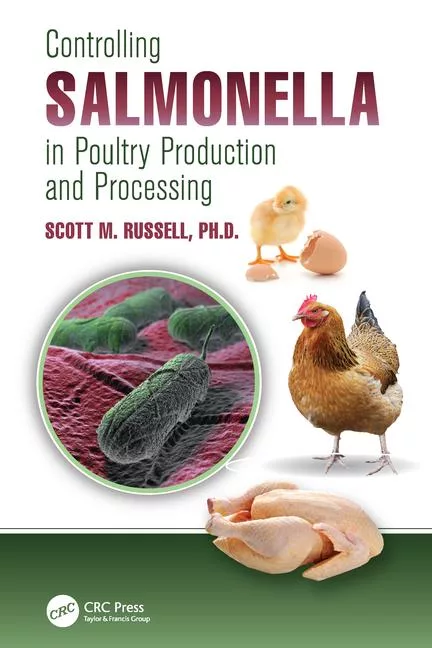
    Controlling Salmonella in Poultry Production and Processing

  • Handbook of Poultry Science and Technology, Volume 1, Primary Processing

See More Products

Related Directories

  • Midwest Poultry Federation

    The Midwest Poultry Federation (MPF), a 501(c)6 nonprofit organization, was founded in 1971 and held its first convention in Minneapolis in 1972. MPF’s primary purpose is to host an annual convention - called PEAK - emphasizing on-farm poultry production. The convention’s goal is to offer cutting-edge information to attendees through a balanced offering of exhibits and educational workshops.
×

Stay ahead of the curve. Unlock a dose of cutting-edge insights.

Receive our premium content directly to your inbox.

SIGN-UP TODAY
  • RESOURCES
    • Advertise
    • Contact Us
    • Directories
    • Store
    • Want More
  • SIGN UP TODAY
    • Create Account
    • eMagazine
    • Newsletter
    • Customer Service
    • Manage Preferences
  • SERVICES
    • Marketing Services
    • Reprints
    • Market Research
    • List Rental
    • Survey/Respondent Access
  • STAY CONNECTED
    • LinkedIn
    • Facebook
    • YouTube
    • X (Twitter)
  • PRIVACY
    • PRIVACY POLICY
    • TERMS & CONDITIONS
    • DO NOT SELL MY PERSONAL INFORMATION
    • PRIVACY REQUEST
    • ACCESSIBILITY

Copyright ©2026. All Rights Reserved BNP Media, Inc. and BNP Media II, LLC.

Design, CMS, Hosting & Web Development :: ePublishing