Provisioner logo
Provisioner logo
search
cart
facebook twitter linkedin youtube
  • Sign In
  • Create Account
  • Sign Out
  • My Account
Provisioner logo
Provisioner logo
  • NEWS
    • Industry News
    • Supplier News
    • Case Studies
    • Recalls
    • Regulations
    • New Consumer Products
  • EXCLUSIVES
    • Newsletters
    • Source Book
    • Sponsored Insights
    • Events
    • Webinars
    • Classifieds
    • White Papers
    • Provisioner Store
    • Market Research
  • MEAT PROCESSING
    • SUSTAINABILITY
    • Processing
    • Packaging
    • Ingredients
    • Formulation
    • Food Safety
    • Special Reports
    • Commentary
  • PROFILES
    • Processor Profiles
    • Processor of the Year
    • Top 100 Processors
  • MEDIA
    • Videos
    • Podcasts
  • DIRECTORY
  • MIHOF
  • INDEPENDENT PROCESSOR
  • EMAG
    • eMagazine
    • ARCHIVE ISSUES
    • Contact
    • Advertise
  • JOIN!
Ingredients

Meat Science Review

Investigating the use of PLA2 in ground proteins

The effect of phospholipase A2 from pig pancreas on lipid oxidation in minced muscles from fish, poultry and pork.

By Mark P. Richards, Nantawat Tatiyaborworntham
January 22, 2015

Loss of sensory quality in muscle foods is often caused by lipid oxidation, which can be inhibited by the use of antioxidants. Because of health concerns of synthetic antioxidants, there has been an increasing demand for natural antioxidants. Phospholipase A2 (PLA2), a lipolytic enzyme that hydrolyzes phospholipids, was linked to increased oxidative stability of frozen cod muscles (Castell & Bishop, 1969). Therefore, PLA2 could be an alternative natural antioxidant from pancreas, an animal by-product, which serves as an excellent source for the enzyme. However, information on the effect of PLA2 from pig pancreas on lipid oxidation in poultry and pork are still lacking.

The effect of PLA2 (10 mg/kg muscle) was tested independently in cod fillet, chicken (thighs and drumsticks) and pork (semitendinosus) muscles by adding different pro-oxidants. The muscles were prepared by cutting and grinding through a 5-mm plate. Additionally, ground chicken and pork were minced using a Waring blender. Hemoglobin (Hb) was added to ground cod muscle to stimulate lipid oxidation due to low levels of endogenous heme proteins, potent promoters of lipid oxidation in fish. For pork, instead of hemoglobin, NaCl was added at 1.5 percent by weight to promote lipid oxidation. In contrast, no exogenous pro-oxidant was added into minced chicken since lipid oxidation occurs readily. In all cases, control samples were treated with deionized water instead of PLA2. Ground muscles were separately stored in amber-colored glass bottles and stored on ice (0.2°C) in order to minimize microbial growth and to allow lipid oxidation to proceed at an optimal rate for sampling. Lipid oxidation was measured as peroxide value (PV) and thiobarbituric acid reactive substances (TBARS).  The experiment design was completely randomized design (n = 3) with repeated measurements and data were analyzed using SAS.

In ground cod muscle, PLA2 suppressed hemoglobin-promoted lipid oxidation (measured as TBARS) by 85 percent (10.69 vs. 73.07 µmol malondialdehyde/kg muscle; p<0.01), compared with the control samples at Day 5.

In minced pork, the addition of NaCl effectively induced lipid oxidation (p<0.01) and substantially suppressed the activity of the added PLA2, measured as free fatty acids (p<0.01), compared with unsalted samples. At Day 12, the salted pork treated with PLA2 had lower PV and TBARS than the salted pork control by 67 percent (42.67 vs. 129.99 µmol lipid hydroperoxides/kg muscle; p<0.01) and by 24 percent (23.07 vs. 30.36 µmol malondialdehyde/kg muscle; p<0.01), respectively. These results in pork were also in agreement with 43 percent lower hexanal, a volatile product of lipid oxidation measured using gas chromatography, in PLA2-treated salted pork than in control salted pork (6.00 vs. 10.53 µmol hexanal/kg muscle; p<0.01) at Day 12.

Despite the observed antioxidant effect in cod and pork muscles, PLA2 significantly accelerated lipid oxidation of minced chicken measured as PV (706.83 vs. 377.04 µmol lipid hydroperoxides/kg muscle; p<0.01) and TBARS (104.75 vs. 48.36 µmol malondialdehyde/kg muscle; p<0.01), compared with control samples at Day 5.

In conclusion, PLA2 from pig pancreas can either inhibit (cod and pork muscles) or promote (chicken muscle) lipid oxidation in minced muscles, and NaCl can interfere with PLA2 activity. Various intrinsic factors (e.g. pH, presence of endogenous antioxidants and pro-oxidants, fatty acid profiles etc.) may be responsible for the inconsistent effects of PLA2 on lipid oxidation in muscles from different animal species. Therefore, understanding of how phospholipid hydrolysis by PLA2 affects lipid oxidation is necessary for implementing PLA2 to improve eating quality of muscle foods.

KEYWORDS: formulation of meat and poultry products grinds ground meat meat science review

Share This Story

Looking for a reprint of this article?
From high-res PDFs to custom plaques, order your copy today!
Mark P. Richards is a professor in the Meat Science and Muscle Biology Laboratory, Department of Animal Sciences, University of Wisconsin-Madison.
Nantawat Tatiyaborworntham is a graduate student and Mark P. Richards is a professor in the Meat Science and Muscle Biology Laboratory, Department of Animal Sciences, University of Wisconsin-Madison.

Recommended Content

JOIN TODAY
to unlock your recommendations.

Already have an account? Sign In

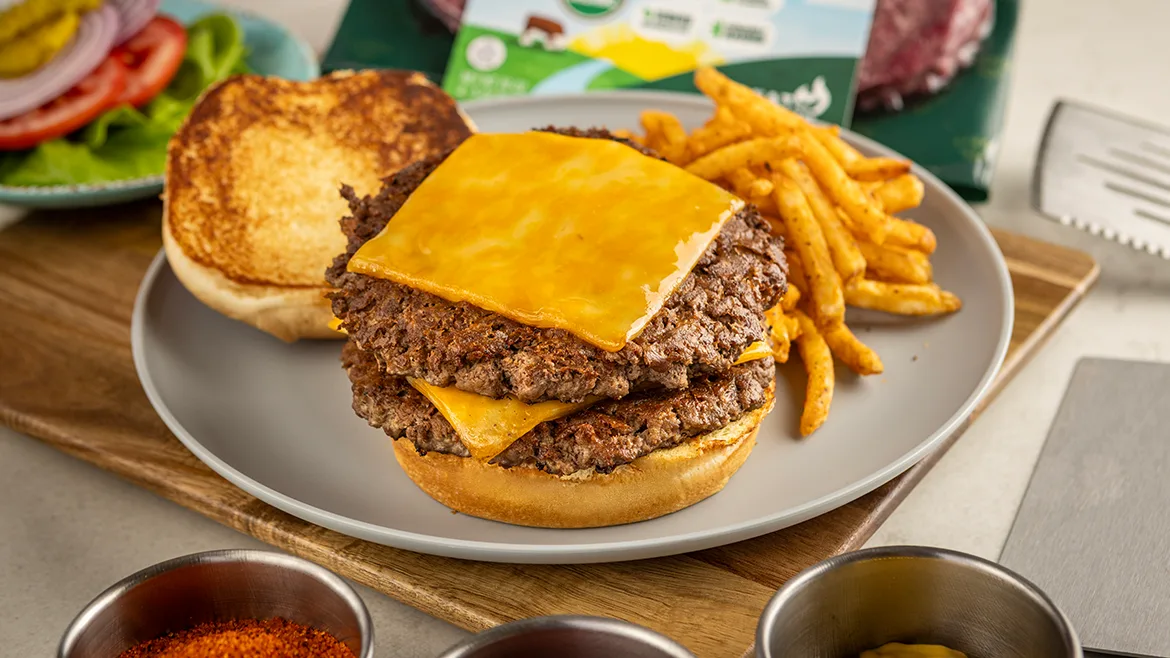
  • Double Charburger

    Premiumization drives burger category

    Shoppers seek out premium meat offerings to fulfill...
    Burgers
    By: Sammy Bredar
  • JJS Adult Pekin duck

    Poultry Report 2025: Convenience propels poultry at retail

    Despite continued economic pressures, the poultry...
    Meat and Poultry Industry News
    By: Sammy Bredar
You must login or register in order to post a comment.

Report Abusive Comment

Manage My Account
  • eMagazine Subscriptions
  • Manage My Preferences
  • Newsletters
  • Online Registration
  • Subscription Customer Service
  • Connect with The National Provisioner

More Videos

Sponsored Content

Sponsored Content is a special paid section where industry companies provide high quality, objective, non-commercial content around topics of interest to the The National Provisioner audience. All Sponsored Content is supplied by the advertising company and any opinions expressed in this article are those of the author and not necessarily reflect the views of The National Provisioner or its parent company, BNP Media. Interested in participating in our Sponsored Content section? Contact your local rep!

close
  • A smiling man carrying a grocery basket is reaching down to pick up a package of meat in a grocery store.
    Sponsored byPIC

    The Green Light: New Data Shows 12-to-1 Support for Pork from PRRS-Resistant Pigs

  • Close up of a grocery cart full of groceries, a cropped image of a couple pushing the cart and a blurred background of the vegetable aisle.
    Sponsored byPIC

    New Market Research Finds Consumers in Eight Key Pork Markets Are Likely to Purchase Pork from Gene-Edited Pigs

  • Close up of a young pig with a blurred background.
    Sponsored byPIC

    New Research Forecasts Significant Economic and Market Impacts with PRRS-Resistant Pig Adoption

Popular Stories

Spam Dog

Hormel rolls out Spam hot dog for foodservice applications

Various new Primal snack sticks on a table amongst pencils, apples, a pair of glasses, lunch bags and a water bottle.

Protein demand drives snacking occasions

Several cuts of beef, pork and chicken on a wooden board, cast iron pan and salt.

Validated thermal lethality data and a new tool for ensuring safety of RTE meats

2026 Top 100 Meat & Poultry Processors Report

Events

June 11, 2026

From Fresh to Frozen in 3 Minutes Flat: Unlocking the Secrets to Temperature Control

Join Tony Vacaro, Foods Industry Manager, and Emile Klein, Foods Market Strategy Manager at Air Products and Chemicals, Inc. , as they tackle key questions surrounding heat removal in food processing. 

January 1, 2030

Webinar Sponsorship Information

For webinar sponsorship information, visit www.bnpevents.com/webinars or email webinars@bnpmedia.com.

View All Submit An Event

Products

Food Crime: An Introduction to Deviance in the Food Industry

Food Crime: An Introduction to Deviance in the Food Industry

See More Products
From Fresh to Frozen in 3 Minutes Flat: Unlocking the Secrets to Temperature Control Webinar Sponsored by Air Products

Related Articles

  • Worker Pushing Utility Cart of Chubs

    The use of gums, binders and emulsifiers in meat and poultry

    See More
  • New website highlights the steps the agriculture community is taking to prepare for 2017 changes in the use of antibiotics

    See More
  • FAPC's research team that studied probiotics in live poultry

    Researching the use of probiotics in live poultry

    See More

Related Products

See More Products
  • GlobalData_logo_blue_header.png

    Frozen Meat (Meat) Market in the United States of America - Outlook to 2023...

  • GlobalData_logo_blue_header.png

    Fresh Meat (Counter) (Meat) Market in the United States of America - Outlook to 2023...

See More Products

Events

View AllSubmit An Event
  • November 8, 2012

    Food Plant of the Future: Hazardous Materials Storage and Use

    On demand Concerns over food safety, reliability, and traceability get a great deal of attention within plants.  Yet the highly regulated – but often-overlooked – concern for the storage and use of hazardous materials is also important.
View AllSubmit An Event
×

Stay ahead of the curve. Unlock a dose of cutting-edge insights.

Receive our premium content directly to your inbox.

SIGN-UP TODAY
  • RESOURCES
    • Advertise
    • Contact Us
    • Directories
    • Store
    • Want More
  • SIGN UP TODAY
    • Create Account
    • eMagazine
    • Newsletter
    • Customer Service
    • Manage Preferences
  • SERVICES
    • Marketing Services
    • Reprints
    • Market Research
    • List Rental
    • Survey/Respondent Access
  • STAY CONNECTED
    • LinkedIn
    • Facebook
    • YouTube
    • X (Twitter)
  • PRIVACY
    • PRIVACY POLICY
    • TERMS & CONDITIONS
    • DO NOT SELL MY PERSONAL INFORMATION
    • PRIVACY REQUEST
    • ACCESSIBILITY

Copyright ©2026. All Rights Reserved BNP Media, Inc. and BNP Media II, LLC.

Design, CMS, Hosting & Web Development :: ePublishing