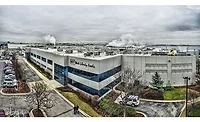
2015 Processor of the Year: Plant Profile
AdvancePierre Foods: A successful 'enterprise'
In conjunction with our 2015 Processor of the Year story, Andy Hanacek, editor-in-chief of The National Provisioner, traveled to Enid, Okla., to tour and visit AdvancePierre Foods’ Enterprise facility. While at the plant, Hanacek sat down with George Chappelle, senior vice president of Supply Chain, Mark Porter, vice president of Protein Operations, and Thomas Akin, Enterprise plant manager, to discuss some of the operational advancements that have propelled APF forward in recent years, starting with the Enterprise facility and moving outward through all of APF’s facilities. What follows is a portion of their conversation:
Plant at a glance
Company: AdvancePierre Foods
Facility: Enid, Okla., Enterprise facility
Size: 230,000 square feet
Constructed: 2008
No. of Lines: 4
1 Fry Line – Full Retail Items
2 Char Lines – Child Nutrition/Foodservice
1 Fry Line – Child Nutrition/Foodservice
Certification: SQF Level 3
No. of employees: 360
Product Mix: Foodservice, retail fully cooked protein
Beef: Burgers, meatballs, steak fingers and steak patties
Pork: BBQ rib patties
Poultry: Chicken breast patties, breaded tenders, popcorn & nuggets
Hanacek: Operationally, how has the Enterprise facility helped to drive the AdvancePierre Foods success story in the last year or so?
Porter: Our entire network of plants (not just Enterprise) has reached a point of consistency. That’s been a particular focus of ours, and we’ve put a lot of emphasis around it. Also, in the last year and a half, we’ve treated the 10 plants, with the integration of Caseyville coming on now, as a true network, where we look to produce the product on the optimal line among the grouping of plants, not just one plant, which is a relatively new sort of view for this company. … Each plant has its own mix. There is overlap from plant to plant, which is where we drive the benefit of the total network and leverage each plant’s strengths.
In addition, our Distribution Center is integrated with Enterprise, enabling the plant to direct-discharge into the warehouse without requiring any additional material handling. We made a significant investment in the DC last year, re-racking more than a third of the warehouse, substantially increasing the total storage capacity of our largest Distribution Center. This allowed us to collapse our logistics network from four points to three. All of this was done without missing a beat in terms of high-speed production.
Hanacek: When we walked through the plant, the meatballs were pointed out as an important product for the company and the plant. What investments has APF made to leverage the success of that product line?
Porter: Meatballs are a large, growing and attractive category with more than 200 million pounds consumed annually in foodservice and retail channels, with 4-5 percent growth per year. To capitalize on this trend, we invested in technology to make a better meatball, physically. Our salesforce has gone out and actively sold this improved meatball product to our customers. So our investment in technology and operational disciplines around it, coupled with the sales focus, has really fired up some decent growth in terms of volume and margin. It’s not one or the other; it’s both.
Hanacek: Are there any other products that this plant produces, specifically, that have seen good success based on changes made here — whether that’s through investment, renovation or operational discipline, as you mentioned above?
Chappelle: Our fried chicken business has really increased in output. Chicken, as you probably know, as a whole is up across the industry, probably related to high beef prices. … There’s plenty of chicken on the market, and our fried chicken business — whether it’s tender strips, chicken fried steak — has grown tremendously in this plant, thanks to a variety of productivity programs put in place. Year to date, our net sales are up 15 percent, and we expect this strength to continue.
Hanacek: What are some of the productivity initiatives driving that?
Chappelle: Our APF Way continuous-improvement program spans everything from ensuring proper oven temperatures to keeping an eye on line staffing and line rates; we’ve made some improvements in bagging, in terms of our flexibility on bags and what line can bag where; we went to a gusseted bag that runs a little more efficiently than the previous bag type we had. I could produce a laundry list of 10 to 15 things we’ve done — each individually probably not very significant, but when combined, they really helped the line perform much better than it has in the past.
Porter: I’d like to add that our Philly steaks products have also benefitted greatly. We had a record year last year, in terms of production out of the Philly plant — it was the first time the plant’s ever made over 60 million pounds of raw Philly in a year, and we’re on pace now to leave that record in the dust in 2015.
Chappelle: Quality has improved as well, statistically, not just at this plant but across the network. We’ve probably performed in the first quarter (2015) $1 million to $1.5 million better than prior year, based simply on quality being better, with less re-work, less waste, less product out of spec. That’s been a big focal point. Then, coming back to The APF Way, it’s literally how we drive everything. We always come back to it because it is the disciplined method we have to identify opportunities and track them to implementation, so that continues to be the primary source of all our continuous-improvement savings.
Hanacek: At a plant level, how has The APF Way affected the everyday workers here, how has it affected you, Tom, in what you do and how you kind of drive that down into the rest of your colleagues here?
Akin: It’s a holistic performance-management system that allows visibility into a multitude of different metrics, from cost per pound in different categories all the way to numbers that the employees understand on the line, such as throughput per hour, and staffing and labor usage. It gives us a common platform, a chance in meetings to actually get on the same page and talk about the same metrics, instead of things becoming anecdotal conversations. We’re talking about real numbers to drive performance, so it means the world, all the way down to the floor, and gets us on the same page. It’s been a tremendous asset to this company and this plant in particular, and it’s really just changed the way we communicate.
Hanacek: You took your position just over a year ago. What have you tried to bring to the table since you stepped into the role? What initiatives and results are you most proud of your team accomplishing in these 12-14 months you’ve been here?
Akin: One person can’t take credit for anything that the team is doing, but we set initiatives and the priorities starting with safety of the associates. We’ve been able to improve our [Total Incident Rate] numbers by 50 percent, year over year, so far this year. Another priority has been our quality to our customers, and we’ve seen tremendous improvement in the quality aspects coming out of this plant, from customer complaints to defects per million pounds that we produce. We’ve seen defects per million improve significantly from last year.
Hanacek: What are some of the major automation initiatives undertaken here at Enterprise that really helped improve the quality and efficiency of the plant?
Porter: To the point of automation, and expanding that to include any of the equipment that we’ve added, our philosophy has been around skating to where we think the puck will be, as opposed to where it is now, and making sure that we have the plants positioned to meet customer demand and forecasted trends. I would point back to The APF Way, which opens up those kinds of conversations company-wide, to help us plan ahead. The meatball line has been one example on which we’ve made some significant investment, with our forming technology and our cooking technology. We’ve upgraded the maintenance systems around all of our cooking technology, which was nothing new in terms of cooking, but rather about bringing a different degree of discipline to the operations. It’s also an investment in the people, and it brings a more consistent, higher-quality product through the ovens and the fryers.
As far as what’s coming, we’ve been working to add another degree of automation to lower costs even further. We have one automatic palletizer at the plant, and [at presstime] we’re about to add another. We have one line out of four that doesn’t have automated case-packing technology, so we’re going to close that gap and automate that last line.
Hanacek: What other initiatives do you have that you’re working on that are coming to fruition in the very near future?
Porter: At the Philly plant, we just finished a major upgrade to speed up one of our product lines. It’s been so successful that we’re moving quickly to upgrade the other four lines. It’s exceeding expectations and giving us more throughput with the same labor or less. That’s why [even though] we had a record-setting year last year, we’re on pace to beat that this year, and we want to make sure that next year, we’re able to produce in the 70-million-pounds-plus range.
Looking for a reprint of this article?
From high-res PDFs to custom plaques, order your copy today!