Provisioner logo
Provisioner logo
search
cart
facebook twitter linkedin youtube
  • Sign In
  • Create Account
  • Sign Out
  • My Account
Provisioner logo
Provisioner logo
  • NEWS
    • Industry News
    • Supplier News
    • Case Studies
    • Recalls
    • Regulations
    • New Consumer Products
  • EXCLUSIVES
    • Newsletters
    • Source Book
    • Sponsored Insights
    • Events
    • Webinars
    • Classifieds
    • White Papers
    • Provisioner Store
    • Market Research
  • MEAT PROCESSING
    • SUSTAINABILITY
    • Processing
    • Packaging
    • Ingredients
    • Formulation
    • Food Safety
    • Special Reports
    • Commentary
  • PROFILES
    • Processor Profiles
    • Processor of the Year
    • Top 100 Processors
  • MEDIA
    • Videos
    • Podcasts
  • DIRECTORY
  • MIHOF
  • INDEPENDENT PROCESSOR
  • EMAG
    • eMagazine
    • ARCHIVE ISSUES
    • Contact
    • Advertise
  • JOIN!
Meat and Poultry Industry NewsChickenTurkeyExpert Commentary

Poultry Perspectives

Emissions exemption vacated, hurting family farms
By John Starkey
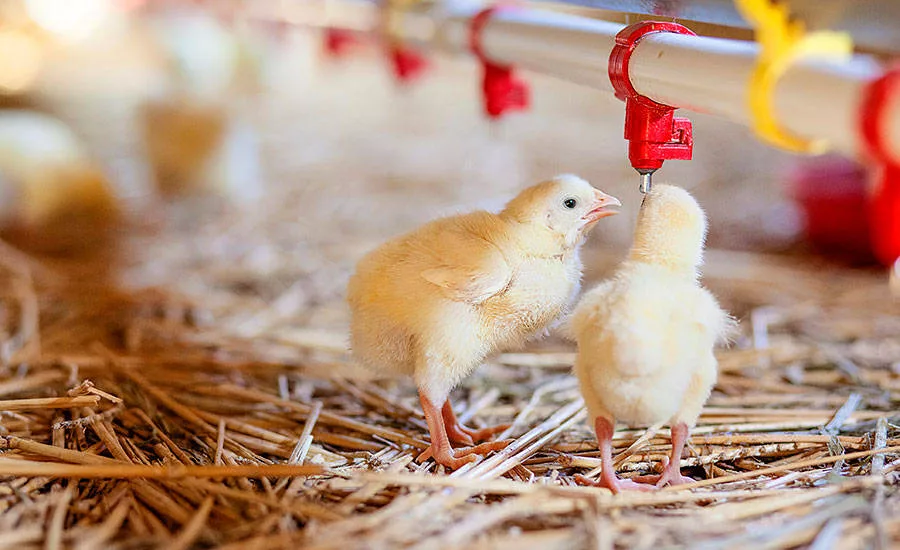
Reporting regulations pose to unnecessarily burden poultry producers who are predominantly relatively small, family-owned and -operated farms.
June 9, 2017

More than a decade ago, animal agriculture secured a hard-fought reporting exemption under two chemical release laws, the Comprehensive Environmental Response Compensation and Liability Act (CERCLA), passed in 1980, and the Emergency Planning and Community Right to Know Act (EPCRA), passed in 1986.

On April 11, 2017, the U.S. Court of Appeals for the D.C. Circuit vacated this exemption, tortuously dragging animal agriculture back into pointless reporting requirements. Animal agriculture needs to be aware of and develop a comprehensive plan to address this adverse decision. The good news is that the fundamental basis for granting the exemption continues today:

•  Emissions from poultry houses pose little or no risk to public health. In the last 10 to 15 years, significantly more research on emissions from modern animal agriculture housing systems, including poultry housing, has been conducted. The industry participated in the “Air Consent Agreement” (ACA) that generated data across the country. “Look up” tables were originally envisioned under the ACA, but the reality proved far too difficult for “look up” tables. But on the other hand, research such as “Ammonia Outside of Broiler Houses” (Fairchild, et al, 2009 J  Applied Poultry Research, IS: 630-639), demonstrated that a mere 200 feet from a broiler house fan exhaust, mean ammonia concentrations were below 1.6 ppm all of the time, well below levels for human concern or occupational exposure limits.  

•  Emergency response to releases from poultry houses isn’t feasible. Under these laws, if a poultry facility releases 100 pounds of ammonia in 24 hours — the most likely case for a poultry facility — emergency reporting requirements kick in. The farmer is required to notify the National Response Center (NRC), as well as the State Emergency Response Commission (SERC), and if appropriate, the Local Emergency Planning Committee (LEPC) — all as soon as possible. But the next question is: What will happen at the farm after such a report?  And the answer, still today, is that absolutely nothing will happen. The local fire department or SERC is not going to send out its fire truck or hazardous-materials response team, or anything else, in response to the gradual release of ammonia from manure breakdown on a chicken farm over the prior 24 hours.

•  Emergency reporting would unnecessarily burden state and local response systems. The sheer volume of calls to the NRC, SERCs and LEPCs would stress those systems, and more importantly, divert resources from an actual event that does immediately threaten the health and welfare of the general public, where an emergency response is required.

•  Emergency Response unnecessarily burdens poultry producers who are predominantly relatively small, family-owned and -operated farms. Imagine the poultry farmer now having to make a daily decision whether the RQ (Reportable Quantity) for ammonia was exceeded from a facility and then documenting the decision to report in case there is a later lawsuit. Remember, there are no “look up” tables as envisioned by the ACA. The producer is placed in the position of making an engineering extrapolation which may or may not be accurate for a given farm on a given day, and the consequences and penalties of an incorrect calculation — despite the best of intentions — could easily undermine the farm’s fiscal future.

The Environmental Protection Agency (EPA) argued similar points as cited above in the court case just completed, defending the validity of this exemption. U.S. Poultry & Egg Association and the National Pork Producers Council intervened in the case to ensure animal agriculture was heard, but ultimately the efforts to defend the exemption fell short, and these reporting requirements may soon be felt by all U.S. animal producers. 

This is a case in which the additional regulatory burdens, while garnering no quantifiable environmental benefit, will most certainly put a cost on the producer. The irony here is that the environmental plaintiffs bemoan “Big Ag” and “factory farms.” Yet, larger producers are more capable of affording services needed to comply with this regulation than the smaller producer. So, in the end, which operation is going to be more efficient, more capable of remaining viable? The answer, of course, is the larger producer — exactly opposite the intended effect for the plaintiffs.

Stay tuned as animal agriculture tries to untie this knot yet again. NP

KEYWORDS: animal agriculture environmental impact

Share This Story

Looking for a reprint of this article?
From high-res PDFs to custom plaques, order your copy today!


John Starkey, P.E., is president of the U.S. Poultry & Egg Association. Contact him for more information at Jstarkey@uspoultry.org.

Recommended Content

JOIN TODAY
to unlock your recommendations.

Already have an account? Sign In

  • Double Charburger

    Premiumization drives burger category

    Shoppers seek out premium meat offerings to fulfill...
    Special Reports
    By: Sammy Bredar
  • JJS Adult Pekin duck

    Poultry Report 2025: Convenience propels poultry at retail

    Despite continued economic pressures, the poultry...
    Turkey
    By: Sammy Bredar
You must login or register in order to post a comment.

Report Abusive Comment

Manage My Account
  • eMagazine Subscriptions
  • Manage My Preferences
  • Newsletters
  • Online Registration
  • Subscription Customer Service
  • Connect with The National Provisioner

More Videos

Sponsored Content

Sponsored Content is a special paid section where industry companies provide high quality, objective, non-commercial content around topics of interest to the The National Provisioner audience. All Sponsored Content is supplied by the advertising company and any opinions expressed in this article are those of the author and not necessarily reflect the views of The National Provisioner or its parent company, BNP Media. Interested in participating in our Sponsored Content section? Contact your local rep!

close
  • A smiling man carrying a grocery basket is reaching down to pick up a package of meat in a grocery store.
    Sponsored byPIC

    The Green Light: New Data Shows 12-to-1 Support for Pork from PRRS-Resistant Pigs

  • Close up of a grocery cart full of groceries, a cropped image of a couple pushing the cart and a blurred background of the vegetable aisle.
    Sponsored byPIC

    New Market Research Finds Consumers in Eight Key Pork Markets Are Likely to Purchase Pork from Gene-Edited Pigs

  • Close up of a young pig with a blurred background.
    Sponsored byPIC

    New Research Forecasts Significant Economic and Market Impacts with PRRS-Resistant Pig Adoption

Popular Stories

Various new Primal snack sticks on a table amongst pencils, apples, a pair of glasses, lunch bags and a water bottle.

Protein demand drives snacking occasions

Spam Dog

Hormel rolls out Spam hot dog for foodservice applications

Several cuts of beef, pork and chicken on a wooden board, cast iron pan and salt.

Validated thermal lethality data and a new tool for ensuring safety of RTE meats

2026 Top 100 Meat & Poultry Processors Report

Events

January 1, 2030

Webinar Sponsorship Information

For webinar sponsorship information, visit www.bnpevents.com/webinars or email webinars@bnpmedia.com.

View All Submit An Event

Products

Food Crime: An Introduction to Deviance in the Food Industry

Food Crime: An Introduction to Deviance in the Food Industry

See More Products
From Fresh to Frozen in 3 Minutes Flat: Unlocking the Secrets to Temperature Control Webinar Sponsored by Air Products

Related Articles

  • Poultry House Emissions

    Be prepared: Emissions reporting battle ignores reason

    See More
  • Colorado Department of Agriculture logo

    Colorado issues support for small retailers, family farms

    See More
  • Slagel Family Farms launches dog food line

    See More
×

Stay ahead of the curve. Unlock a dose of cutting-edge insights.

Receive our premium content directly to your inbox.

SIGN-UP TODAY
  • RESOURCES
    • Advertise
    • Contact Us
    • Directories
    • Store
    • Want More
  • SIGN UP TODAY
    • Create Account
    • eMagazine
    • Newsletter
    • Customer Service
    • Manage Preferences
  • SERVICES
    • Marketing Services
    • Reprints
    • Market Research
    • List Rental
    • Survey/Respondent Access
  • STAY CONNECTED
    • LinkedIn
    • Facebook
    • YouTube
    • X (Twitter)
  • PRIVACY
    • PRIVACY POLICY
    • TERMS & CONDITIONS
    • DO NOT SELL MY PERSONAL INFORMATION
    • PRIVACY REQUEST
    • ACCESSIBILITY

Copyright ©2026. All Rights Reserved BNP Media, Inc. and BNP Media II, LLC.

Design, CMS, Hosting & Web Development :: ePublishing