Provisioner logo
Provisioner logo
search
cart
facebook twitter linkedin youtube
  • Sign In
  • Create Account
  • Sign Out
  • My Account
Provisioner logo
Provisioner logo
  • NEWS
    • Industry News
    • Supplier News
    • Case Studies
    • Recalls
    • Regulations
    • New Consumer Products
  • EXCLUSIVES
    • Newsletters
    • Source Book
    • Sponsored Insights
    • Events
    • Webinars
    • Classifieds
    • White Papers
    • Provisioner Store
    • Market Research
  • MEAT PROCESSING
    • SUSTAINABILITY
    • Processing
    • Packaging
    • Ingredients
    • Formulation
    • Food Safety
    • Special Reports
    • Commentary
  • PROFILES
    • Processor Profiles
    • Processor of the Year
    • Top 100 Processors
  • MEDIA
    • Videos
    • Podcasts
  • DIRECTORY
  • MIHOF
  • INDEPENDENT PROCESSOR
  • EMAG
    • eMagazine
    • ARCHIVE ISSUES
    • Contact
    • Advertise
  • JOIN!
Meat and Poultry Processing

Processing Tech

Tight labor market pushes processors toward automation of trimming and deboning operations

Not in the 'manual'
By Elizabeth Fuhrman
Poultry Trimming and Deboning Operation
October 24, 2018

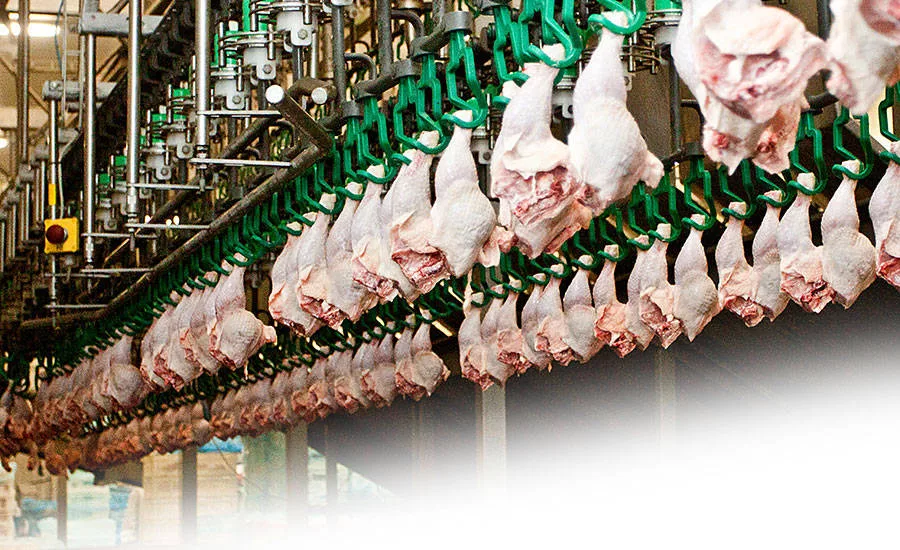
Fixed automation is the most common type of automation used in trimming and deboning. For example, West Liberty Foods (WLF), in West Liberty, Iowa, uses automation for back half processing, such as back, thigh and drum separation and thigh deboning. For WLF, the biggest advantage for automated processing is the reduction in labor required to debone the whole chickens without giblets (WOGs). Associated with this is a reduction in health claims due to a lower overall workforce, says Joe Swanson, vice president of operations. 

“Front-half WOG deboning continues to advance with improvements in the yield attained versus the hand deboning process,” he says. “As this gap closes, the automated process will surpass the manual process.” 

For turkey deboning, the primary challenge is the variability in WOG size within an individual flock. “For WLF, an additional challenge is fitting an automated process within an existing facility and the disruption to the harvest schedule a change would bring,” Swanson says. 

Still, Swanson believes that the tough labor market conditions will drive harvest companies toward automation, even at the expense of a portion of current yield. 

“Good advancements are being made on the deboning portion of our process,” he says. “I believe improvement in high-speed vision technology will aid turkey deboning and make inroads on the evisceration process.” 


Robotic cutting and deboning

Advancements are occurring in automation and robotics in this processing area. The difference between fixed automation and robotics is fixed automation uses mechanical components that cannot be adjusted much while robotics allows for flexibility. For example, a processor’s fixed automation system might be able to accommodate small, medium and large birds. At the beginning of a shift, though, a processor might need to sort the birds into different sizes and run the birds through on a particular setting that was adjusted manually to be able to handle the size. 

“The machines that are out there right now by these big equipment manufacturers can’t treat each bird as being unique,” explains Ai-Ping Hu, a principal research engineer at Georgia Tech Research Institute (GTRI), Atlanta. “They’re using fixed automation solutions. That’s really different from how we’re treating the problem in that we’re using a robotic system that basically can replicate what a human arm can do. Our robots look like human arms with a knife on the end of it.” 

GTRI’s robotic systems use machine vision to replicate how people would debone birds and use force sensors to see how hard to press the knife. Combining that information, GTRI’s intelligent cutting systems are able to develop a unique knife path for the robot to follow and get the most meat from each unique carcass.  

“We have cases where processors will get the fixed automation machines inside their plant, and they’ll run them for a few years,” Hu says. “Then what ends up happening is because they’re so limited on how much they can adjust to the unique carcass, they end up leaving a high yield on the carcass. They end up taking these machines out and putting people back in because people can get more yield from that carcass.” 

Currently, GTRI is working with chicken carcasses, but its robotic systems could apply to any carcasses with a software change. 

While people are still the best at performing cutting and deboning skills currently, in terms of being flexible enough to make the different types of operations that need to be done to perform the task, Wayne Daley, a principal research engineer at GTRI, says the issue is getting workers to perform the task for eight hours at a very efficient level.  

“We definitely see that we need to figure out a way to reduce the burden on these folks,” he explains. “What has happened is we think now with a combination of different sensing technology and computing power, we think we are close to be able to get something there to help people to do a better job with what they are doing.” 

GTRI’s first robotic prototype was much slower than the human speed of deboning about 40 birds a minute. The research group currently is working on a new version that will be comparable to human speed. 

Still, Daley is not sure that machines are going to be able to perform all tasks in the cutting and deboning process.  

“The anticipated solution is going to be a combination of machines and people,” he explains. “There is this whole area called collaborative robotics where you look at how you design the robots to work with people. You have both people supporting the robots and robots helping the people and how best to implement those types of systems. People are thinking about how best to do that.” 

While yield and labor issues will still be concerns for processors in the near future, the good news is with how ubiquitous robotics and visions systems are becoming, costs are coming down for the technology. GTRI calculates costs for investing in robotic solutions for deboning chickens can be regained in a year or two, if not sooner.  NP

KEYWORDS: deboning trimmings

Share This Story

Looking for a reprint of this article?
From high-res PDFs to custom plaques, order your copy today!

Elizabeth christenson 200x200
Elizabeth Fuhrman is a contributing writer.

Recommended Content

JOIN TODAY
to unlock your recommendations.

Already have an account? Sign In

  • Double Charburger

    Premiumization drives burger category

    Shoppers seek out premium meat offerings to fulfill...
    Ingredients
    By: Sammy Bredar
  • JJS Adult Pekin duck

    Poultry Report 2025: Convenience propels poultry at retail

    Despite continued economic pressures, the poultry...
    Meat and Poultry Industry News
    By: Sammy Bredar
You must login or register in order to post a comment.

Report Abusive Comment

Manage My Account
  • eMagazine Subscriptions
  • Manage My Preferences
  • Newsletters
  • Online Registration
  • Subscription Customer Service
  • Connect with The National Provisioner

More Videos

Sponsored Content

Sponsored Content is a special paid section where industry companies provide high quality, objective, non-commercial content around topics of interest to the The National Provisioner audience. All Sponsored Content is supplied by the advertising company and any opinions expressed in this article are those of the author and not necessarily reflect the views of The National Provisioner or its parent company, BNP Media. Interested in participating in our Sponsored Content section? Contact your local rep!

close
  • A smiling man carrying a grocery basket is reaching down to pick up a package of meat in a grocery store.
    Sponsored byPIC

    The Green Light: New Data Shows 12-to-1 Support for Pork from PRRS-Resistant Pigs

  • Close up of a grocery cart full of groceries, a cropped image of a couple pushing the cart and a blurred background of the vegetable aisle.
    Sponsored byPIC

    New Market Research Finds Consumers in Eight Key Pork Markets Are Likely to Purchase Pork from Gene-Edited Pigs

  • Close up of a young pig with a blurred background.
    Sponsored byPIC

    New Research Forecasts Significant Economic and Market Impacts with PRRS-Resistant Pig Adoption

Popular Stories

Spam Dog

Hormel rolls out Spam hot dog for foodservice applications

Various new Primal snack sticks on a table amongst pencils, apples, a pair of glasses, lunch bags and a water bottle.

Protein demand drives snacking occasions

Several cuts of beef, pork and chicken on a wooden board, cast iron pan and salt.

Validated thermal lethality data and a new tool for ensuring safety of RTE meats

2026 Top 100 Meat & Poultry Processors Report

Events

June 11, 2026

From Fresh to Frozen in 3 Minutes Flat: Unlocking the Secrets to Temperature Control

Join Tony Vacaro, Foods Industry Manager, and Emile Klein, Foods Market Strategy Manager at Air Products and Chemicals, Inc. , as they tackle key questions surrounding heat removal in food processing. 

January 1, 2030

Webinar Sponsorship Information

For webinar sponsorship information, visit www.bnpevents.com/webinars or email webinars@bnpmedia.com.

View All Submit An Event

Products

Food Crime: An Introduction to Deviance in the Food Industry

Food Crime: An Introduction to Deviance in the Food Industry

See More Products
From Fresh to Frozen in 3 Minutes Flat: Unlocking the Secrets to Temperature Control Webinar Sponsored by Air Products

Related Articles

  • Meat Trimming and Deboning Tool

    Banking on better trimming, deboning

    See More
  • Gainco introduces the Yieldscan Rapid Frame Analyzer for poultry deboning operations

    See More
  • Streamlined Production

    Tight labor markets can make a processing plant equipment upgrade an attractive consideration

    See More

Related Products

See More Products
  • GlobalData_logo_blue_header.png

    Frozen Meat (Meat) Market in the United States of America - Outlook to 2023...

  • GlobalData_logo_blue_header.png

    Cooked Meats - Packaged (Meat) Market in the United States of America - Outlook to 2023

See More Products

Events

View AllSubmit An Event
  • September 9, 2010

    Food Plant of the Future: Surviving and Thriving with Automation

    On Demand: Hixson Architecture Engineering Interiors presents Surviving and Thriving with Automation.
  • April 26, 2011

    Institute of Packaging Professionals Packaging Automation Forum

    Our sixth annual Packaging Automation Forum will feature peer-to-peer education about how to increase productivity, flexibility and performance using state-of-the-art packaging controls and information technology.
View AllSubmit An Event

Related Directories

  • Missouri Assn. of Meat Processors

    The Missouri Association of Meat Processors was founded in 1939, by a small group of meat business operators who were looking for a way to promote their products and businesses. MAMP helps members expand into new markets and learn new skills. Its dual mission of protection and education for members are enhanced by unique marketing opportunities available through the Association. MAMP provides 10 newsletters a year and provides training to keep the small processor ahead of the trends.
  • American Assn. of Meat Processors

    The American Association of Meat Processors (AAMP) is North America’s largest meat trade organization. Membership includes more than 1,600 medium-sized and smaller meat, poultry, and food businesses: slaughterers, packers, processors, wholesalers, in-home food service business, retailers, deli and catering operators, and industry suppliers.
  • SPI Automation

    SPI Automation creates and integrates custom solutions for manufacturers to automate their operations. From robotics to integrated systems and the controls that power them, we design, manufacture, install, and support solutions to augment human potential.
×

Stay ahead of the curve. Unlock a dose of cutting-edge insights.

Receive our premium content directly to your inbox.

SIGN-UP TODAY
  • RESOURCES
    • Advertise
    • Contact Us
    • Directories
    • Store
    • Want More
  • SIGN UP TODAY
    • Create Account
    • eMagazine
    • Newsletter
    • Customer Service
    • Manage Preferences
  • SERVICES
    • Marketing Services
    • Reprints
    • Market Research
    • List Rental
    • Survey/Respondent Access
  • STAY CONNECTED
    • LinkedIn
    • Facebook
    • YouTube
    • X (Twitter)
  • PRIVACY
    • PRIVACY POLICY
    • TERMS & CONDITIONS
    • DO NOT SELL MY PERSONAL INFORMATION
    • PRIVACY REQUEST
    • ACCESSIBILITY

Copyright ©2026. All Rights Reserved BNP Media, Inc. and BNP Media II, LLC.

Design, CMS, Hosting & Web Development :: ePublishing