Provisioner logo
Provisioner logo
search
cart
facebook twitter linkedin youtube
  • Sign In
  • Create Account
  • Sign Out
  • My Account
Provisioner logo
Provisioner logo
  • NEWS
    • Industry News
    • Supplier News
    • Case Studies
    • Recalls
    • Regulations
    • New Consumer Products
  • EXCLUSIVES
    • Newsletters
    • Source Book
    • Sponsored Insights
    • Events
    • Webinars
    • Classifieds
    • White Papers
    • Provisioner Store
    • Market Research
  • MEAT PROCESSING
    • SUSTAINABILITY
    • Processing
    • Packaging
    • Ingredients
    • Formulation
    • Food Safety
    • Special Reports
    • Commentary
  • PROFILES
    • Processor Profiles
    • Processor of the Year
    • Top 100 Processors
  • MEDIA
    • Videos
    • Podcasts
  • DIRECTORY
  • MIHOF
  • INDEPENDENT PROCESSOR
  • EMAG
    • eMagazine
    • ARCHIVE ISSUES
    • Contact
    • Advertise
  • JOIN!
PackagingSeafood

Packaging Tech

Study reveals problems with fish mislabeling in Canada

The challenges of labeling aren't limited to ingredients in products — even proper identification of species has become a tremendous problem, explains researchers.
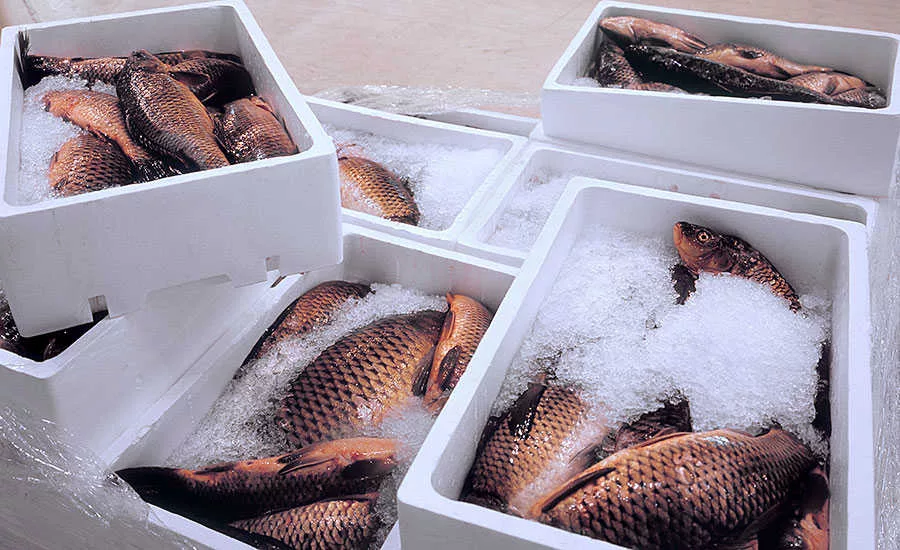
Packages of Fish in Ice
April 24, 2019

Canada continues to have a problem with fish mislabeling, and the problem persists throughout the supply chain, according to a first-ever study produced by University of Guelph (U of G), Canada.

In this study, U of G researchers found 32% of fish were mislabeled, and the number of incorrectly identified samples became compounded as the samples moved through the food system.

“We’ve been doing seafood fraud studies for a decade,” says professor Robert Hanner, the study’s lead author. “We know there are problems. But, this is the first study to move beyond that and look at where the problems are happening throughout the food supply chain.”

The findings reveal that mislabeling happens before fish are imported into Canada, as well as throughout the supply chain.

“It seems it’s not isolated to foreign markets, but it’s also happening at home. The Canadian Food Inspection Agency (CFIA) has partnered with us to actively find solutions to this persistent problem,” says Hanner.

“As a science-based regulator, the CFIA works with an array of partners to address mislabeling and promote compliance within industry,” says Aline Dimitri, deputy chief food safety officer of CFIA, Canada. “It is only through our collective efforts that we will be able to tackle this global issue.”

U of G researchers examined 203 samples from 12 key targeted species collected from various importers, processing plants and retailers in Ontario, Canada. Of the samples, 141 (69.5%) were from retailers, 51 (25%) from importers and 11 (5.5%) from processing plants.

Researchers identified the samples using DNA barcoding, which was developed at U of G, and allows scientists to determine species of organisms using a short, standardized region of genetic material.

The findings revealed 32% of the samples overall were mislabeled. The mislabeling rate was 17.6% at the import stage, 27.3% at processing plants and 38.1% at retailers.

“The higher mislabeling rate in samples collected from retailers compared to that for samples collected from importers indicates the role of distribution and re-packaging in seafood mislabeling,” says Hanner. “It’s either economically motivated, meaning cheaper fish are being purposely mislabeled as more expensive fish. Or, it’s inconsistent labelling regulations between countries and the use of broader common names being used to label fish instead of scientific species names that are leading to mislabeling.”

In both Canada and the United States, fish are labeled using a common name rather than a specific scientific name. For example, a variety of species may be sold as tuna, although different species can significantly vary in price.

“It creates ambiguity and opens the door for fraud or honest mistakes,” Hanner adds. “It also makes it more difficult to track species at risk or indicate if a fish is a species that has higher mercury content. At the end of the day, Canadian consumers don’t really know what type of fish they are eating.”
European countries that recently included species names along with common names have seen less fraud.

“The next step would be to follow one package from import to wholesale to retail and see what happens,” Hanner says. NP


Editor’s Note: This story originally appeared at www.refrigeratedfrozenfood.com, a sister publication of The National Provisioner.

KEYWORDS: Canada mislabeling

Share This Story

Looking for a reprint of this article?
From high-res PDFs to custom plaques, order your copy today!

Recommended Content

JOIN TODAY
to unlock your recommendations.

Already have an account? Sign In

  • Double Charburger

    Premiumization drives burger category

    Shoppers seek out premium meat offerings to fulfill...
    Meat and Poultry Industry News
    By: Sammy Bredar
  • JJS Adult Pekin duck

    Poultry Report 2025: Convenience propels poultry at retail

    Despite continued economic pressures, the poultry...
    Turkey
    By: Sammy Bredar
You must login or register in order to post a comment.

Report Abusive Comment

Manage My Account
  • eMagazine Subscriptions
  • Manage My Preferences
  • Newsletters
  • Online Registration
  • Subscription Customer Service
  • Connect with The National Provisioner

More Videos

Sponsored Content

Sponsored Content is a special paid section where industry companies provide high quality, objective, non-commercial content around topics of interest to the The National Provisioner audience. All Sponsored Content is supplied by the advertising company and any opinions expressed in this article are those of the author and not necessarily reflect the views of The National Provisioner or its parent company, BNP Media. Interested in participating in our Sponsored Content section? Contact your local rep!

close
  • A smiling man carrying a grocery basket is reaching down to pick up a package of meat in a grocery store.
    Sponsored byPIC

    The Green Light: New Data Shows 12-to-1 Support for Pork from PRRS-Resistant Pigs

  • Close up of a grocery cart full of groceries, a cropped image of a couple pushing the cart and a blurred background of the vegetable aisle.
    Sponsored byPIC

    New Market Research Finds Consumers in Eight Key Pork Markets Are Likely to Purchase Pork from Gene-Edited Pigs

  • Close up of a young pig with a blurred background.
    Sponsored byPIC

    New Research Forecasts Significant Economic and Market Impacts with PRRS-Resistant Pig Adoption

Popular Stories

Spam Dog

Hormel rolls out Spam hot dog for foodservice applications

Various new Primal snack sticks on a table amongst pencils, apples, a pair of glasses, lunch bags and a water bottle.

Protein demand drives snacking occasions

Several cuts of beef, pork and chicken on a wooden board, cast iron pan and salt.

Validated thermal lethality data and a new tool for ensuring safety of RTE meats

2026 Top 100 Meat & Poultry Processors Report

Events

June 11, 2026

From Fresh to Frozen in 3 Minutes Flat: Unlocking the Secrets to Temperature Control

Join Tony Vacaro, Foods Industry Manager, and Emile Klein, Foods Market Strategy Manager at Air Products and Chemicals, Inc. , as they tackle key questions surrounding heat removal in food processing. 

January 1, 2030

Webinar Sponsorship Information

For webinar sponsorship information, visit www.bnpevents.com/webinars or email webinars@bnpmedia.com.

View All Submit An Event

Products

Food Crime: An Introduction to Deviance in the Food Industry

Food Crime: An Introduction to Deviance in the Food Industry

See More Products
From Fresh to Frozen in 3 Minutes Flat: Unlocking the Secrets to Temperature Control Webinar Sponsored by Air Products

Related Articles

  • News Brief Feature

    Egg production study reveals vast reduction in environmental impact over the past 50 years

    See More
  • Jennie-O brand Thanksgiving consumer survey image

    Jennie-O study reveals state-by-state consumer insights on Thanksgiving meal traditions

    See More
  • Eagle Protect logo

    Study reveals glove pathogen threat to healthcare and food industries

    See More

Related Products

See More Products
  • GlobalData_logo_blue_header.png

    Fish & Seafood in the United States

  • meat.jpg

    Non-Thermal Processing Technologies for the Meat, Fish, and Poultry Industries

See More Products

Events

View AllSubmit An Event
  • August 31, 2022

    Improve Freezing Performance and Quality with Companion Cryogenic Systems

    On Demand The spiral freezer will remain the workhorse of your freezing operation, but using a cryogenic system in the proper location with optimized features for marinated products,  steamy, cooked products, or fast-growing products can reduce defrost downtime, reduce sanitation, improve yield, reduce waste, reduce batch times, and more.
View AllSubmit An Event
×

Stay ahead of the curve. Unlock a dose of cutting-edge insights.

Receive our premium content directly to your inbox.

SIGN-UP TODAY
  • RESOURCES
    • Advertise
    • Contact Us
    • Directories
    • Store
    • Want More
  • SIGN UP TODAY
    • Create Account
    • eMagazine
    • Newsletter
    • Customer Service
    • Manage Preferences
  • SERVICES
    • Marketing Services
    • Reprints
    • Market Research
    • List Rental
    • Survey/Respondent Access
  • STAY CONNECTED
    • LinkedIn
    • Facebook
    • YouTube
    • X (Twitter)
  • PRIVACY
    • PRIVACY POLICY
    • TERMS & CONDITIONS
    • DO NOT SELL MY PERSONAL INFORMATION
    • PRIVACY REQUEST
    • ACCESSIBILITY

Copyright ©2026. All Rights Reserved BNP Media, Inc. and BNP Media II, LLC.

Design, CMS, Hosting & Web Development :: ePublishing