Provisioner logo
Provisioner logo
search
cart
facebook twitter linkedin youtube
  • Sign In
  • Create Account
  • Sign Out
  • My Account
Provisioner logo
Provisioner logo
  • NEWS
    • Industry News
    • Supplier News
    • Case Studies
    • Recalls
    • Regulations
    • New Consumer Products
  • EXCLUSIVES
    • Newsletters
    • Source Book
    • Sponsored Insights
    • Events
    • Webinars
    • Classifieds
    • White Papers
    • Provisioner Store
    • Market Research
  • MEAT PROCESSING
    • SUSTAINABILITY
    • Processing
    • Packaging
    • Ingredients
    • Formulation
    • Food Safety
    • Special Reports
    • Commentary
  • PROFILES
    • Processor Profiles
    • Processor of the Year
    • Top 100 Processors
  • MEDIA
    • Videos
    • Podcasts
  • DIRECTORY
  • MIHOF
  • INDEPENDENT PROCESSOR
  • EMAG
    • eMagazine
    • ARCHIVE ISSUES
    • Contact
    • Advertise
  • JOIN!
Supplier News

Implement an Integrated Pest Management program to control flies in poultry operations

By Industry News
The National Provisioner Supplier News
June 21, 2021

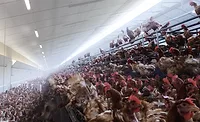
Flies can negatively impact poultry flocks, causing economic loss from increased disease spread, mortality and food safety concerns. While house flies and other non-biting flies do not cause direct injury to birds, they do transfer pathogens and other bacteria onto the legs, wings and other body parts of poultry within a flock. It takes strict management strategies to help with fly control. Producers should follow these techniques, which can be part of a well-planned Integrated Pest Management (IPM) program, to better defend their poultry operations against insect-borne threats.

Inspect the type of flies and their life cycle
The first step of a successful IPM program is to understand the types of flies that can impact an operation. There are two types of flies that can cause major damage to a poultry flock: the house fly (Musca domestica Linnaeus) and the stable fly (Stomoxys calcitrans Linnaeus). The house fly is found in and around barns and feeds on waste, especially garbage and animal feces. The stable fly often attaches to the birds’ legs and belly in an effort to get a blood meal.

“The fly season varies depending on climatic conditions,” said Richard Hack, an Elanco pest management consultant. “Flies can be a year-round problem in enclosed animal housing, so it’s important that producers start an Integrated Pest Management program regularly, preferably weekly, to target flies as both adults and eggs/larvae.”

Flies pass through four life cycle stages: egg, larva, pupa and adult fly. The lifespan of flies is approximately 15 to 30 days, but it can vary depending on environmental factors like temperature.1 Studies show that 80% of an insect load is due to eggs and larva and 20% of the problem is due to adults.2 This is also called the Silent Army Rule because for every adult observed, there are likely four eggs/larva present as well.

Manage manure, water and moisture in the poultry house
Sanitation is an important and effective measure against flies. This includes immediately removing manure, feed, litter, broken eggs and mortality on which flies lay eggs. The litter that remains in the poultry house should be dry. To help reduce water and moisture in the poultry house, producers should make sure to manage the height of drinking systems and check water flow rates to ensure there are no leaks.

Implement fly screens or fans
Flies can also be reduced from the house with the use of screens or extraction fans. Fans with an outward flow can prevent flies from entering the poultry house. In addition, screens should be placed in windows, entrance doors and inlets.

Use chemical methods to manage resistance
An effective method to reduce fly burden is insecticides. The four basic fly control insecticides are      larvicides, residual adulticides, baits and contract adulticides. Larvicides, including granule or spray, are      applied to manure or high organic material to control larvae in the breeding material. Adulticides, including sprays or baits, can also be applied to control pests.

“As a proactive approach, use larvicides in breeding areas to delay and reduce adult populations,” said Hack. “Continue larvicides during the season to keep adult populations low. Producers can add residual adulticides when adult fly populations increase and use fogger treatments during fly explosions.”

According to Hack, producers should also follow these general management tips:

  • Avoid unnecessary insecticide applications.
  • Use monitoring efforts to know when to apply treatments.
  • Use non-chemical control methods, such as sanitation and biological control agents.
  • Manage untreated refuges where susceptible insects can survive.
  • Use adulticides and larvicides at the same time or in sequence.
  • Rotate chemical classes as well as modes of action.

Implementing an IPM program reaps a variety of benefits to poultry operations. By taking a proactive approach, producers can better reduce fly populations and avoid potential issues to their birds.

Producers can contact their Elanco technical consultant to learn more about the chemicals offered for their poultry operations and discuss ways to develop a well-planned Integrated Pest Management program.

For more information visit www.elanco.com.

KEYWORDS: elanco Pest control

Share This Story

Looking for a reprint of this article?
From high-res PDFs to custom plaques, order your copy today!


Recommended Content

JOIN TODAY
to unlock your recommendations.

Already have an account? Sign In

  • Double Charburger

    Premiumization drives burger category

    Shoppers seek out premium meat offerings to fulfill...
    Beef
    By: Sammy Bredar
  • JJS Adult Pekin duck

    Poultry Report 2025: Convenience propels poultry at retail

    Despite continued economic pressures, the poultry...
    Chicken
    By: Sammy Bredar
You must login or register in order to post a comment.

Report Abusive Comment

Manage My Account
  • eMagazine Subscriptions
  • Manage My Preferences
  • Newsletters
  • Online Registration
  • Subscription Customer Service
  • Connect with The National Provisioner

More Videos

Sponsored Content

Sponsored Content is a special paid section where industry companies provide high quality, objective, non-commercial content around topics of interest to the The National Provisioner audience. All Sponsored Content is supplied by the advertising company and any opinions expressed in this article are those of the author and not necessarily reflect the views of The National Provisioner or its parent company, BNP Media. Interested in participating in our Sponsored Content section? Contact your local rep!

close
  • A smiling man carrying a grocery basket is reaching down to pick up a package of meat in a grocery store.
    Sponsored byPIC

    The Green Light: New Data Shows 12-to-1 Support for Pork from PRRS-Resistant Pigs

  • Close up of a grocery cart full of groceries, a cropped image of a couple pushing the cart and a blurred background of the vegetable aisle.
    Sponsored byPIC

    New Market Research Finds Consumers in Eight Key Pork Markets Are Likely to Purchase Pork from Gene-Edited Pigs

  • Close up of a young pig with a blurred background.
    Sponsored byPIC

    New Research Forecasts Significant Economic and Market Impacts with PRRS-Resistant Pig Adoption

Popular Stories

Spam Dog

Hormel rolls out Spam hot dog for foodservice applications

Various new Primal snack sticks on a table amongst pencils, apples, a pair of glasses, lunch bags and a water bottle.

Protein demand drives snacking occasions

Several cuts of beef, pork and chicken on a wooden board, cast iron pan and salt.

Validated thermal lethality data and a new tool for ensuring safety of RTE meats

2026 Top 100 Meat & Poultry Processors Report

Events

June 11, 2026

From Fresh to Frozen in 3 Minutes Flat: Unlocking the Secrets to Temperature Control

Join Tony Vacaro, Foods Industry Manager, and Emile Klein, Foods Market Strategy Manager at Air Products and Chemicals, Inc. , as they tackle key questions surrounding heat removal in food processing. 

January 1, 2030

Webinar Sponsorship Information

For webinar sponsorship information, visit www.bnpevents.com/webinars or email webinars@bnpmedia.com.

View All Submit An Event

Products

Food Crime: An Introduction to Deviance in the Food Industry

Food Crime: An Introduction to Deviance in the Food Industry

See More Products
From Fresh to Frozen in 3 Minutes Flat: Unlocking the Secrets to Temperature Control Webinar Sponsored by Air Products

Related Articles

  • McCloud Services’ 2019 Pest Invasion focuses on how to develop a successful integrated pest management program

    See More
  • chickens

    Bugs matter: Integrated Pest Management in poultry preharvest food safety

    See More
  • News Brief Feature

    Cargill makes investment in UK poultry operations

    See More

Related Products

See More Products
  • salmonela.jpg

    Controlling Salmonella in Poultry Production and Processing

  • food-crime.jpg

    Food Crime: An Introduction to Deviance in the Food Industry

  • meat inspection.jpg

    Meat Inspection and Control in the Slaughterhouse

See More Products

Events

View AllSubmit An Event
  • June 11, 2026

    From Fresh to Frozen in 3 Minutes Flat: Unlocking the Secrets to Temperature Control

    Join Tony Vacaro, Foods Industry Manager, and Emile Klein, Foods Market Strategy Manager at Air Products and Chemicals, Inc. , as they tackle key questions surrounding heat removal in food processing. 
  • July 10, 2025

    Is Your Food Safety Plan Up to Date? Insights & Innovations Shaping Meat and Poultry Safety in 2025

    On-Demand Whether you're a processor, producer, or industry stakeholder, this is your chance to gain insider knowledge that will elevate your food safety practices from compliant to exemplary.
View AllSubmit An Event

Related Directories

  • Hydrite

    Hydrite offers a complete Intervention program that includes an extensive line of products, cleaning and sanitation, food-grade lubricants, specialty and water treatment chemistries, integrated equipment technologies with chemistry delivery systems, process monitoring and control systems, and best-in-class technical service and support with subject matter expertise in meat and poultry processing.
×

Stay ahead of the curve. Unlock a dose of cutting-edge insights.

Receive our premium content directly to your inbox.

SIGN-UP TODAY
  • RESOURCES
    • Advertise
    • Contact Us
    • Directories
    • Store
    • Want More
  • SIGN UP TODAY
    • Create Account
    • eMagazine
    • Newsletter
    • Customer Service
    • Manage Preferences
  • SERVICES
    • Marketing Services
    • Reprints
    • Market Research
    • List Rental
    • Survey/Respondent Access
  • STAY CONNECTED
    • LinkedIn
    • Facebook
    • YouTube
    • X (Twitter)
  • PRIVACY
    • PRIVACY POLICY
    • TERMS & CONDITIONS
    • DO NOT SELL MY PERSONAL INFORMATION
    • PRIVACY REQUEST
    • ACCESSIBILITY

Copyright ©2026. All Rights Reserved BNP Media, Inc. and BNP Media II, LLC.

Design, CMS, Hosting & Web Development :: ePublishing