Midan shares meat industry 2025 trends to watch
Consumers prioritize protein.

Courtesy of Midan Marketing
In some ways, it’s getting harder to predict the future. The world is changing so fast that by the time we ask the question, “What’s next?” the answer already arrived – yesterday.
Lots of elements are at play as we look ahead to the new year: The U.S. is about to usher in a new administration. War is ongoing in Ukraine and Gaza. Despite uncertainty about how things will unfold on the national and global stage, we know two key factors that will have a significant impact on business in 2025: the economy and technology. Expect headlines about the economy to continue into next year, as the Federal Reserve attempts to wrangle stubborn inflation and consumers seek relief from high prices. Technology will also get lots of buzz, as companies move quickly to figure out how to leverage AI to boost production and profits.
When it comes to the meat industry, the critical “moving part” Midan keeps its eye on never wavers: today’s always-evolving meat consumer.
Here are Midan’s picks for the top trends to watch next year:
1. Health and wellness: mega opportunity for the meat industry
Consumers’ fixation on health is intensifying. The ongoing expansion of the global wellness industry bears this out: It reached approximately $6.3 trillion at the end of 2023. For perspective, the wellness industry is now roughly four times larger than the global pharmaceutical industry.
Consumers are looking at food as medicine, seeking out nutrient-dense foods and prioritizing protein. As the population ages, people are employing proactive strategies for longevity (living longer) and vitality (living better). Among those consumers who are preventing, treating or supporting healthy aging, 42% rely on foods. This helps account for the rising interest in foods like adaptogens (herbs, mushrooms, etc., used to boost immunity and manage stress) and nootropics (herbal supplements or drugs used to enhance cognition).
As for how consumers fit meat’s nutritional profile into the wellness equation, Midan’s own Meat Consumer Segmentation 3.0 research revealed that 57% of meat consumers believe meat contains nutrients that can’t be found easily in any other food, while 54% believe that, when compared to other types of protein, meat has the highest nutritional value per ounce.
Another important consideration in the health space is how the proliferation of GLP-1 medications for diabetes and weight loss will impact how America eats, as those patients taking semaglutides are encouraged to eat a high-protein diet.
Takeaway: For the meat industry, the growing focus on holistic wellness plus the sheer number of people taking GLP-1 drugs (more than 15 million adults) signals an opportunity to promote meat as a nutrient-dense food that is a high source of protein. Protein has always been one of red meat’s top selling features; amplifying its protein benefits now will help attract those consumers on the lookout for food as medicine. It’s also a prime time to call out meat as a good source of iron; a recent study revealed that nearly one in three adults is iron deficient.
2. Get to know the “sustainability enthusiasts”
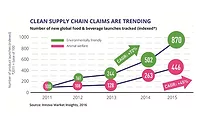
Consumers are becoming more aware of and proactive about sustainability. But even as consumers themselves embrace being sustainable, they are skeptical of the corporate response to sustainability. Concerns over “green washing” – overstating sustainability efforts – have led to “green fatigue.” According to Mintel, 60% of consumers believe that companies simply “make up” their eco-friendly claims.
On the positive side, interest is growing in regenerative agriculture-raised meat. A study by Regenified shows that awareness of regen ag among values-based shoppers has grown from 6% in 2019 to 47% in 2024. These values-based shoppers are motivated to support initiatives that protect water systems, improve human health and increase nutrient density in food.
Midan’s own research, the Sustainability Profile Report, revealed a group of consumers who consider sustainability “a great deal” when purchasing meat; Midan coined them “sustainability enthusiasts.” While only 17% of meat consumers fall into the enthusiast category, almost one third of meat consumers think about sustainability when purchasing meat.
Takeaway: There will be a growing opportunity within this space as sustainably minded consumers seek out specific options that align with their values. But companies must ensure that their sustainable efforts are transparent, authentic and verifiable: Consumers are paying attention. Learn more about sustainability-conscious meat eaters.
3. Claims-based meat: convergence of health and sustainability
In the meat case, the place where wellness and sustainability intersect is on claims labels. Wellness is tied into the desire for claims-based meat, and some evidence suggests wellness, not sustainability, is the lead driver, especially when it comes to regen ag.
According to the 2024 Power of Meat report, 83% of consumers seek a “better-for-you” option when they purchase protein, and four in 10 meat shoppers occasionally purchase meat or poultry that features production claims, such as organic, free range, grass fed or locally raised.
Midan’s Meat Consumer Segmentation 3.0 study indicates that the most likely consumer to pursue meat with claims is the “claim seeker” segment. This consumer is very motivated by natural and environmental claims and is willing to pay more for claims-based meat.
Takeaway: As consumers become more aware of climate issues and more mindful of their personal health and wellness, expect to see interest in claims-based meat grow. For packer/processors, highlighting their sustainability story on the package will resonate with those shoppers who place a high value on sustainably raised meat and are willing to pay more for it.
4. The economy: inflation is stubborn
Lots of economists have written about the confluence of factors that drove the inflation spike in the U.S. economy after the 2020 pandemic. But to the average consumer selecting a ribeye at the meat case, all those explanations don’t ease their current reality: Food costs more (and in some cases, significantly more). The average nationwide price of ground beef at the end of October 2024 was $5.59, up from $3.84 during that same time frame in 2019; that’s a 45% jump. And despite the Federal Reserve ticking down interest rates a month earlier, inflation actually rose 2.6% in October 2024.
Many consumers have traded down to cheaper grocery alternatives, including chicken, as their share of income spent on food is at a three-decade high. Even as chicken prices edge up, poultry is viewed as a bargain compared to red meat, and chicken demand is likely to remain high for at least two more years until the beef supply stabilizes. CoBank reports that U.S. per capita chicken consumption is on pace to rise 1.5 pounds in 2024. With beef prices continuing to stay elevated in 2025, ground beef items should continue to see strong sales at both retail and foodservice. While pork prices are expected to hold steady through the end of the year, the potential of having fewer hogs to market – and therefore less product on shelves – plus talk of tariffs with the U.S.' biggest pork exporter, Mexico, will make pork a story to follow in the new year.
Takeaway: The combination of ongoing inflation and the long-term effects of a contracted beef supply means that getting meat in the shopping cart will continue to be challenging. To help offset sticker shock, packer/processors should focus on messaging that highlights the quality and consistency of their brands, while retailers should remind consumers that meat continues to be a good value when it comes to getting a nutritious meal on the table. It’s more important than ever to drill deeper into your target consumers: Who’s looking for value cuts to stretch their dollars, and who’s willing to pay for the premium cuts they prefer?
5. Social commerce is big business
It is time to pay attention to what’s happening with social commerce. While it might look like the social apps TikTok and Instagram are all fun and games, make no mistake: These platforms are focused on “commerce” as much as they are on “social.” TikTok, for example, is fueled by creator content that directs users to “The TikTok Shop,” helping to ensure “influencing” and buying happen in the same app. Instagram follows a similar model.
The Influencer Marketing Hub’s report, The State of Social Shopping in 2024, found that 98% of customers plan to use social purchasing at least once this year – a big jump from last year’s 68% of purchasers.
Takeaway: Social commerce is expected to grow by more than 28% annually, generating $3.37 trillion by 2028. For companies working on their 2025 marketing plans, social commerce might make sense for D2C meat brands that want to capture the attention of the youngest meat purchasers, Gen Zs and Millennials. Sixty percent of TikTok users are Gen Zs, followed by Millennials.
Note that the U.S. government has taken steps to ban TikTok due to concerns over Chinese ownership; however, it is unclear how the new administration will address TikTok.
6. Gen Zs: beyond “the TikTok Generation”
Gen Zs have been dubbed the “TikTok Generation” because, as “digital natives,” they prefer short-form visual content like TikTok videos and Instagram reels.
But just because this generation might seem obsessed with what’s happening online, don’t underestimate their power and voice. We know that Gen Zs are less brand loyal and more value oriented: What they care about motivates their purchases. One thing they care about a lot is sustainability. Midan’s own research revealed that 75% of Gen Zs think about sustainability at least some when purchasing fresh meat. According to a consumer survey by First Insight and the Baker Retailing Center at The Wharton School of the University of Pennsylvania, Gen Z is even influencing other generations toward sustainability.
Takeaway: Gen Zs are a mix of contradictions: They embrace interaction and playfulness, but they also care deeply about causes that matter to them. To effectively reach them, companies and brands must appeal to both these traits, with campaigns that are visual and engaging but also authentic and anchored in a higher purpose.
7. Retail shopping continues to evolve
Consumer behavior is never static. Anticipate several shifts in where and how people shop:
- According to Placer.ai's Oct. 2, 2024, Rise of Value Grocery Webinar, club stores are attracting younger consumers (potentially fueled by popular Instagram accounts like @CostcoHotFinds), while discounter Walmart is attracting more affluent grocery shoppers via its online platform.
- Consumers are shopping across more stores, filling their baskets at different retailers to get the prices they want. This translates to the number of store visits going up, but a drop in spend per visit. Consumers are also spending less dwell time in store searching for products; this is likely due to the rise of click and collect, according to Placer.ai's Rise of Value Grocery Webinar.
Takeaway: Even though consumers are always evolving, some things never change: Price and convenience still drive the shopping trip, whether it takes place in the store or on the couch. Especially as meat consumers feel the pinch on their wallets and retailers struggle with slim margins, communicating value – what shoppers get for their money – is more important than ever.
8. Retail giants elevating omnichannel
Not surprisingly, retail giants Walmart and Amazon are leading the charge in omnichannel shopping, leveraging technology to create experiences that are seamless, personalized and convenient:
- Walmart is using AI to create customer-facing experiences that are tailored to individual shoppers, eventually offering customized homepages on its website and smoother online transactions like product returns.
- Amazon is focused on a true omnichannel experience via a mash-up of its in-store and online offerings. For example, a customer shopping at a Whole Foods store can place an order on the Amazon app on their phone, and those online items will be ready by the time they are finished grocery shopping, thanks to a microfulfillment center.
Takeaway: While these mega retailers have vast resources to keep expanding the omnichannel experience, their efforts are rooted in a very basic premise: giving customers options. Packer/processors and retailers of every size should consider how to leverage consumer choice when it comes to their products, stores and online platforms.
9. AI transforming digital marketing
Marketers are beginning to learn how AI can reach customers more powerfully than ever before. Deep learning, a type of AI technology, is already being used to predict how people will behave in future scenarios, aka “social prediction.” According to Steve King, CEO of Black Swan Data, “AI can help marketers take social data, like customer sentiment data gathered by social media listening tools, to identify patterns that can help them forecast consumer behavior months in advance.” This intersection of AI and analytics will lead to hyperpersonalized messaging and a much more granular understanding of consumer needs.
Takeaway: Don’t wait to put AI to work for your company; according to MIT Sloan Management, nine out of 10 organizations are actively embracing AI to gain a competitive advantage. And there is a big pot to share: McKinsey’s research predicts the AI opportunity for marketing and sales translates to $1.4–2.6 trillion of value across the world’s businesses.
10. Social media embracing micro influencers (and Tom in Accounting)
The influencer game is shifting again. Brands don’t need to seek out an A-list celebrity to headline a successful social campaign; instead, they should consider micro influencers, those with smaller but highly engaged followings. According to LinkedIn, micro influencers have an average engagement rate of 3.86%, much higher than the 1.21% rate for mega influencers. Brands are moving away from large-scale, one-off campaigns with mega influencers in favor of long-term partnerships with influencers who can build trust with their audiences over time.
And some companies are looking no further than one cubicle over for content inspiration: Employee-generated content is gaining traction. Using employees to create content helps strengthen the personal connection between your brand and target audience. Some brands, such as Flying Tiger, even include content creation in employee contracts, dedicating a portion of work hours to filming TikTok videos.
Takeaway: Micro influencer and employee-generated content share common characteristics: authenticity and connection. Remember that even as influencer marketing continuously evolves, the most important driver will always be creating content that rings true with a target audience.
Source: Midan Marketing
Looking for a reprint of this article?
From high-res PDFs to custom plaques, order your copy today!