STATE OF THE INDUSTRY: SUSTAINABILITY
State of the Industry: Collaborating to make sustainability advances across livestock supply chains
Livestock plays an important role in a sustainable food future, but advances cannot and will not happen in silos.
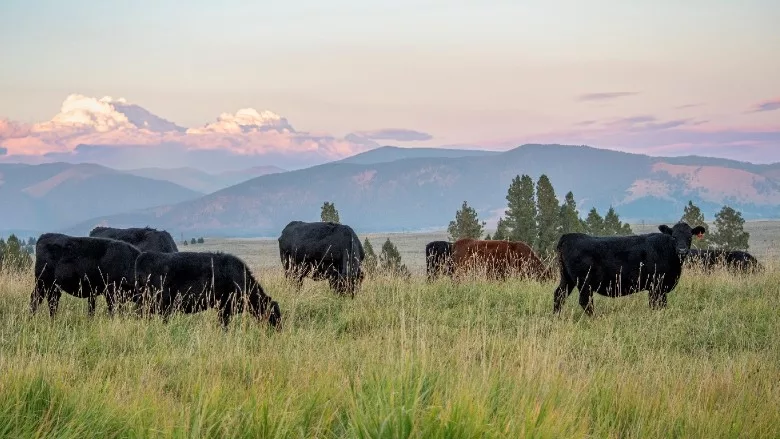
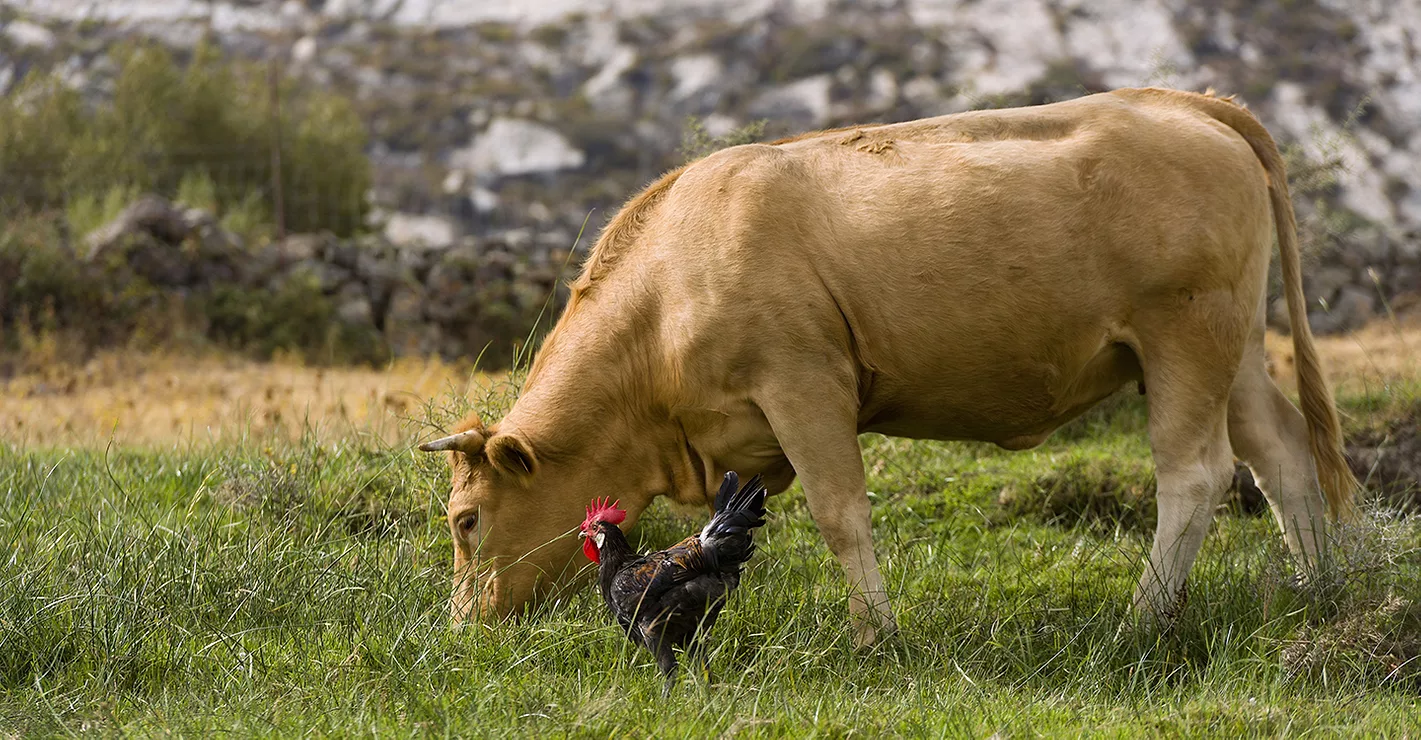
Photo credit: USRSB
With the conclusion of Climate Week NYC at the end of September and preparations underway for the United Nations Climate Change Conference or Conference of the Parties of the UNFCCC (COP 29) in November, comes a renewed focus on the role of livestock in a sustainable food system.
Discussions around livestock production during Climate Week NYC, ranged from optimistic – livestock have a critical role to play in a sustainable food system and present a unique opportunity to offset anthropogenic (human-caused) emissions – to pessimistic – livestock are the leading cause of climate change and we must do everything in our power to limit consumption and reduce livestock numbers immediately. With such conflicting points of view, often supported by confusing and contradictory information, it becomes increasingly difficult to understand what the role of livestock might be in either combating or causing climate change. Add to the equation corporate sustainability commitments and the increasing pressures to reduce scope 3 (i.e., downstream and upstream supply chain) emissions and the waters become increasingly muddied.
The current state of livestock emissions
Globally, livestock production is responsible for approximately 7.4% of all GHG emissions[1] while in the United States, livestock production is responsible for 4.3% of national GHG emissions[2],[3]. In either instance, methane emissions, primarily from enteric fermentation from beef and dairy cattle, account for more than 70% of direct emissions from livestock production, or 5.2% of global and 3.0% of national GHG emissions. Taking emissions accounting a step further, when comparing livestock on an emissions intensity basis (i.e., kg of carbon dioxide equivalents per kg of product) animal sourced foods, especially beef and dairy products, rank highest compared to most other foods (Figure 1).
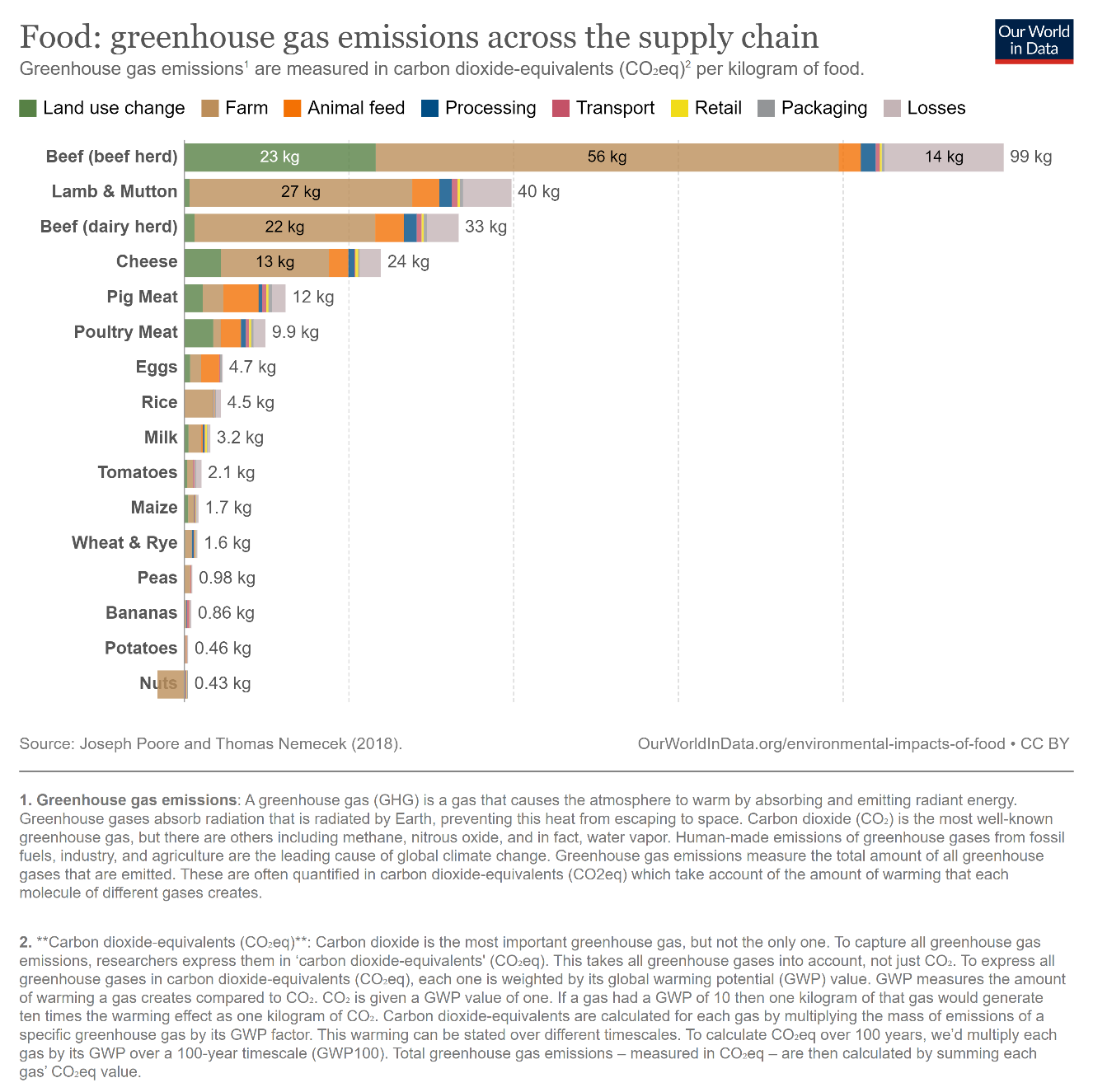
Figure 1. Average global emissions intensity of various foods for full supply chains (Source: Our World in Data, 2024).
Comparisons such as those depicted in Figure 1 are helpful in understanding general trends in emissions intensity of different foods but are in reality an overgeneralization that does not provide appropriate context needed to fairly assess emissions from livestock. There exists a huge amount of variability in emissions intensity of animal sourced foods based on where and how animals are raised (Figure 2). For example, there can be as much as a 25 fold increase in the emissions intensity of beef from cattle raised solely on grasslands in a subsistence farming manner compared to cattle raised on grass and then finished in a conventional feedlot system, such as those we find in the U.S.
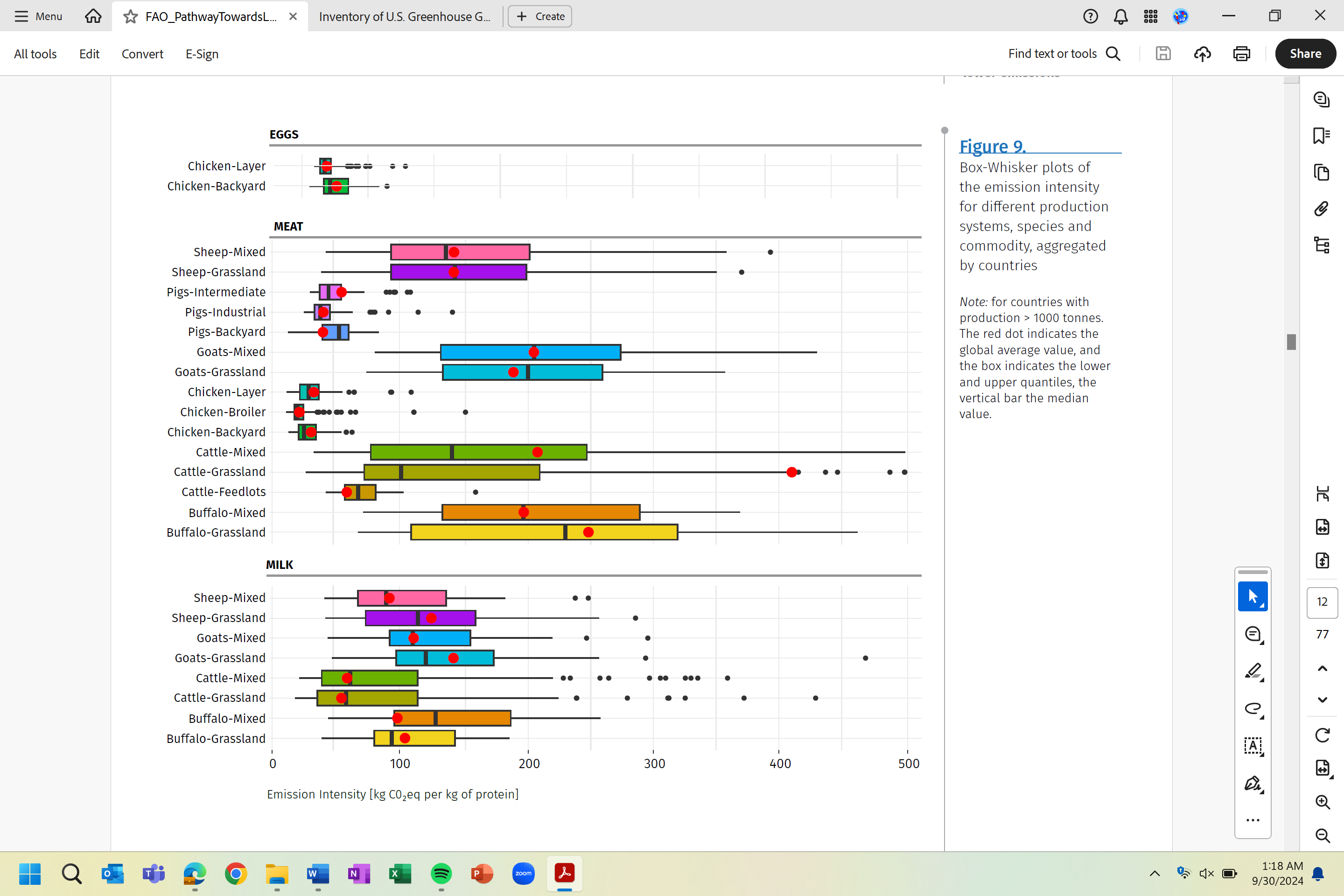
Figure 2. Global emissions intensity for different production systems, by species and commodity. The red dot depicts the global average, while the box represents where 50% of all regional emissions intensity numbers lie and the extending lines and black dots represent the range of emissions intensities, depending on region. (Source: FAO, 2023)
Even in a comparison such as this, key contextual components, such as livestock’s total contribution to global emissions, are still missing. While livestock constitutes a relatively small percentage of global and national emissions, the higher emissions intensity of animal-sourced foods makes livestock an easy target in climate conversations. The argument is that a shift in consumption away from animal-sourced foods will lead to a substantial reduction in GHG emissions thereby helping to combat the effects of climate change.
On the other side of this argument, there is a unique opportunity to leverage livestock production to combat climate change. Methane is by in large the most significant emission resulting from livestock production and thus reductions in methane emissions from livestock provide an opportunity for greater reductions in overall livestock emissions.
There are a number of opportunities in which methane can be reduced from livestock production, predominantly with a focus on beef and dairy supply chains. In a report published by the FAO during last year’s COP, productivity increases, breeding, improved animal health and rumen manipulation were listed at the greatest opportunities for reducing emissions from livestock (Figure 3).
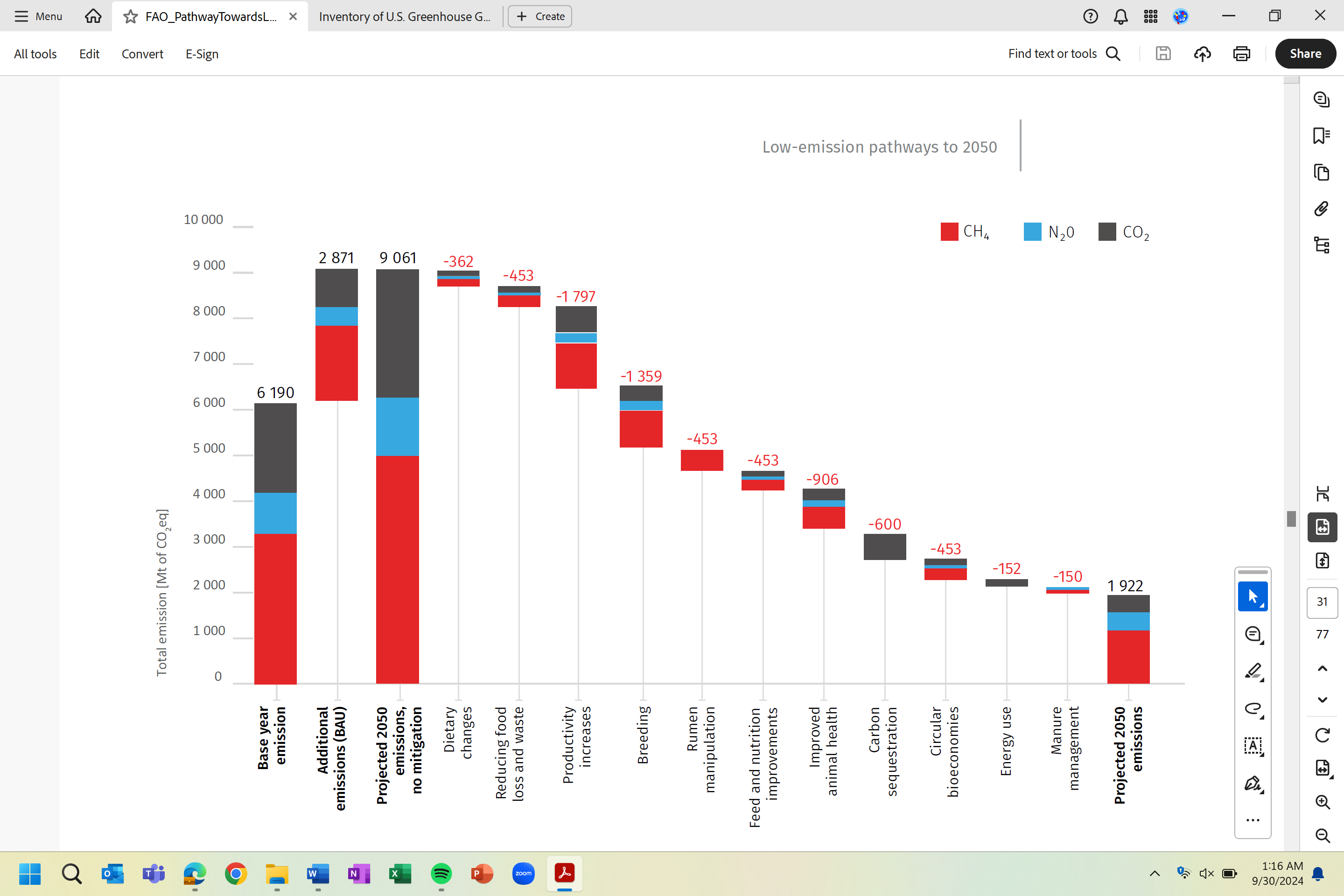
Figure 3. Current global livestock emissions, projected emissions assuming a business as usual case scenario (BAU), opportunities for emissions reductions and projected emissions if reductions are achieved (Source: FAO, 2023).
Partnerships to support industry’s ambitious goals
While there exist ample opportunities to reduce emissions from livestock, there are two key points to note: (1) reduction opportunities are large within the livestock sector but remain a relatively small piece of the global emissions pie and (2) emissions reduction opportunities will vary depending on production systems and location.
Regardless of livestock’s relatively low contribution to global and national emissions compared to other sectors, livestock supply chains around the world recognize the role that livestock can play in supporting emissions reductions and there are several key multi-stakeholder organizations and partnerships working to support continuous improvement across livestock supply chains.
Multi-stakeholder organizations, such as the U.S. Roundtable for Sustainable Beef (USRSB), Canadian Roundtable for Sustainable Beef (CRSB), Global Roundtable for Sustainable Beef (GRSB), U.S. Roundtable for Sustainable Poultry and Eggs (USRPE), Innovation Center for U.S. Dairy and Global Dairy Platform (GDP) work across their respective supply chains, from producers to retail and foodservice companies, to understand unique challenges and support activities that lead viable solutions to identified challenges.
Several of these organizations have set ambitious, aspirational goals around climate intended to propel action across their respective supply chains. In 2022, USRSB has set a goal for the U.S. beef supply chain to achieve climate neutrality by 2040. Similarly, CRSB has set a goal to reduce primary production GHG emission intensity by 33% by 2030 and GRSB has set a goal to globally reduce the net global warming impact of each unit of beef by 30% by 2030, on a pathway to climate neutrality. In 2021, GDP launched their pathway to diary net zero initiative which is dedicated to reducing GHG emissions from dairy over the next 30 years.
Perhaps more important even than the goals set by these organizations is the actual work being done across these organizations to support advances across their respective supply chains. As an example, USRSB has recently partnered with the Foundation for Food & Agriculture Research (FFAR) to develop a U.S. Beef Sustainability Research Roadmap. To date, USRSB and FFAR have hosted three virtual sessions in which academic experts have presented the current state of the science, research gaps and potential opportunities related to USRSB’s air, land and water goals.[4] Later this month, USRSB and FFAR will build upon these virtual sessions and host an in-person workshop where experts from across academia and the U.S. and global beef supply chains will convene to further identify research opportunities and support development of a targeted research roadmap for U.S. beef.
Efforts like this from USRSB along with the many other activities happening at CRSB, GRSB, GDP and others are critical to ensuring effective and place-based solutions are developed to support advancement of our livestock supply chains and corresponding reductions to emissions from livestock. Without coordinated and collaborative efforts across our livestock supply chains we will not achieve the type of change being called for at events like Climate Week NYC.
Livestock has an important role to play in a sustainable food future, but advances cannot and will not happen in silos. As the famous African proverb states, “If you want to go fast, go alone. If you want to go far, go together.”
[1] FAO, 2023. Pathways towards lower emissions – A global assessment of the greenhouse gas emissions and mitigation options from livestock agrifood systems. Rome. https://doi.org/10.4060/cc9029en
[2] EPA, 2024. Inventory of U.S. Greenhouse Gas Emissions and Sinks: 1990-2022. U.S. Environmental Protection Agency, EPA 430-R-24-004. https://www.epa.gov/ghgemissions/inventory-us-greenhouse-gas-emissions-and-sinks-1990-2022.
[3] These estimates account only for direct emissions from livestock production, including emissions from manure management and enteric fermentation and do not include crop production for animal feed, energy or transportation associated with production.
Looking for a reprint of this article?
From high-res PDFs to custom plaques, order your copy today!