STATE OF THE INDUSTRY: ANIMAL WELFARE
State of the Industry: Leveraging the relationship between animal welfare and sustainability
Improving animal health and welfare positively affect productivity and economic sustainability.
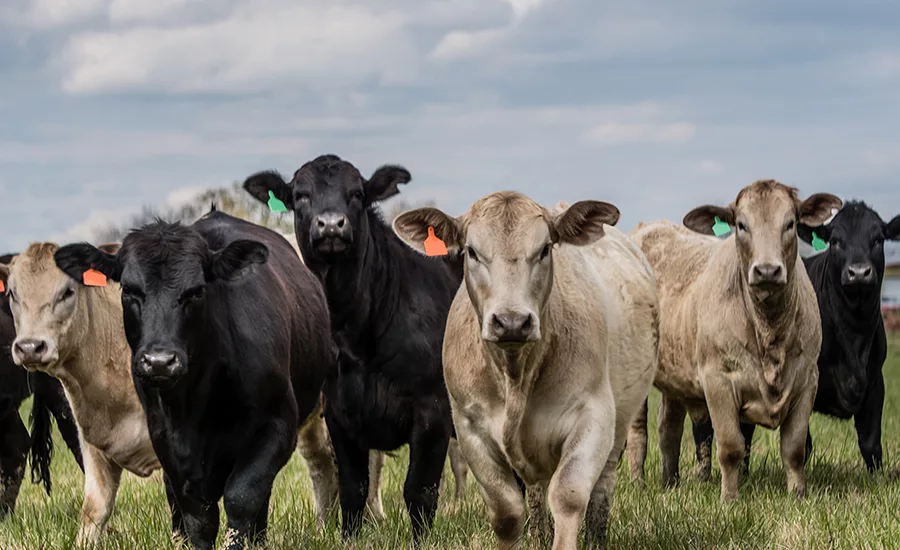
Climate change and shifts in consumer behavior continue to impact the meat industry. In fact, in 2023, the U.S. reported the smallest beef cow inventory in the last 50 years, according to the National Cattlemen’s Beef Association. Meanwhile, consumers are increasingly concerned about how animals are treated in the food industry, with nearly 70% of Americans saying that animal wellness plays an important role in purchasing decisions. This shift toward ethical consumerism is driving demand for consistency and compliance among meat producers and processors. Retail and restaurant brands are also setting higher animal welfare standards for producers of animal origin for marketability and public credibility.
Animal wellness is complex and multifaceted, involving scientific, ethical, economic, cultural, social and political factors. The meat industry must address animal wellness by making informed, animal-centric decisions and factoring in environmental, social and governance (ESG) considerations.
Meeting sustainable development goals
The industrialization of animal farming and the growth of concentrated animal feeding operations (CAFOs) have led to adverse impacts on the planet’s air and water quality. According to the US Environmental Protection Agency, agriculture contributes at least 11% of the nation’s greenhouse gas emissions.
The United Nations Sustainable Development Goals (SDGs) are the heart of the 2030 Agenda for Sustainable Development, which was adopted by all UN member states in 2015. The SDGs provide an urgent call to action across countries to end poverty, improve health and education, reduce inequality and spur economic growth.
As a leading consumer of land and water, animal agriculture can contribute to biodiversity loss and climate change. The relationship between animal welfare and sustainability goes well beyond environmental conservation, involving ethical, economic and social factors. As such, several of the SDGs apply to animal welfare, including SDG 2 (zero hunger), SDG 3 (good health and well-being), SDG 6 (clean water and sanitation), SDG 8 (decent work and environmental growth), SDG 12 (responsible consumption and production) and SDG 15 (life on land).
Animal wellness will continue to play a key role in achieving the SDGs as direct measures that improve animal health and welfare positively impact productivity and economic sustainability. The meat industry has already begun reviewing and considering the SDGs from both human and animal perspectives and aligning their ESG goals accordingly.
Advancing toward One Health
At NSF, we often refer to the “One Health” concept, which says animal health, human health and environmental health are intrinsically intertwined and interdependent. The health of one affects the health of all and implementing animal wellness will improve animal health and productivity while reducing reliance on antimicrobials. As a result, antimicrobials can be used more selectively, reducing associated costs.
Increasingly, farmers are using new ways of reducing environmental impacts, including attaining certification to standards that both improve animal health and productivity while reducing the carbon footprint.
These sustainable applications can alleviate the demand on our protein supply chains while supporting the UN SDGs, driving viable means of feeding the world’s population while replenishing our planet’s natural resources and reducing emissions.
Monitoring regulations and industry changes
Stronger environmental regulations will continue to change the trajectory of industrialized farming, as will demand from consumers and retailers. The regulatory framework that governs animal welfare in the U.S. is multifaceted, involving federal laws, state statutes and specific regulations for various sectors.
For example, in California, Proposition 12 (Prop 12) certification is now required for all American meat and egg distributors distributing products in the state. The law, which went into effect Jan. 1, 2024, ensures compliance with the state’s animal welfare standards.
Several industry organizations are working to advance animal wellness across the nation, including the Meat Institute, which is comprised of more than 350 packers, processors, suppliers and allies. The institute has set a target for 100% of its members to deliver greenhouse gas reduction targets approved by the Science-Based Targets Initiative (SBTi) by 2030. It has launched a greenhouse gas inventory tool under the Meat Institute Protein PACT, a reporting initiative to enable supply chain collaboration to advance the People, Animals and Climate of Tomorrow.
Meanwhile, the U.S. Roundtable for Sustainable Poultry & Eggs (US-RSPE) Sustainability Framework is the first-ever multistakeholder sustainability framework developed for the full U.S. supply chains for chicken, turkey and eggs from producer to final customer. The framework provides a voluntary assessment to collect and analyze sustainability data, consisting of 101 metrics across 15 areas of importance. The US-RSPE focuses on four priority areas in sustainability: energy and greenhouse gas conservation, air quality, land use and water use and quality.
The meat industry must continue to monitor for new and updated regulations and tools, ensuring that requirements are met and the proper food safety and sustainability practices are in place.
Working better together
It is essential for industry members to work closely with independent, third-party organizations, especially when leveraging audits and certifications to validate animal welfare practices.
At NSF, we see best practices in action via Raised Without Antibiotics, the only independent certification mark that assures consumers animal products were produced without exposure to antibiotics, and the Global Animal Wellness Standards, a comprehensive framework that ensures wellness for the entire lifespan of animals throughout the protein supply chain. The Global Animal Wellness Standards are designed to address every step in the life cycle of all key animal agriculture species, ensuring that a strong, consistent animal wellness system is in place.
NSF also certifies to the GLOBALG.A.P. standard, which includes a protocol called the Sustainable Program for Irrigation and Groundwater Use (SPRING), a key tool that reduces the environmental impact of irrigation practices, reducing the risk of crop failures due to droughts and other natural disasters.
By recognizing the interconnectedness of farm animal welfare with broader sustainability goals, together, we can work toward building a more resilient, ethical food supply chain.
Looking for a reprint of this article?
From high-res PDFs to custom plaques, order your copy today!