House passes Farm Bill, teeing up Senate review
US House of Representatives on April 30 passes the 2026 farm bill in a 224–200 bipartisan vote, marking the first time the chamber has approved a farm bill since 2018.
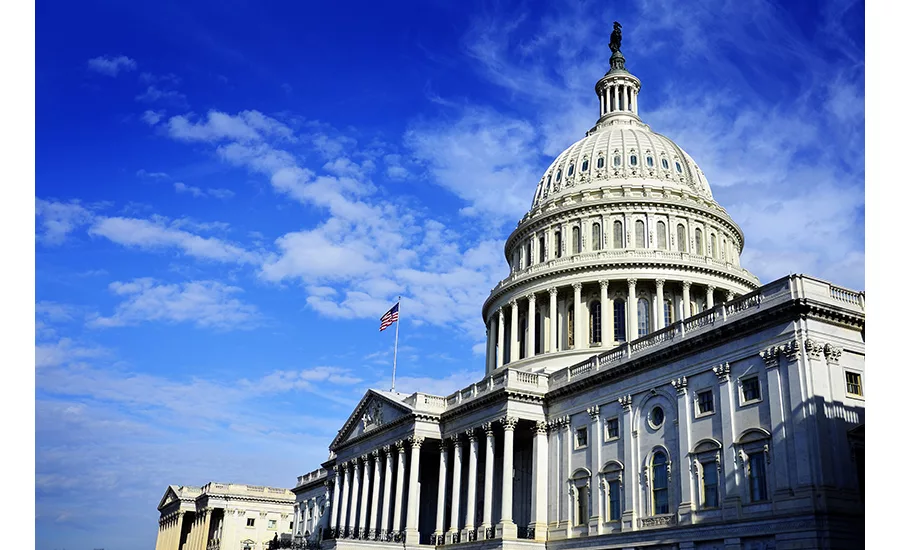
Photo credit: Getty Images
The US House of Representatives on April 30 passed the 2026 farm bill in a 224–200 bipartisan vote, marking the first time the chamber has approved a farm bill since 2018.
During amendment consideration, the House also voted 384–35 to adopt a bipartisan measure from Rep. Rick Crawford (R-Ark.), allowing Supplemental Nutrition Assistance Program (SNAP) participants to purchase hot rotisserie chicken with their benefits.
“The ‘Hot Rotisserie Chicken Act’ is popular because it’s a winner on affordability and nutrition,” said National Chicken Council President Harrison Kircher, urging the Senate to advance similar legislation.
The broader farm bill includes a provision addressing California’s Proposition 12, a move supported by the National Pork Producers Council. The Save Our Bacon Act, part of the bill passed through the House, overrides state laws like Proposition 12 by limiting states’ ability to restrict interstate commerce by imposing production‑method requirements on out‑of‑state producers.
According to NPPC, the legislation also advances several pork industry priorities, including:
- Converting the Feral Swine Eradication and Control Pilot Program into a permanent program
- Increasing funding for agricultural trade promotion programs, including MAP and FMD
- Requiring USDA to report on the potential impacts of changes to the U.S.-Mexico-Canada Agreement
- Establishing an Agricultural Trade Enforcement Task Force
- Expanding the Animal Health Protection Act to improve disease traceability
- Supporting additional training under the Beagle Brigade Act
- Requiring USDA to document its ability to respond to foreign animal disease outbreaks
- Limiting administrative costs for key animal health programs to direct more funding to research
- Directing USDA to study insurance options for catastrophic animal disease losses
The House debated the bill over two days, with discussions extending into the early morning hours of April 30.
The legislation now moves to the Senate for consideration.
Sources: National Pork Producers Council; National Chicken Council
Looking for a reprint of this article?
From high-res PDFs to custom plaques, order your copy today!