Provisioner logo
Provisioner logo
search
cart
facebook twitter linkedin youtube
  • Sign In
  • Create Account
  • Sign Out
  • My Account
Provisioner logo
Provisioner logo
  • NEWS
    • Industry News
    • Supplier News
    • Case Studies
    • Recalls
    • Regulations
    • New Consumer Products
  • EXCLUSIVES
    • Newsletters
    • Source Book
    • Sponsored Insights
    • Events
    • Webinars
    • Classifieds
    • White Papers
    • Provisioner Store
    • Market Research
  • MEAT PROCESSING
    • SUSTAINABILITY
    • Processing
    • Packaging
    • Ingredients
    • Formulation
    • Food Safety
    • Special Reports
    • Commentary
  • PROFILES
    • Processor Profiles
    • Processor of the Year
    • Top 100 Processors
  • MEDIA
    • Videos
    • Podcasts
  • DIRECTORY
  • MIHOF
  • INDEPENDENT PROCESSOR
  • EMAG
    • eMagazine
    • ARCHIVE ISSUES
    • Contact
    • Advertise
  • JOIN!
Meat and Poultry Industry News

S. Korea doesn't see changing U.S. beef age restrictions

December 7, 2010

The free trade agreement agreed upon by the United States and South Korea did not include any changes to the Korean restrictions on U.S. beef imports, which only permit beef from animals aged 30 months or younger. South Korea’s trade minister has ruled out holding further talks on changing those age limits.

“It is our government’s firm position that there is no room for further discussions on it,” said Kim Jong Hoon in an interview with KBS radio in Seoul, reports Bloomberg. He said he hoped the trade accord would take effect on Jan. 1, 2012.

Meat associations and industry leaders had called for the agreement to be passed without further negotiations on U.S. beef, and several organizations have already called for a quick passage of the agreement. They maintain the FTA will increase the amount of U.S. meat products exported to Korea, and they argue that a quick ratification would give U.S. producers an advantage over other countries that are also working on trade agreements with Korea, such as Australia.


Source: Bloomberg


BBQ chain experiments with spicy cheddar sausage

For the first time in decades, Texas-based Dickey's Barbecue Pit may be adding a new signature meat to their menu— Spicy Cheddar Sausage. The chain, with 134 locations in 32 states, is testing the sausage at its location in McKinney, Texas. According to the chain officials, the product has been a hit so far and could end up as a seasonal LTO product system-wide.

"This spicy sausage is delicious and is a great opportunity for us to offer something different for our customers," Dickeys Barbecue Restaurants Inc. President Roland Dickey, Jr. said.

Dickey's hasn't added a signature meat to its menu since 1952. The sausage is the first “spicy” item that the restaurant has offered its customers.

"It's time to try smoking something new. The spicy cheddar sausage is delicious and we are confident all our customers will feel the same" Dickey, Jr. said.

Dickey's put the task of creating a new and exciting limited time offer to its corporate chef, Tyler Riddle.

"Down here in Texas we love a few things with great passion; blazin' hot peppers and Texas-sized loads of melted cheese," he said. "When we went to the drawing board to design the new limited time offer we let our passion and pallets lead the way which brought us to proudly offer spicy cheddar sausage.

"Our spicy cheddar sausage carries a lot of the same flavors as our polish-style sausage, but with a kick," Riddle added. "Hints of roasted garlic, cracked black pepper, and old world spices can be tasted, but we also loaded it with a fiery mix of fresh peppers, hearty chunks of cheddar, and a tantalizing blend of smokin' spices!"


Source: Dickey’s Barbecue


Canada launches small meat pilot projects

Fulfilling a promise made at the Agriculture ministers' meeting in July, the Government of Canada will invest up to $3 million for a series of pilot projects that will investigate and help better position provincial meat processors to move their safe, high quality product across the country while keeping with Canada's high federal food safety standards.

"Producers and processors can be proud of their safe, high quality meat, but are often unable to sell to customers just kilometres away because of a provincial border," said Agriculture Minister Gerry Ritz. "We are working with the provinces to inject some common sense into interprovincial trade so that producers and processors can share their world-class product with more Canadian consumers."

As part of the ongoing work by federal and provincial Ministers to create market opportunities for farmers and producers, these pilot projects are part of a roadmap that would expand interprovincial trade in meat. Officials will work with industry to validate new inspection procedures, collect samples and information, and determine what technical procedures could be adapted to better reflect the operating environments of meat processors of all sizes.

"Breaking down interprovincial trade barriers will benefit our producers, processors and packers, who will be able to expand their markets," said Saskatchewan Agriculture Minister Bob Bjornerud, who was the co-chair of the Ministers' meetings this year. "Consumers in Saskatchewan and across Canada will benefit from a sound science-based approach to reducing red tape and interprovincial trade barriers."

Facilities interested in participating in the pilot project are invited to submit their application by January 7th to their respective province. Information about this project, including the list of participating provinces/territories, and how to apply, is available at www.inspection.gc.ca/english/fssa/meavia/interprov/interprove.shtml.

"One of the Canadian Cattlemen's Association's principles is free and competitive trade, both internationally and interprovincially," said Canadian Cattlemen's Association President Travis Toews. "The domestic market is our biggest market; removing barriers to improve interprovincial trade is a worthy undertaking."

This federal investment is being delivered through the Agricultural Flexibility Fund. The Agricultural Flexibility Fund provides up to $500-million to implement new initiatives that will help the agriculture sector adapt to pressures and improve its competitiveness by funding projects that reduce production costs, improve environmental sustainability, promote innovation and respond to market challenges.

Provincial governments and industry will be invited to contribute to those selected pilot projects.


Source: Canadian Food Inspection Agency

Share This Story

Looking for a reprint of this article?
From high-res PDFs to custom plaques, order your copy today!

Recommended Content

JOIN TODAY
to unlock your recommendations.

Already have an account? Sign In

  • Double Charburger

    Premiumization drives burger category

    Shoppers seek out premium meat offerings to fulfill...
    Special Reports
    By: Sammy Bredar
  • JJS Adult Pekin duck

    Poultry Report 2025: Convenience propels poultry at retail

    Despite continued economic pressures, the poultry...
    Chicken
    By: Sammy Bredar
You must login or register in order to post a comment.

Report Abusive Comment

Manage My Account
  • eMagazine Subscriptions
  • Manage My Preferences
  • Newsletters
  • Online Registration
  • Subscription Customer Service
  • Connect with The National Provisioner

More Videos

Sponsored Content

Sponsored Content is a special paid section where industry companies provide high quality, objective, non-commercial content around topics of interest to the The National Provisioner audience. All Sponsored Content is supplied by the advertising company and any opinions expressed in this article are those of the author and not necessarily reflect the views of The National Provisioner or its parent company, BNP Media. Interested in participating in our Sponsored Content section? Contact your local rep!

close
  • A smiling man carrying a grocery basket is reaching down to pick up a package of meat in a grocery store.
    Sponsored byPIC

    The Green Light: New Data Shows 12-to-1 Support for Pork from PRRS-Resistant Pigs

  • Close up of a grocery cart full of groceries, a cropped image of a couple pushing the cart and a blurred background of the vegetable aisle.
    Sponsored byPIC

    New Market Research Finds Consumers in Eight Key Pork Markets Are Likely to Purchase Pork from Gene-Edited Pigs

  • Close up of a young pig with a blurred background.
    Sponsored byPIC

    New Research Forecasts Significant Economic and Market Impacts with PRRS-Resistant Pig Adoption

Popular Stories

Various new Primal snack sticks on a table amongst pencils, apples, a pair of glasses, lunch bags and a water bottle.

Protein demand drives snacking occasions

Several cuts of beef, pork and chicken on a wooden board, cast iron pan and salt.

Validated thermal lethality data and a new tool for ensuring safety of RTE meats

Cargill logo

Cargill initiates lockout at Fort Morgan beef plant after union rejects contract

2026 Top 100 Meat & Poultry Processors Report

Events

January 1, 2030

Webinar Sponsorship Information

For webinar sponsorship information, visit www.bnpevents.com/webinars or email webinars@bnpmedia.com.

View All Submit An Event

Products

Food Crime: An Introduction to Deviance in the Food Industry

Food Crime: An Introduction to Deviance in the Food Industry

See More Products
From Fresh to Frozen in 3 Minutes Flat: Unlocking the Secrets to Temperature Control Webinar Sponsored by Air Products

Related Articles

  • S. Korea: Beef age limit to be kept until concerns subside

    See More
  • Almost 20,000 tons of U.S. beef clear S. Korea customs

    See More
  • S. Korea bans anti-U.S. beef rallies

    See More

Related Products

See More Products
  • meat.jpg

    Non-Thermal Processing Technologies for the Meat, Fish, and Poultry Industries

  • fermented.jpg

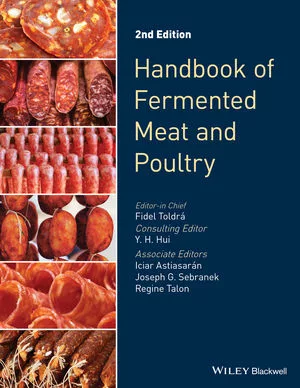
    Handbook of Fermented Meat and Poultry, 2nd Edition

See More Products

Related Directories

  • U.S. Meat Export Federation

    The mission of USMEF is to “increase the value and profit opportunities for the U.S. beef, pork, and lamb industries by enhancing demand in export markets through a coordinated and collaborative partnership of all stakeholders.” Simply put, USMEF is “Putting U.S. Meat on the World’s Table.” USMEF has the most diverse membership of any trade association in the meat and livestock industry. USMEF represents beef/veal producers and feeders, pork producers and feeders, lamb producers and feeders, packers and processors, purveyors and traders, oilseeds producers, feedgrains producers, farm organizations, and supply and service organizations.
  • U.S. Poultry & Egg Assn.

    U.S. Poultry & Egg Association is the world’s largest poultry association, representing the entire industry as an “All Feather” Association. Membership includes producers and processors of broilers, turkeys, ducks, eggs, breeding stock, and allied companies. USPOULTRY is also the managing partner for the International Production & Processing Expo (IPPE).
×

Stay ahead of the curve. Unlock a dose of cutting-edge insights.

Receive our premium content directly to your inbox.

SIGN-UP TODAY
  • RESOURCES
    • Advertise
    • Contact Us
    • Directories
    • Store
    • Want More
  • SIGN UP TODAY
    • Create Account
    • eMagazine
    • Newsletter
    • Customer Service
    • Manage Preferences
  • SERVICES
    • Marketing Services
    • Reprints
    • Market Research
    • List Rental
    • Survey/Respondent Access
  • STAY CONNECTED
    • LinkedIn
    • Facebook
    • YouTube
    • X (Twitter)
  • PRIVACY
    • PRIVACY POLICY
    • TERMS & CONDITIONS
    • DO NOT SELL MY PERSONAL INFORMATION
    • PRIVACY REQUEST
    • ACCESSIBILITY

Copyright ©2026. All Rights Reserved BNP Media, Inc. and BNP Media II, LLC.

Design, CMS, Hosting & Web Development :: ePublishing