Provisioner logo
Provisioner logo
search
cart
facebook twitter linkedin youtube
  • Sign In
  • Create Account
  • Sign Out
  • My Account
Provisioner logo
Provisioner logo
  • NEWS
    • Industry News
    • Supplier News
    • Case Studies
    • Recalls
    • Regulations
    • New Consumer Products
  • EXCLUSIVES
    • Newsletters
    • Source Book
    • Sponsored Insights
    • Events
    • Webinars
    • Classifieds
    • White Papers
    • Provisioner Store
    • Market Research
  • MEAT PROCESSING
    • SUSTAINABILITY
    • Processing
    • Packaging
    • Ingredients
    • Formulation
    • Food Safety
    • Special Reports
    • Commentary
  • PROFILES
    • Processor Profiles
    • Processor of the Year
    • Top 100 Processors
  • MEDIA
    • Videos
    • Podcasts
  • DIRECTORY
  • MIHOF
  • INDEPENDENT PROCESSOR
  • EMAG
    • eMagazine
    • ARCHIVE ISSUES
    • Contact
    • Advertise
  • JOIN!
Meat and Poultry Industry NewsRegulations

NAMI highlights importance of nutrient dense foods such as meat and poultry as foundation for a healthy diet

By Industry News
May 11, 2015

Nutrition guidance recommending nutrient dense foods such as meat and poultry products, including red and processed meats, should be the foundation of government nutrition policy, the North American Meat Institute (NAMI) said in comments submitted to the Departments of Agriculture (USDA) and Health and Human Services (HHS) regarding the 2015 Dietary Guidelines Advisory Committee (DGAC) Scientific Report.

The comments emphasize the variety of nutrition benefits of meat and poultry products as convenient, direct, and balanced dietary sources of all essential amino acids and rich sources of many micronutrients. The comments also are critical of lean meat’s relegation to mere footnote status in the DGAC report.

“Lean meat’s inclusion in a healthy dietary pattern is supported by the scientific evidence demonstrating its high nutritional value, and the Report’s handling of lean meat represents a sharp, unsubstantiated departure from findings presented in the Dietary Guidelines for Americans, 2010. A review of scientific research reveals that the DGAC’s findings on lean meat conflict with the preponderance of the evidence, which affirms the healthful role lean meat and poultry, including red and processed meats, play in dietary patterns,” the comments state.

NAMI also highlighted the benefits of red and processed meats, noting that 17 of the 25 most popular cuts of beef and seven pork cuts meet the definition of lean by USDA and many lean, lower in saturated fat and lower sodium processed meats can be purchased. According to a NAMI menu model analysis using the recommendations of the 2010 Dietary Guidelines for Americans, which had previously been shared with the DGAC, a diverse array of processed meats, even when consumed twice daily for one week, allow consumers to stay within daily calorie and nutrient goals, while also helping individuals meet or exceed recommended nutrient intakes.

NAMI also takes issue with the DGAC’s recommendation to reduce consumption of “mixed dishes” with foods from a variety of groups, asserting that these foods often drive consumption of foods and nutrients encouraged by the DGAC, such as vegetables, whole grains, fiber, protein and more.

Scientific Inconsistencies
NAMI’s comments also highlighted several inconsistencies in the way science was evaluated by the DGAC. Overall, more than 70 percent of the DGAC recommendations were not based on the reviews of the Nutritional Evidence Library (NEL), which is designed to reduce bias in scientific analysis by serving as a primary resource to inform the committee about the best available scientific research and answer important food and nutrition-related questions. Conversely, the 2010 DGAC used the NEL for approximately 70 percent of its recommendations.

The inconsistencies were particularly glaring in the DGAC’s evaluation of red and processed meats. The DGAC ignored its own analysis that the intake of red and processed meats in Mediterranean-style diets was approximately twice the recommended intake of the USDA Food Patterns, and also ignored the result of a study it heavily relied on to make its conclusions on dietary patterns and cardiovascular disease (CVD), which found that red meat consumption did not significantly increase the CVD risk.

“The scientific evidence did not fit the bias of the DGAC, which instead recommended against including red and processed meat as components of a healthy diet. The DGAC reinterpreted the Mediterranean diet to be more “healthy” and based on the description “healthy” does not include the consumption of red and processed meats. Because the recommendation to limit intake of red and processed meat is not based on robust scientific evidence, HHS and USDA should not develop dietary guidance recommending limiting the consumption of red and processed meats,” the comments say.

The inconsistencies extend to the DGAC’s evaluation of sustainability. The Sustainability and Food Safety Subcommittee deviated from the evidence review approach used by all other subcommittees because its review depended on lower-quality study designs, and the subcommittee only reviewed a small proportion of the available modeling data, resulting in an underpowered review. NAMI also reiterated its concern that the committee acted outside it authority the scope of its expertise with its recommendations on sustainability and tax policy, stating “Just as it is not appropriate for the person designing a better light bulb to tell Americans how to make a better sandwich so too is it inappropriate for nutrition experts to wander into sustainability recommendations.”

Finally, NAMI recommends that HHS and USDA develop the final Dietary Guidelines for Americans with the guidance of food scientists and consumer behaviorists, which were each missing from the DGAC.

“Food scientists and behaviorists provide a translation perspective that would have provided biological context resulting in the final DGAC recommendations being more robust and likely achievable. Instead, many of the recommendations lack the scientific rigor to be utilized in developing the final policy document,” the comments say.

A copy of the comments is available here.

Source: NAMI

KEYWORDS: dietary guidelines

Share This Story

Looking for a reprint of this article?
From high-res PDFs to custom plaques, order your copy today!


Recommended Content

JOIN TODAY
to unlock your recommendations.

Already have an account? Sign In

  • Double Charburger

    Premiumization drives burger category

    Shoppers seek out premium meat offerings to fulfill...
    Beef
    By: Sammy Bredar
  • JJS Adult Pekin duck

    Poultry Report 2025: Convenience propels poultry at retail

    Despite continued economic pressures, the poultry...
    Chicken
    By: Sammy Bredar
You must login or register in order to post a comment.

Report Abusive Comment

Manage My Account
  • eMagazine Subscriptions
  • Manage My Preferences
  • Newsletters
  • Online Registration
  • Subscription Customer Service
  • Connect with The National Provisioner

More Videos

Sponsored Content

Sponsored Content is a special paid section where industry companies provide high quality, objective, non-commercial content around topics of interest to the The National Provisioner audience. All Sponsored Content is supplied by the advertising company and any opinions expressed in this article are those of the author and not necessarily reflect the views of The National Provisioner or its parent company, BNP Media. Interested in participating in our Sponsored Content section? Contact your local rep!

close
  • A smiling man carrying a grocery basket is reaching down to pick up a package of meat in a grocery store.
    Sponsored byPIC

    The Green Light: New Data Shows 12-to-1 Support for Pork from PRRS-Resistant Pigs

  • Close up of a grocery cart full of groceries, a cropped image of a couple pushing the cart and a blurred background of the vegetable aisle.
    Sponsored byPIC

    New Market Research Finds Consumers in Eight Key Pork Markets Are Likely to Purchase Pork from Gene-Edited Pigs

  • Close up of a young pig with a blurred background.
    Sponsored byPIC

    New Research Forecasts Significant Economic and Market Impacts with PRRS-Resistant Pig Adoption

Popular Stories

Spam Dog

Hormel rolls out Spam hot dog for foodservice applications

Colorado Premium logo

Colorado Premium acquires Old Hickory Smokehouse

Niman Ranch Uncured Grass-Fed Beef Bacon

Niman Ranch introduces beef bacon

2026 Top 100 Meat & Poultry Processors Report

Events

June 11, 2026

From Fresh to Frozen in 3 Minutes Flat: Unlocking the Secrets to Temperature Control

Join Tony Vacaro, Foods Industry Manager, and Emile Klein, Foods Market Strategy Manager at Air Products and Chemicals, Inc. , as they tackle key questions surrounding heat removal in food processing. 

January 1, 2030

Webinar Sponsorship Information

For webinar sponsorship information, visit www.bnpevents.com/webinars or email webinars@bnpmedia.com.

View All Submit An Event

Products

Food Crime: An Introduction to Deviance in the Food Industry

Food Crime: An Introduction to Deviance in the Food Industry

See More Products
From Fresh to Frozen in 3 Minutes Flat: Unlocking the Secrets to Temperature Control Webinar Sponsored by Air Products

Related Articles

  • Two new scientific reviews examine meat’s role in a healthy diet

    See More
  • American Heart Association certifies extra lean ground beef as part of a heart-healthy diet

    See More
  • Full fat foods in a healthy diet

    See More

Related Products

See More Products
  • Handbook of Meat, Poultry and Seafood Quality, second edition

  • Handbook of Food Products Manufacturing: Health, Meat, Milk, Poultry, Seafood, and Vegetables, Volume 2

  • fermented.jpg

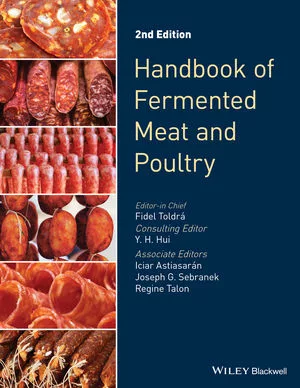
    Handbook of Fermented Meat and Poultry, 2nd Edition

See More Products
×

Stay ahead of the curve. Unlock a dose of cutting-edge insights.

Receive our premium content directly to your inbox.

SIGN-UP TODAY
  • RESOURCES
    • Advertise
    • Contact Us
    • Directories
    • Store
    • Want More
  • SIGN UP TODAY
    • Create Account
    • eMagazine
    • Newsletter
    • Customer Service
    • Manage Preferences
  • SERVICES
    • Marketing Services
    • Reprints
    • Market Research
    • List Rental
    • Survey/Respondent Access
  • STAY CONNECTED
    • LinkedIn
    • Facebook
    • YouTube
    • X (Twitter)
  • PRIVACY
    • PRIVACY POLICY
    • TERMS & CONDITIONS
    • DO NOT SELL MY PERSONAL INFORMATION
    • PRIVACY REQUEST
    • ACCESSIBILITY

Copyright ©2026. All Rights Reserved BNP Media, Inc. and BNP Media II, LLC.

Design, CMS, Hosting & Web Development :: ePublishing