Provisioner logo
Provisioner logo
search
cart
facebook twitter linkedin youtube
  • Sign In
  • Create Account
  • Sign Out
  • My Account
Provisioner logo
Provisioner logo
  • NEWS
    • Industry News
    • Supplier News
    • Case Studies
    • Recalls
    • Regulations
    • New Consumer Products
  • EXCLUSIVES
    • Newsletters
    • Source Book
    • Sponsored Insights
    • Events
    • Webinars
    • Classifieds
    • White Papers
    • Provisioner Store
    • Market Research
  • MEAT PROCESSING
    • SUSTAINABILITY
    • Processing
    • Packaging
    • Ingredients
    • Formulation
    • Food Safety
    • Special Reports
    • Commentary
  • PROFILES
    • Processor Profiles
    • Processor of the Year
    • Top 100 Processors
  • MEDIA
    • Videos
    • Podcasts
  • DIRECTORY
  • MIHOF
  • INDEPENDENT PROCESSOR
  • EMAG
    • eMagazine
    • ARCHIVE ISSUES
    • Contact
    • Advertise
  • JOIN!
Supplier NewsSustainability

Supplier's Perspective

How to reduce water usage during carcass washing
By Robert Ogren
There are several ways to reduce water usage and cut costs, without compromising food safety, during carcass washing
Regular inspections, training and technology are ways to reduce water usage and cut costs - without compromising food safety.
June 9, 2017

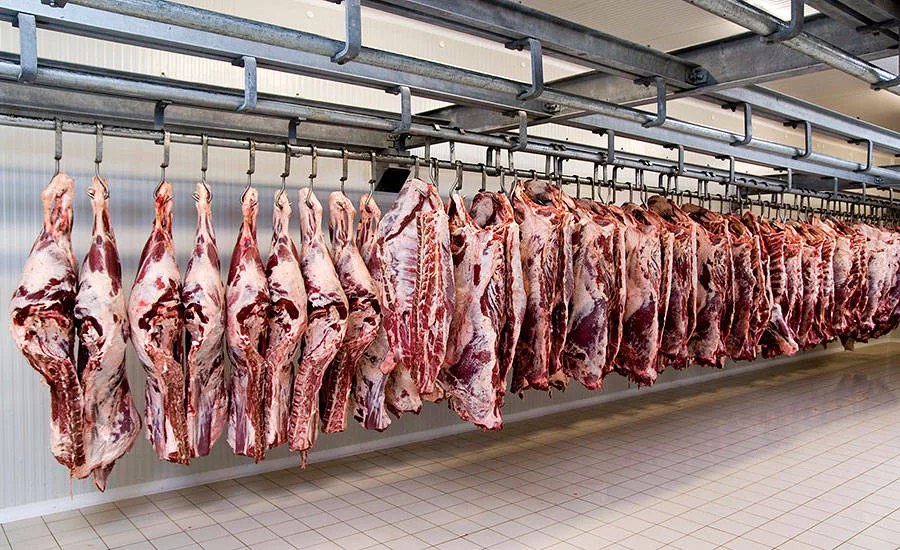
For protein processors, carcass washing on the harvest floor is one of the plant’s biggest offenders when it comes to water usage. Carcass wash cabinets can pump out as much as 350 gallons per minute as they remove bone dust, loose tissue, and other soil. That’s about 336,000 gallons a day in a two-shift plant!

It can cost hundreds of thousands of dollars a year to bring water into a carcass wash cabinet, heat it, and treat the waste water. Plus, many facilities have introduced an antimicrobial step into the process, adding diluted peracetic acid, lactic acid, or bromine to the carcass wash, which further increases a plant’s cost of operation.

To cut costs without compromising food safety, plants should look for ways to reduce the amount of water utilized on the harvest floor. Luckily, there are several ways to do this through regular inspections, training and technology.

Regular inspections

It may be a mundane task, but spending time inspecting machinery is a crucial step in making sure equipment isn’t wasting water. Regular maintenance is needed, and damage should not go unaddressed.

Take this situation we saw in a high-volume beef plant: a carcass fell and damaged a spray pipe in a cabinet. The damaged pipe allowed water to spew out uncontrolled, losing gallons per minute. This is not only wasteful, but it could also make the equipment less effective due to disrupted spray patterns and lead to an even more costly issue.

One of the most common water efficiency oversights stems from the nozzles. The wear and tear these components endure can cause the orifices to expand, which increases the amount of water sprayed and reduces efficacy. Nozzles should be examined monthly and replaced when necessary, typically every six months to one year.

Employee training

A proper inspection first requires that workers are well-trained and understand how the equipment works so they are more likely to spot potential problems.

Do the right employees know where spray nozzles should be hitting the carcass for an effective wash? Are they checking the pressure gauges? Do they know if the equipment is operating under parameters set by the manufacturer?

The best way to feel confident in employees’ knowledge is to have an expert, like a factory-trained technician, provide guidance and education directly to those who work on the harvest floor. Plants should develop and follow a consistent, systematic approach to carcass washing and equipment maintenance.

New technology

The quickest and most effective way for a plant to use water more efficiently is by procuring more technologically advanced equipment. There are innovations in food safety equipment that give processors a sustainable and profitable advantage, such as a recirculating hot water pasteurization system that dramatically reduces waste water. This particular type of equipment reduces and controls microbials.

Look for solutions that have been validated in other plants. There is equipment on the market that’s been shown to cut water use by more than 30 percent, which means a plant can potentially recoup the cost of their technology investment in less than one year.

Processors can certainly continue their current ways of handling carcass washing, but at a time when the worldwide deficit of fresh water is intensifying and protein processors are facing increased pressure to maintain margins, why wouldn’t you look for ways to reduce water use and save money, all without impacting the safety or quality of your product?

For more information about Birko Corp., visit www.birkocorp.com.  NP

KEYWORDS: carcass wash spray applications water conservation water usage

Share This Story

Looking for a reprint of this article?
From high-res PDFs to custom plaques, order your copy today!


Robertogren
Robert Ogren is president of Birko Equipment Division.

Recommended Content

JOIN TODAY
to unlock your recommendations.

Already have an account? Sign In

  • Double Charburger

    Premiumization drives burger category

    Shoppers seek out premium meat offerings to fulfill...
    Special Reports
    By: Sammy Bredar
  • JJS Adult Pekin duck

    Poultry Report 2025: Convenience propels poultry at retail

    Despite continued economic pressures, the poultry...
    Meat and Poultry Industry News
    By: Sammy Bredar
You must login or register in order to post a comment.

Report Abusive Comment

Manage My Account
  • eMagazine Subscriptions
  • Manage My Preferences
  • Newsletters
  • Online Registration
  • Subscription Customer Service
  • Connect with The National Provisioner

More Videos

Sponsored Content

Sponsored Content is a special paid section where industry companies provide high quality, objective, non-commercial content around topics of interest to the The National Provisioner audience. All Sponsored Content is supplied by the advertising company and any opinions expressed in this article are those of the author and not necessarily reflect the views of The National Provisioner or its parent company, BNP Media. Interested in participating in our Sponsored Content section? Contact your local rep!

close
  • A smiling man carrying a grocery basket is reaching down to pick up a package of meat in a grocery store.
    Sponsored byPIC

    The Green Light: New Data Shows 12-to-1 Support for Pork from PRRS-Resistant Pigs

  • Close up of a grocery cart full of groceries, a cropped image of a couple pushing the cart and a blurred background of the vegetable aisle.
    Sponsored byPIC

    New Market Research Finds Consumers in Eight Key Pork Markets Are Likely to Purchase Pork from Gene-Edited Pigs

  • Close up of a young pig with a blurred background.
    Sponsored byPIC

    New Research Forecasts Significant Economic and Market Impacts with PRRS-Resistant Pig Adoption

Popular Stories

Spam Dog

Hormel rolls out Spam hot dog for foodservice applications

Colorado Premium logo

Colorado Premium acquires Old Hickory Smokehouse

Niman Ranch Uncured Grass-Fed Beef Bacon

Niman Ranch introduces beef bacon

2026 Top 100 Meat & Poultry Processors Report

Events

June 11, 2026

From Fresh to Frozen in 3 Minutes Flat: Unlocking the Secrets to Temperature Control

Join Tony Vacaro, Foods Industry Manager, and Emile Klein, Foods Market Strategy Manager at Air Products and Chemicals, Inc. , as they tackle key questions surrounding heat removal in food processing. 

January 1, 2030

Webinar Sponsorship Information

For webinar sponsorship information, visit www.bnpevents.com/webinars or email webinars@bnpmedia.com.

View All Submit An Event

Products

Food Crime: An Introduction to Deviance in the Food Industry

Food Crime: An Introduction to Deviance in the Food Industry

See More Products
From Fresh to Frozen in 3 Minutes Flat: Unlocking the Secrets to Temperature Control Webinar Sponsored by Air Products

Related Articles

  • Chad Equipment introduces WaterSmart to reduce water usage in protein processing operations

    See More
  • How to reduce Salmonella in live-side poultry production

    How to reduce Salmonella in live-side poultry production

    See More
  • Chickens in Poultry Barn

    Virginia Poultry cuts bird-wash water usage by 50 percent

    See More

Related Products

See More Products
  • GlobalData_logo_blue_header.png

    Frozen Meat (Meat) Market in the United States of America - Outlook to 2023...

See More Products

Events

View AllSubmit An Event
  • May 7, 2026

    Stop Plant-Floor Margin Leakage: How to Quantify and Eliminate Hidden Costs

    On-Demand WorkForge Advisor and veteran food production executive Tim Cook (Marlen International, LINXIS Group, Shick Esteve, AMF Bakery Systems) will share findings from The Hidden Costs of Inconsistent Employee Development in Food Manufacturing - research that outlines ten common, measurable, and fixable cost drivers that quietly hit your P&L.
View AllSubmit An Event

Related Directories

  • Clean Water Technology

    Clean Water Technology (CWT) offers industrial wastewater treatment solutions built on decades of R&D. Its proprietary GEM® System outperforms traditional DAF technology, delivering up to 98% removal of TSS, FOG, and undissolved BOD/COD with a smaller footprint, sustainability, and operational savings.
×

Stay ahead of the curve. Unlock a dose of cutting-edge insights.

Receive our premium content directly to your inbox.

SIGN-UP TODAY
  • RESOURCES
    • Advertise
    • Contact Us
    • Directories
    • Store
    • Want More
  • SIGN UP TODAY
    • Create Account
    • eMagazine
    • Newsletter
    • Customer Service
    • Manage Preferences
  • SERVICES
    • Marketing Services
    • Reprints
    • Market Research
    • List Rental
    • Survey/Respondent Access
  • STAY CONNECTED
    • LinkedIn
    • Facebook
    • YouTube
    • X (Twitter)
  • PRIVACY
    • PRIVACY POLICY
    • TERMS & CONDITIONS
    • DO NOT SELL MY PERSONAL INFORMATION
    • PRIVACY REQUEST
    • ACCESSIBILITY

Copyright ©2026. All Rights Reserved BNP Media, Inc. and BNP Media II, LLC.

Design, CMS, Hosting & Web Development :: ePublishing