Provisioner logo
Provisioner logo
search
cart
facebook twitter linkedin youtube
  • Sign In
  • Create Account
  • Sign Out
  • My Account
Provisioner logo
Provisioner logo
  • NEWS
    • Industry News
    • Supplier News
    • Case Studies
    • Recalls
    • Regulations
    • New Consumer Products
  • EXCLUSIVES
    • Newsletters
    • Source Book
    • Sponsored Insights
    • Events
    • Webinars
    • Classifieds
    • White Papers
    • Provisioner Store
    • Market Research
  • MEAT PROCESSING
    • SUSTAINABILITY
    • Processing
    • Packaging
    • Ingredients
    • Formulation
    • Food Safety
    • Special Reports
    • Commentary
  • PROFILES
    • Processor Profiles
    • Processor of the Year
    • Top 100 Processors
  • MEDIA
    • Videos
    • Podcasts
  • DIRECTORY
  • MIHOF
  • INDEPENDENT PROCESSOR
  • EMAG
    • eMagazine
    • ARCHIVE ISSUES
    • Contact
    • Advertise
  • JOIN!
Ingredients

Ingredients

Gums, binders and emulsifiers: Cleaning up labels

Processors experiment with clean-label-friendly gums, binders and emulsifiers.
By Megan Pellegrini
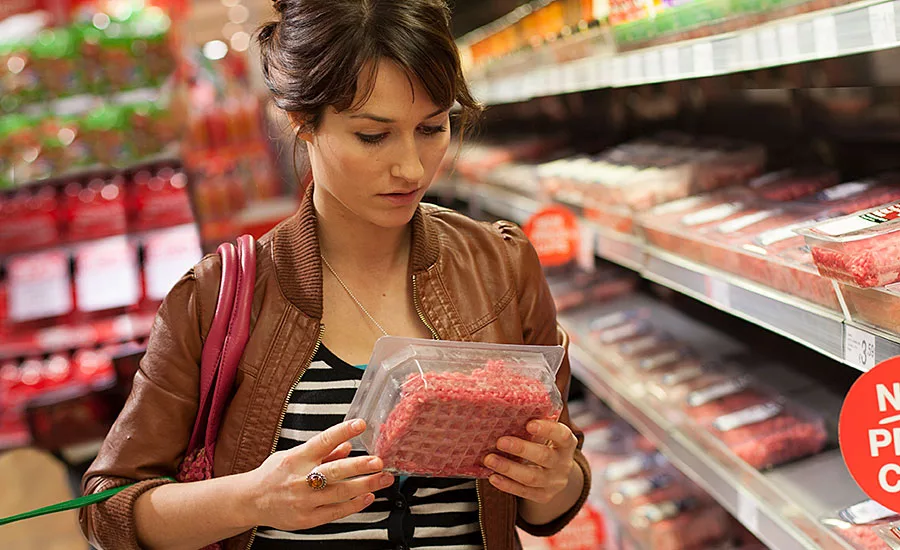
Woman Reading Ingredients on Food Label for Meat Product
Man Reading Ingredients in Hot Dogs
Woman Reading Ingredients on Food Label for Meat Product
Man Reading Ingredients in Hot Dogs
October 11, 2017

Recently, Oscar Mayer cleaned up its hot dog ingredient labels, replacing all artificial preservatives, added nitrates and added nitrites with celery juice. Tyson Foods has also removed nitrates and nitrites from its Ball Park hot dog line. Will other companies follow suit?

Food additives such as nitrites can improve product appearance, texture, taste and freshness. And celery juice certainly sounds healthy to consumers, compared to, say, sodium nitrites. But  the celery juice in hot dogs is treated with bacterial culture to turn its natural nitrates into nitrites, which fulfill the same function as before — provide color, improve shelf life and prevent foodborne illnesses.

“Clean labels are huge; processors are trying to use ingredients with understandable names,” says Rodrigo Tarté, Ph.D., assistant professor at Iowa State University, in Ames, Iowa. “A disdain for ingredients with names that are unrecognizable by the average consumer has directed the spotlight on certain tried and true ingredients like nitrites, nitrates, phosphates, erythorbate and ascorbate. But natural alternatives are more expensive, so not every company will want to go in that direction.”

According to Tarté, certain binder ingredients (as long as they have recognizable names) have been used to simulate some of the functional properties of phosphate, with varying degrees of success. Cherry powder, for example, is being used as a natural alternative for erythorbate and ascorbate, and celery powder, as previously mentioned, can replace nitrites.

“The food and meat industry and ingredient suppliers are fully hands on board with continuing to look at natural alternatives to these ingredients,” says Tarté.


Gumming up labels

Gums play a different role and are used to extend the meat or deli product. One pound of deli turkey, for example, could be lengthened to 1.2 or 1.5 pounds with the use of gums (or extenders).

“They also add flavor, moisture and texture,” says Dennis Seisun, owner of IMR International and a food and beverages consultant based in San Diego. “In comparison tests of meat with gums or extenders compared to those with none, consumers overall prefer the product with extenders.”

Yet, as processors attempt to provide clean or simple labels to consumers by reducing the number of ingredients in their products, gums and binders stand out on product labels.

Even deli or institutional food manufacturers are starting to be concerned about food additives, even though consumers typically do not see an ingredient list, Seisun says.

“Less is cleaner, as far as consumers are concerned,” Seisun says.

What’s in a name? A lot, apparently. “Ingredients like carrageenan have been victims of the clean-label movement — or anything with a chemical-sounding name,” says Tarté. “The fact that carrageenan comes from seaweed seems to only make it appear worse. So ingredient options are becoming fewer.”

The Food Babe has mobilized social media followers to join her campaign against carrageenan, a binder. “It’s a little under the gun in the United States from a consumer standpoint, suffering more in dairy than in meat products though,” Seisun says. “Also, its availability has tightened and prices are going up because of the weather in the Philippines and Indonesia where much of the world’s carrageenan is produced.”

Xanthan gum is also struggling with public perception. “People are irrationally concerned with ingredients starting with the letter X; however, xanthan gum is one of the most widely used binders and is also gluten-free,” Seisun says.

The emulsifier gum arabic is being re-branded as acacia gum to sound more appealing on a label, as well, Seisun says.

Modified corn starches have also fallen out of favor as a binder for native starches. “Starches that are from nature are good for some uses and not others,” Tarté says. “Lots of R&D work is taking place with native starches in order to improve on their limited functional properties.”


Avoiding cross-contamination

Binders can be plant-based or dairy-based, says Tarté, so allergenicity is always a concern.

“Many companies stay away from plant-based proteins for that reason,” Tarté says. “The allergen issue is significant, in many cases not so much from the consumer point of view — we hope they read product labels — but from issues of cross-contamination at the manufacturing-plant level.”

If a product uses soy, for example, and it goes airborne, it could potentially contaminate batches that don’t use soy.

Fibers from sources such as oat, carrot, pea and citrus, as well as rice bran, show promise because they are non-allergenic and clean-label-friendly.

“We see a lot of potential in these ingredients, because they are carbohydrates [not protein-based] and functional,” Tarté says.


Working with retailers

Retailers are taking on a pseudo regulatory role as they are asking for more disclosure and transparency than, in many cases, even the United States Department of Agriculture (USDA) or Food and Drug Administration (FDA), Tarté says.

“If a company sells products at Whole Foods, for example, they have to meet their specific standards, many of which are stricter than those of USDA and FDA regulations,” Tarté says. “This is a big change in retail, and it’s spilling over into foodservice.”

In addition, other retailers also have their own set of standards, which, while similar to each other, still contain some differences that food manufacturers must keep in mind, Tarté says.

Ultimately, processors will have to weigh the pros and cons of using available gums, binders and emulsifiers against the public’s perception of their benefits.  NP

KEYWORDS: clean-label gums, binders and emulsifiers

Share This Story

Looking for a reprint of this article?
From high-res PDFs to custom plaques, order your copy today!


Megan pellegrini
Megan Pellegrini is a contributing writer.

Recommended Content

JOIN TODAY
to unlock your recommendations.

Already have an account? Sign In

  • Double Charburger

    Premiumization drives burger category

    Shoppers seek out premium meat offerings to fulfill...
    Meat and Poultry Industry News
    By: Sammy Bredar
  • JJS Adult Pekin duck

    Poultry Report 2025: Convenience propels poultry at retail

    Despite continued economic pressures, the poultry...
    Chicken
    By: Sammy Bredar
You must login or register in order to post a comment.

Report Abusive Comment

Manage My Account
  • eMagazine Subscriptions
  • Manage My Preferences
  • Newsletters
  • Online Registration
  • Subscription Customer Service
  • Connect with The National Provisioner

More Videos

Sponsored Content

Sponsored Content is a special paid section where industry companies provide high quality, objective, non-commercial content around topics of interest to the The National Provisioner audience. All Sponsored Content is supplied by the advertising company and any opinions expressed in this article are those of the author and not necessarily reflect the views of The National Provisioner or its parent company, BNP Media. Interested in participating in our Sponsored Content section? Contact your local rep!

close
  • A smiling man carrying a grocery basket is reaching down to pick up a package of meat in a grocery store.
    Sponsored byPIC

    The Green Light: New Data Shows 12-to-1 Support for Pork from PRRS-Resistant Pigs

  • Close up of a grocery cart full of groceries, a cropped image of a couple pushing the cart and a blurred background of the vegetable aisle.
    Sponsored byPIC

    New Market Research Finds Consumers in Eight Key Pork Markets Are Likely to Purchase Pork from Gene-Edited Pigs

  • Close up of a young pig with a blurred background.
    Sponsored byPIC

    New Research Forecasts Significant Economic and Market Impacts with PRRS-Resistant Pig Adoption

Popular Stories

Various new Primal snack sticks on a table amongst pencils, apples, a pair of glasses, lunch bags and a water bottle.

Protein demand drives snacking occasions

Several cuts of beef, pork and chicken on a wooden board, cast iron pan and salt.

Validated thermal lethality data and a new tool for ensuring safety of RTE meats

Cargill logo

Cargill initiates lockout at Fort Morgan beef plant after union rejects contract

2026 Top 100 Meat & Poultry Processors Report

Events

January 1, 2030

Webinar Sponsorship Information

For webinar sponsorship information, visit www.bnpevents.com/webinars or email webinars@bnpmedia.com.

View All Submit An Event

Products

Food Crime: An Introduction to Deviance in the Food Industry

Food Crime: An Introduction to Deviance in the Food Industry

See More Products
From Fresh to Frozen in 3 Minutes Flat: Unlocking the Secrets to Temperature Control Webinar Sponsored by Air Products

Related Articles

  • Gums, binders and emulsifiers

    Gums, binders and emulsifiers: Stronger together

    See More
  • Worker Pushing Utility Cart of Chubs

    The use of gums, binders and emulsifiers in meat and poultry

    See More
  • Cleaning up Labels

    See More

Related Products

See More Products
  • Handbook of Poultry Science and Technology, Two-Volume Set

  • Handbook of Poultry Science and Technology, Volume 1, Primary Processing

  • Organic Meat Production and Processing

See More Products

Events

View AllSubmit An Event
  • July 10, 2025

    Is Your Food Safety Plan Up to Date? Insights & Innovations Shaping Meat and Poultry Safety in 2025

    On-Demand Whether you're a processor, producer, or industry stakeholder, this is your chance to gain insider knowledge that will elevate your food safety practices from compliant to exemplary.
View AllSubmit An Event

Related Directories

  • Clean Water Technology

    Clean Water Technology (CWT) offers industrial wastewater treatment solutions built on decades of R&D. Its proprietary GEM® System outperforms traditional DAF technology, delivering up to 98% removal of TSS, FOG, and undissolved BOD/COD with a smaller footprint, sustainability, and operational savings.
×

Stay ahead of the curve. Unlock a dose of cutting-edge insights.

Receive our premium content directly to your inbox.

SIGN-UP TODAY
  • RESOURCES
    • Advertise
    • Contact Us
    • Directories
    • Store
    • Want More
  • SIGN UP TODAY
    • Create Account
    • eMagazine
    • Newsletter
    • Customer Service
    • Manage Preferences
  • SERVICES
    • Marketing Services
    • Reprints
    • Market Research
    • List Rental
    • Survey/Respondent Access
  • STAY CONNECTED
    • LinkedIn
    • Facebook
    • YouTube
    • X (Twitter)
  • PRIVACY
    • PRIVACY POLICY
    • TERMS & CONDITIONS
    • DO NOT SELL MY PERSONAL INFORMATION
    • PRIVACY REQUEST
    • ACCESSIBILITY

Copyright ©2026. All Rights Reserved BNP Media, Inc. and BNP Media II, LLC.

Design, CMS, Hosting & Web Development :: ePublishing