Provisioner logo
Provisioner logo
search
cart
facebook twitter linkedin youtube
  • Sign In
  • Create Account
  • Sign Out
  • My Account
Provisioner logo
Provisioner logo
  • NEWS
    • Industry News
    • Supplier News
    • Case Studies
    • Recalls
    • Regulations
    • New Consumer Products
  • EXCLUSIVES
    • Newsletters
    • Source Book
    • Sponsored Insights
    • Events
    • Webinars
    • Classifieds
    • White Papers
    • Provisioner Store
    • Market Research
  • MEAT PROCESSING
    • SUSTAINABILITY
    • Processing
    • Packaging
    • Ingredients
    • Formulation
    • Food Safety
    • Special Reports
    • Commentary
  • PROFILES
    • Processor Profiles
    • Processor of the Year
    • Top 100 Processors
  • MEDIA
    • Videos
    • Podcasts
  • DIRECTORY
  • MIHOF
  • INDEPENDENT PROCESSOR
  • EMAG
    • eMagazine
    • ARCHIVE ISSUES
    • Contact
    • Advertise
  • JOIN!
Meat and Poultry Industry NewsSustainabilityExpert Commentary

Business Strategies

2018 Crop Report
By Dan Emery
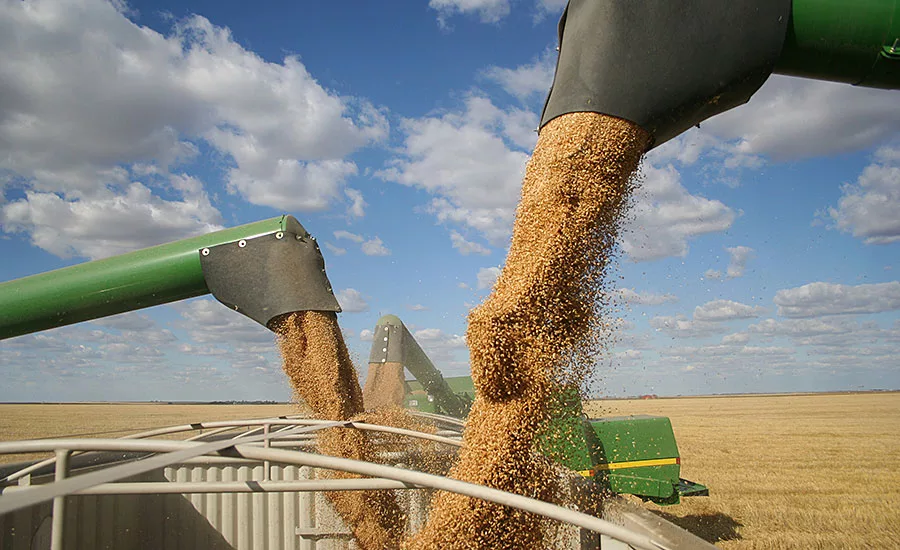
Combines Unloading Crop Yields
August 21, 2018

The 2018 growing season was delayed by 10 to 14 days by an extended winter and wet planting season. But a warm May and lots of moisture combined with near-perfect June weather leading up to July 4 in most growing regions may increase growth and yield. As we have had for a number of years, it will be a buyer’s market regardless of how it shakes out. As usual, there are pockets of drought but nothing that will have a significant impact on either the corn or soybeans supply.  The warm and dry May/June weather allowed for acreage expansion of nearly 1.6 million acres between corn and beans.

CORN*

In late June, the U.S. Department of Agriculture (USDA) estimated that corn acres reached 89.128 million acres in 2018. In 31 of 48 states, the agency estimates flat or slightly lower acreage compared with 2017. That number is still higher than USDA’s March estimates of 88.03 million acres. 

USDA’s corn stock estimates rose from 5.229 billion bushels last June to 5.306 billion bushels. USDA noted a divergent trend regarding on- and off-farm storage for corn stocks. On-farm corn stocks are at an estimated 2.75 billion bushels, down 3 percent from a year ago, while off-farm stocks of 2.56 billion bushels moved 7 percent higher this year. Disappearance of 3.59 billion bushels between March and May grew 5.9 percent year-over-year, according to USDA. 

SOYBEANS*

The USDA estimated soybean acres trended 1 percent lower from a year ago, with 89.557 million acres. That’s moderately higher than USDA’s March estimates of 88.99 acres.  

Soybeans stored in all positions on June 1, 2018 totaled 1.22 billion bushels, up 26 percent from June 1, 2017. On-farm stocks totaled 377 million bushels, up 13 percent from a year ago. Off-farm stocks, at 845 million bushels, are up 33 percent from a year ago. Indicated disappearance for the March through May 2018 quarter totaled 888 million bushels, up 15 percent from the same period a year earlier. 

WHEAT*

All wheat acres, in contrast, are up 4 percent from a year ago, according to USDA, with 47.821 million acres. Spring wheat acres accounted for much of this boost, coming in at 13.202 million acres — significantly higher than USDA’s March estimates of 12.63 million acres.  

Domestic wheat stocks fell slightly, from 1.181 billion bushels to 1.110 billion bushels, slipping 7 percent from last June. On-farm wheat stocks tumbled 32 percent from a year ago, reaching 130 million bushels. Off-farm stocks of 970 million bushels are just 2 percent lower than they were last June.

Disappearance between March and May totaled 395 million bushels, down 17 percent year-over-year.  

INTERNATIONAL

In the U.S., we still need to ship our farm products, both crops and protein. Increased sourcing of product from the European Union, Asia, Australia and Brazil will create a vacuum in other markets which creates opportunities. The primary protein feed stock in the U.S. is corn and soybean meal, while the E.U. feeds primarily wheat. Energy prices have taken a significant swing higher in a range more sustainable for oil producers to regain profitability.  

The international trade war between the U.S. and China could have short-term effects on both the protein markets and the feed ingredient markets. On July 6, China slapped a 25 percent tariff on imports from the U.S. This will probably affect pork and soybean markets the most. In addition, China has ordered state media not to report on comments from President Trump or U.S. officials because of the trade conflict. The notice indicates that China is trying to shield its citizens from news of trade dispute escalations with the U.S. They must manage their population’s discontent, which requires adequate supplies of quality protein among other things. It also seems Beijing is trying to not anger Western countries by censoring mentions of its “Made in China 2025” initiative. The timing is not particularly good for any of the sectors, but I expect some resolution to come prior to midterm elections in November. Both sides need a resolution long-term. The Chinese can’t live without U.S. trade markets and the food we provide to the many mouths they have to feed.  

Until the trade situation clears up, it’s going to take some real weather to move the market higher. Every year is unique and the variables that are in play this can cause unforeseen changes. My recommendation is hedge on a low market while corn and soybeans are over supplied. Many of you have done this already based on the percent of the crop committed.  NP

* Data from USDA’s report on June 29

KEYWORDS: agriculture crops

Share This Story

Looking for a reprint of this article?
From high-res PDFs to custom plaques, order your copy today!


Dan Emery has 25 years experience in the food industry, including 15 as vice president of marketing at Pilgrim's Pride. He is directing Meaningful Solutions, a company founded to assist clients in solving problems.

Recommended Content

JOIN TODAY
to unlock your recommendations.

Already have an account? Sign In

  • Double Charburger

    Premiumization drives burger category

    Shoppers seek out premium meat offerings to fulfill...
    Special Reports
    By: Sammy Bredar
  • JJS Adult Pekin duck

    Poultry Report 2025: Convenience propels poultry at retail

    Despite continued economic pressures, the poultry...
    Meat and Poultry Industry News
    By: Sammy Bredar
You must login or register in order to post a comment.

Report Abusive Comment

Manage My Account
  • eMagazine Subscriptions
  • Manage My Preferences
  • Newsletters
  • Online Registration
  • Subscription Customer Service
  • Connect with The National Provisioner

More Videos

Sponsored Content

Sponsored Content is a special paid section where industry companies provide high quality, objective, non-commercial content around topics of interest to the The National Provisioner audience. All Sponsored Content is supplied by the advertising company and any opinions expressed in this article are those of the author and not necessarily reflect the views of The National Provisioner or its parent company, BNP Media. Interested in participating in our Sponsored Content section? Contact your local rep!

close
  • A smiling man carrying a grocery basket is reaching down to pick up a package of meat in a grocery store.
    Sponsored byPIC

    The Green Light: New Data Shows 12-to-1 Support for Pork from PRRS-Resistant Pigs

  • Close up of a grocery cart full of groceries, a cropped image of a couple pushing the cart and a blurred background of the vegetable aisle.
    Sponsored byPIC

    New Market Research Finds Consumers in Eight Key Pork Markets Are Likely to Purchase Pork from Gene-Edited Pigs

  • Close up of a young pig with a blurred background.
    Sponsored byPIC

    New Research Forecasts Significant Economic and Market Impacts with PRRS-Resistant Pig Adoption

Popular Stories

Spam Dog

Hormel rolls out Spam hot dog for foodservice applications

Colorado Premium logo

Colorado Premium acquires Old Hickory Smokehouse

Niman Ranch Uncured Grass-Fed Beef Bacon

Niman Ranch introduces beef bacon

2026 Top 100 Meat & Poultry Processors Report

Events

June 11, 2026

From Fresh to Frozen in 3 Minutes Flat: Unlocking the Secrets to Temperature Control

Join Tony Vacaro, Foods Industry Manager, and Emile Klein, Foods Market Strategy Manager at Air Products and Chemicals, Inc. , as they tackle key questions surrounding heat removal in food processing. 

January 1, 2030

Webinar Sponsorship Information

For webinar sponsorship information, visit www.bnpevents.com/webinars or email webinars@bnpmedia.com.

View All Submit An Event

Products

Food Crime: An Introduction to Deviance in the Food Industry

Food Crime: An Introduction to Deviance in the Food Industry

See More Products
From Fresh to Frozen in 3 Minutes Flat: Unlocking the Secrets to Temperature Control Webinar Sponsored by Air Products

Related Articles

  • Inches High Corn Plant

    2019 Crop Report: Riding the crazy train

    See More
  • crop field

    The Crop Report 2023: Second half of 2023 will continue to challenge producers

    See More
  • farmer's field

    2020 Crop Report: Buyer’s market, despite uncertainty

    See More
×

Stay ahead of the curve. Unlock a dose of cutting-edge insights.

Receive our premium content directly to your inbox.

SIGN-UP TODAY
  • RESOURCES
    • Advertise
    • Contact Us
    • Directories
    • Store
    • Want More
  • SIGN UP TODAY
    • Create Account
    • eMagazine
    • Newsletter
    • Customer Service
    • Manage Preferences
  • SERVICES
    • Marketing Services
    • Reprints
    • Market Research
    • List Rental
    • Survey/Respondent Access
  • STAY CONNECTED
    • LinkedIn
    • Facebook
    • YouTube
    • X (Twitter)
  • PRIVACY
    • PRIVACY POLICY
    • TERMS & CONDITIONS
    • DO NOT SELL MY PERSONAL INFORMATION
    • PRIVACY REQUEST
    • ACCESSIBILITY

Copyright ©2026. All Rights Reserved BNP Media, Inc. and BNP Media II, LLC.

Design, CMS, Hosting & Web Development :: ePublishing