Provisioner logo
Provisioner logo
search
cart
facebook twitter linkedin youtube
  • Sign In
  • Create Account
  • Sign Out
  • My Account
Provisioner logo
Provisioner logo
  • NEWS
    • Industry News
    • Supplier News
    • Case Studies
    • Recalls
    • Regulations
    • New Consumer Products
  • EXCLUSIVES
    • Newsletters
    • Source Book
    • Sponsored Insights
    • Events
    • Webinars
    • Classifieds
    • White Papers
    • Provisioner Store
    • Market Research
  • MEAT PROCESSING
    • SUSTAINABILITY
    • Processing
    • Packaging
    • Ingredients
    • Formulation
    • Food Safety
    • Special Reports
    • Commentary
  • PROFILES
    • Processor Profiles
    • Processor of the Year
    • Top 100 Processors
  • MEDIA
    • Videos
    • Podcasts
  • DIRECTORY
  • MIHOF
  • INDEPENDENT PROCESSOR
  • EMAG
    • eMagazine
    • ARCHIVE ISSUES
    • Contact
    • Advertise
  • JOIN!
Supplier News

Top 10 pest vulnerable zones of food distribution centers and warehouses

By Industry News
The National Provisioner Supplier News
November 16, 2020

By Patricia Hottel, BCE

All pests will have certain environmental preferences and survival needs. When the right conditions are met, pests thrive. Sanitation, employee practices, facility processes, and structural and equipment design can either hinder or help pest’s survival. In fact, not all areas within a facility will meet the needs of the pest equally and certain areas will have a higher risk for pest development than others. Here is a list of some of the ten most common areas of pest activity by product type, structural design, and practices. Utilize this list in prioritizing areas for regular inspection as part of a pest prevention program.

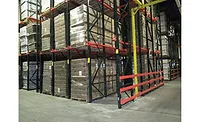
1 Rack Legs

  • Cleanability is rarely a consideration in designing and purchasing racking systems for warehouse storage. Commonly, they are either three or four-sided with numerous holes drilled into the leg for ease of assembly. The problem is that the holes can provide areas for food to accumulate and pests to travel unobserved.
  • The openings in the leg do not provide sufficient space for cleaning tools to access and effective cleaning will take time to complete.
  • The issue can be compounded by the addition of guards installed to protect the base of the rack leg from forklift damage. These too can be difficult to clean and provide areas of food product accumulation for mice and stored product pests.

2 Horizontal Rack Supports

  • Not only can vertical supports offer areas for pest harborage, so can horizontal rack supports. In addition, they may have holes or channels in them for pests to travel. Supports used for rack grating can provide “U” shaped wells for product spills to accumulate.
  • Capping holes and mounting “U” shaped wells upside down can assist in reducing food accumulations.

3 Dumpster / Compactor Areas

  • A poorly maintained dumpster pad can provide food for flies, birds, and rodents. The type of dumpster and dumpster seal can make a difference in product leakage from the box and/or compactor seal. A single unit designed for liquid disposal will reduce leakage. Unfortunately, most facilities do not have the all-in-one unit.
  • Cleaning between the unit and the dumpster pad is required when the disposal company changes out the box. This is the only time when the pad is exposed for effective cleaning.
  • Pads should be maintained and free of cracks to prevent food contamination of the soil or flies could develop.
  • Make sure that a clean dumpster box is provided by the disposal company when changing out the box. Fly maggots can be delivered with a dumpster box that has been emptied but not washed.

4 Trailers for Repurposing Food and Other Wastes

  • It is important to reduce wastes that go to landfills, but how we handle these repurposed wastes can make a difference in pest pressures at the site. Trailers should be sealed to block insects and vertebrate pests to forage on the materials inside.
  • Birds, flies, racoons, rodents and feral cats are common pests of poorly sealed trailers used for repurposing food. It is important to have a program for cleaning the trailers in between use.
  • Food residue left in trailers can support stored product pests and flies. If the trailer will be docked at a dock door, make sure the dock door is kept closed while not actively loading and that the trailer door be kept closed as well.
  • Lastly, understand where the trailers go and what controls are in place to prevent movement of pests like rodents from the repurposing drop off site to the warehouse.

5 Balers

  • Balers may be used to condensed cardboard and paper bags for recycling and disposal. Food residues on these items can support pests and accumulate underneath and around the baler unit.
  • Balers are often difficult to clean due to their design and the source of stored product pests and flies. It’s important to check these areas frequently.

6 Damaged Goods

  • Products in the damaged goods may provide easy access for pests to feed and develop. Damaged cans can be prime area for flies.
  • Make sure there is an area designated for damaged goods and that warehouse staff are moving damaged items to this assigned area for ease of inspection and disposal.

7 Product Type

  • Certain products may be more susceptible to pests than others, such as pet and bird seed. This is due to the fact that the products go through fewer kill steps in processing.
  • Bagged packaging may be easier for pests to enter due to holes provided in sewn bags or lack of complete seals. Aged product and expired inventory will likewise be more likely to be infested.

8 Corrugate Wall Construction

  • Metal corrugated walls are an economical building construction material but are subject to damage and more difficult to pest proof. Damaged walls may provide pests access from the exterior or void spaces for pest development to the interior.
  • In some facilities, rolled insulation is placed over the corrugate wall for temperature control, making it a perfect location for rodents to travel and nest.

9 Break Rooms and Locker Rooms

  • Areas where employees eat and store their personnel belongings can see pest activity. Hitch-hiking insects like cockroaches and bed bugs may be brought into facility on personal belongings.
  • Food materials may attract and support other pests like mice and flies.

10 Wash Bays and Drains for Floor Scrubbers

  • The moisture and organic material from equipment wash down bays and floor scrubber units may support pests like flies.
  • It is important to frequently clean drains to remove organic material which may allow fly development. Maintain floors and walls free of cracks, anduse squeegees and fans to help dry areas quickly.
  • Filth flies and small flies will need moist organic material for development. Targeting both the moisture levels and amount of organic material can be helpful in reducing fly populations.

For more information visit www.mccloudservices.com.

KEYWORDS: mccloud services Pest control

Share This Story

Looking for a reprint of this article?
From high-res PDFs to custom plaques, order your copy today!


Recommended Content

JOIN TODAY
to unlock your recommendations.

Already have an account? Sign In

  • Double Charburger

    Premiumization drives burger category

    Shoppers seek out premium meat offerings to fulfill...
    Meat and Poultry Industry News
    By: Sammy Bredar
  • JJS Adult Pekin duck

    Poultry Report 2025: Convenience propels poultry at retail

    Despite continued economic pressures, the poultry...
    Chicken
    By: Sammy Bredar
You must login or register in order to post a comment.

Report Abusive Comment

Manage My Account
  • eMagazine Subscriptions
  • Manage My Preferences
  • Newsletters
  • Online Registration
  • Subscription Customer Service
  • Connect with The National Provisioner

More Videos

Sponsored Content

Sponsored Content is a special paid section where industry companies provide high quality, objective, non-commercial content around topics of interest to the The National Provisioner audience. All Sponsored Content is supplied by the advertising company and any opinions expressed in this article are those of the author and not necessarily reflect the views of The National Provisioner or its parent company, BNP Media. Interested in participating in our Sponsored Content section? Contact your local rep!

close
  • A smiling man carrying a grocery basket is reaching down to pick up a package of meat in a grocery store.
    Sponsored byPIC

    The Green Light: New Data Shows 12-to-1 Support for Pork from PRRS-Resistant Pigs

  • Close up of a grocery cart full of groceries, a cropped image of a couple pushing the cart and a blurred background of the vegetable aisle.
    Sponsored byPIC

    New Market Research Finds Consumers in Eight Key Pork Markets Are Likely to Purchase Pork from Gene-Edited Pigs

  • Close up of a young pig with a blurred background.
    Sponsored byPIC

    New Research Forecasts Significant Economic and Market Impacts with PRRS-Resistant Pig Adoption

Popular Stories

Spam Dog

Hormel rolls out Spam hot dog for foodservice applications

Various new Primal snack sticks on a table amongst pencils, apples, a pair of glasses, lunch bags and a water bottle.

Protein demand drives snacking occasions

Several cuts of beef, pork and chicken on a wooden board, cast iron pan and salt.

Validated thermal lethality data and a new tool for ensuring safety of RTE meats

2026 Top 100 Meat & Poultry Processors Report

Events

June 11, 2026

From Fresh to Frozen in 3 Minutes Flat: Unlocking the Secrets to Temperature Control

Join Tony Vacaro, Foods Industry Manager, and Emile Klein, Foods Market Strategy Manager at Air Products and Chemicals, Inc. , as they tackle key questions surrounding heat removal in food processing. 

January 1, 2030

Webinar Sponsorship Information

For webinar sponsorship information, visit www.bnpevents.com/webinars or email webinars@bnpmedia.com.

View All Submit An Event

Products

Food Crime: An Introduction to Deviance in the Food Industry

Food Crime: An Introduction to Deviance in the Food Industry

See More Products
From Fresh to Frozen in 3 Minutes Flat: Unlocking the Secrets to Temperature Control Webinar Sponsored by Air Products

Related Articles

  • Steel King Racking

    Tips for keeping food/beverage warehouses and distribution centers safe, compliant, and productive

    See More
  • Tips for keeping food/beverage warehouses and distribution centers safe, compliant, and productive

    See More
  • Golden State Foods will sell selected distribution centers to Martin Brower

    See More

Related Products

See More Products
  • The 10 Principles of Food Industry Sustainability

  • Handbook of Food Products Manufacturing: Health, Meat, Milk, Poultry, Seafood, and Vegetables, Volume 2

  • Food Plant Sanitation: Design, Maintenance, and Good Manufacturing Practices, Second Edition

See More Products

Related Directories

  • Canadian Institute of Food Science & Technology

    The purpose of CIFST is to advocate and promote the quality, safety and wholesomeness of the food supply through the application of science and technology by linking food science professionals from industry, government and academia.
×

Stay ahead of the curve. Unlock a dose of cutting-edge insights.

Receive our premium content directly to your inbox.

SIGN-UP TODAY
  • RESOURCES
    • Advertise
    • Contact Us
    • Directories
    • Store
    • Want More
  • SIGN UP TODAY
    • Create Account
    • eMagazine
    • Newsletter
    • Customer Service
    • Manage Preferences
  • SERVICES
    • Marketing Services
    • Reprints
    • Market Research
    • List Rental
    • Survey/Respondent Access
  • STAY CONNECTED
    • LinkedIn
    • Facebook
    • YouTube
    • X (Twitter)
  • PRIVACY
    • PRIVACY POLICY
    • TERMS & CONDITIONS
    • DO NOT SELL MY PERSONAL INFORMATION
    • PRIVACY REQUEST
    • ACCESSIBILITY

Copyright ©2026. All Rights Reserved BNP Media, Inc. and BNP Media II, LLC.

Design, CMS, Hosting & Web Development :: ePublishing