Provisioner logo
Provisioner logo
search
cart
facebook twitter linkedin youtube
  • Sign In
  • Create Account
  • Sign Out
  • My Account
Provisioner logo
Provisioner logo
  • NEWS
    • Industry News
    • Supplier News
    • Case Studies
    • Recalls
    • Regulations
    • New Consumer Products
  • EXCLUSIVES
    • Newsletters
    • Source Book
    • Sponsored Insights
    • Events
    • Webinars
    • Classifieds
    • White Papers
    • Provisioner Store
    • Market Research
  • MEAT PROCESSING
    • SUSTAINABILITY
    • Processing
    • Packaging
    • Ingredients
    • Formulation
    • Food Safety
    • Special Reports
    • Commentary
  • PROFILES
    • Processor Profiles
    • Processor of the Year
    • Top 100 Processors
  • MEDIA
    • Videos
    • Podcasts
  • DIRECTORY
  • MIHOF
  • INDEPENDENT PROCESSOR
  • EMAG
    • eMagazine
    • ARCHIVE ISSUES
    • Contact
    • Advertise
  • JOIN!
Meat and Poultry Industry NewsSupplier NewsMeat and Poultry ProcessingFood Safety

AI-driven vision inspection provides a dependable ‘eye’ for challenging foreign material detection

AI vision system can deliver consistent precision and accuracy across different production lines or SKUs.

By Jon Gilchrist
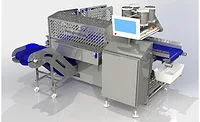
KPM AI vision

Photo credit: KPM

Lower-density foreign materials like these often go undetected by most inspection technologies. However, AI vision inspection technologies are well-equipped to detect anomalies like these and others in real time and with high accuracy. 

November 14, 2024

For many reasons, meat processing companies have always had the challenge of retaining and training online product inspectors at their plants, despite the fact they are vitally essential to a company’s quality and food safety programs. Nevertheless, all it takes is one product recall due to inaccurate detection of unwanted or harmful foreign materials on food products to cripple a company financially and its brand’s perception in the market.

The average cost of a product recall can vary widely depending on the industry, the scale of the recall, and the specific circumstances involved. In the food industry, for example, a study by the Food Marketing Institute and the Grocery Manufacturers Association (now known as the Consumer Brands Association) has estimated that the direct costs of a recall can average anywhere from $10 million to $30 million. This estimate includes expenses related to notifying consumers and retailers, pulling the product from shelves, destroying contaminated products, and managing public relations.  

Therefore, meat processing companies that invest in automated technologies to protect their operations and customers from potentially unsafe food products can mitigate these risks effectively.  

Traditional methods for foreign material detection have limits

When it comes to detecting dense and solid objects – metal tags, stones, broken pieces of machinery, etc. – X-ray and metal detection systems have been a reliable solution used by meat processing companies for decades. However, low-density or soft objects pose an equally damaging risk should they find their way into the process. X-ray and metal detectors are not well suited to detect materials like rubber, paper, clear plastic and films, wood chips, etc.

Computer/machine vision inspection technologies driven by artificial intelligence (AI) have quickly become popular among meat processing companies as a dependable option to detect these challenging foreign materials. These sanitary inspection technologies integrate within critical stages of a processing line to analyze products in real time and benchmark their product attributes against pre-programmed standards for product quality and appearance. Virtually anything that a human inspector can perceive can be programmed into a product measurement code, thereby creating objective, quantifiable measurements for what has previously been a subjective process.

Meat processors benefit from recent advancements in AI vision inspection

At the heart of an AI vision inspection system is its machine learning algorithms. Like a line worker, the algorithm requires training, using vast datasets of images labeled with information about desired quality, known defects, and other relevant characteristics that human spotters are trained to recognize.

AI vision inspection systems are trained to detect virtually any foreign material on the surface of a food product with high precision. Additionally, unlike rotating shifts of workers, once trained, the AI vision system can deliver the same precision and accuracy if it remains in operation or trained for a different production line or SKU.

Some AI vision inspection systems include infrared imaging to analyze non-visible materials like moisture and oil content. These attributes provide further insight into the composition of a product, adding a deeper layer of protection to inspect foreign objects that are similar in color to the final product, which most human inspectors can easily miss.

An aid to labor – not a replacement

AI vision inspection addresses an area of most meat processing organizations that has traditionally been difficult to manage: Labor retention at critical quality control positions within the organization. Nevertheless, with AI being a hotly discussed topic throughout our world today – especially regarding its impacts on worker responsibilities in a variety of industries – in the case of vision inspection technology, it can provide many positive productivity impacts for companies. Rather than having a full-time product inspector on the line or continually spending the time, effort, and money to train new employees on these tasks, companies can give that individual a more meaningful role elsewhere in the plant.

Meat and poultry companies can transform their quality assurance and food safety efforts by integrating AI vision inspection technology, especially when identifying traditionally difficult-to-detect foreign materials. As more companies invest in AI vision inspection technologies, the models and capabilities for these robust systems will expand, improve, and revolutionize quality control capabilities for meat and poultry processors.


KEYWORDS: artificial intelligence detection systems foreign material contamination KPM Analytics vision systems

Share This Story

Looking for a reprint of this article?
From high-res PDFs to custom plaques, order your copy today!


Jongilchrist 2

Jon Gilchrist is the engineering manager at KPM Analytics.

Recommended Content

JOIN TODAY
to unlock your recommendations.

Already have an account? Sign In

  • Double Charburger

    Premiumization drives burger category

    Shoppers seek out premium meat offerings to fulfill...
    Meat and Poultry Industry News
    By: Sammy Bredar
  • JJS Adult Pekin duck

    Poultry Report 2025: Convenience propels poultry at retail

    Despite continued economic pressures, the poultry...
    Meat and Poultry Industry News
    By: Sammy Bredar
You must login or register in order to post a comment.

Report Abusive Comment

Manage My Account
  • eMagazine Subscriptions
  • Manage My Preferences
  • Newsletters
  • Online Registration
  • Subscription Customer Service
  • Connect with The National Provisioner

More Videos

Sponsored Content

Sponsored Content is a special paid section where industry companies provide high quality, objective, non-commercial content around topics of interest to the The National Provisioner audience. All Sponsored Content is supplied by the advertising company and any opinions expressed in this article are those of the author and not necessarily reflect the views of The National Provisioner or its parent company, BNP Media. Interested in participating in our Sponsored Content section? Contact your local rep!

close
  • A smiling man carrying a grocery basket is reaching down to pick up a package of meat in a grocery store.
    Sponsored byPIC

    The Green Light: New Data Shows 12-to-1 Support for Pork from PRRS-Resistant Pigs

  • Close up of a grocery cart full of groceries, a cropped image of a couple pushing the cart and a blurred background of the vegetable aisle.
    Sponsored byPIC

    New Market Research Finds Consumers in Eight Key Pork Markets Are Likely to Purchase Pork from Gene-Edited Pigs

  • Close up of a young pig with a blurred background.
    Sponsored byPIC

    New Research Forecasts Significant Economic and Market Impacts with PRRS-Resistant Pig Adoption

Popular Stories

Spam Dog

Hormel rolls out Spam hot dog for foodservice applications

Various new Primal snack sticks on a table amongst pencils, apples, a pair of glasses, lunch bags and a water bottle.

Protein demand drives snacking occasions

Several cuts of beef, pork and chicken on a wooden board, cast iron pan and salt.

Validated thermal lethality data and a new tool for ensuring safety of RTE meats

2026 Top 100 Meat & Poultry Processors Report

Events

June 11, 2026

From Fresh to Frozen in 3 Minutes Flat: Unlocking the Secrets to Temperature Control

Join Tony Vacaro, Foods Industry Manager, and Emile Klein, Foods Market Strategy Manager at Air Products and Chemicals, Inc. , as they tackle key questions surrounding heat removal in food processing. 

January 1, 2030

Webinar Sponsorship Information

For webinar sponsorship information, visit www.bnpevents.com/webinars or email webinars@bnpmedia.com.

View All Submit An Event

Products

Food Crime: An Introduction to Deviance in the Food Industry

Food Crime: An Introduction to Deviance in the Food Industry

See More Products
From Fresh to Frozen in 3 Minutes Flat: Unlocking the Secrets to Temperature Control Webinar Sponsored by Air Products

Related Articles

  • Foreign-material detection: playing defense

    See More
  • Prospection Solutions detector

    Prospection Solutions announces new foreign material detection system

    See More
  • Prospection Solutions detection

    Low density foreign material detection system wins innovation showcase award

    See More

Related Products

See More Products
  • food safety.jpg

    Food Safety in the Seafood Industry: A Practical Guide for ISO 22000 and FSSC 22000 Implementation

  • meat inspection.jpg

    Meat Inspection and Control in the Slaughterhouse

  • Optimizing Social Media from a B2B Perspective

See More Products

Related Directories

  • ProSpection Solutions

    Prospection Solutions delivers AI-powered X-ray inspection systems for meat processors, including Dual Energy X-Ray (“Bone Hunter”) and the Eliminator Grinder. Our technology detects bone and foreign material while ensuring product integrity and compliance. From grind to packaging, we help maximize yield, reduce risk, and protect food safety - finding what others miss.
×

Stay ahead of the curve. Unlock a dose of cutting-edge insights.

Receive our premium content directly to your inbox.

SIGN-UP TODAY
  • RESOURCES
    • Advertise
    • Contact Us
    • Directories
    • Store
    • Want More
  • SIGN UP TODAY
    • Create Account
    • eMagazine
    • Newsletter
    • Customer Service
    • Manage Preferences
  • SERVICES
    • Marketing Services
    • Reprints
    • Market Research
    • List Rental
    • Survey/Respondent Access
  • STAY CONNECTED
    • LinkedIn
    • Facebook
    • YouTube
    • X (Twitter)
  • PRIVACY
    • PRIVACY POLICY
    • TERMS & CONDITIONS
    • DO NOT SELL MY PERSONAL INFORMATION
    • PRIVACY REQUEST
    • ACCESSIBILITY

Copyright ©2026. All Rights Reserved BNP Media, Inc. and BNP Media II, LLC.

Design, CMS, Hosting & Web Development :: ePublishing