AAMP Convention features insights on immigration compliance
The current political landscape is focused on immigration compliance more than ever before, and the meat industry must stay up to date on current regulations and compliance requirements to stay ahead and avoid legal complications.
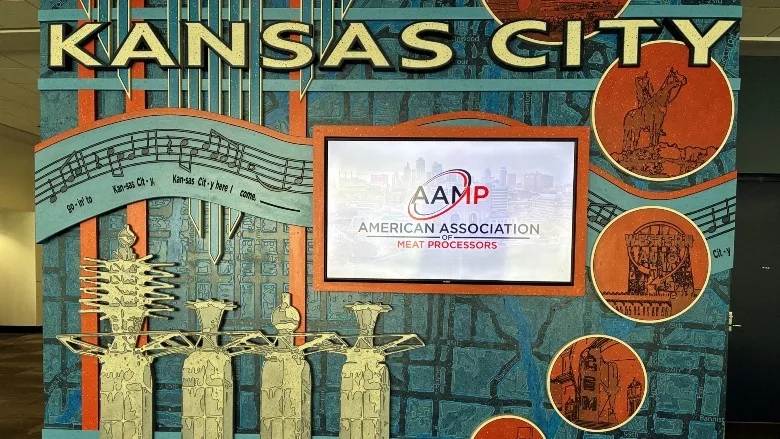
AAMP Convention 2025, hosted in Kansas City
KANSAS CITY, Mo. — Each year, the American Association of Meat Processors hosts the American Convention of Meat Processors & Suppliers' Exhibition, bringing together processors, suppliers and experts to connect, explore the latest trends and category innovations, attend informative educational sessions and much more.
At the 86th edition of the convention, educational sessions offered unique insights into evolving trends, as well as concerns over immigration compliance in the industry.
In the compliance session, titled "Immigration Compliance: I-9 Employment Eligibility and Worksite Enforcement," Klasko Immigration Law Partners Timothy D'Arduini and Nicholas Lowrey explored the unique position the meat industry is in right now. The speakers noted that they probably would not have been asked to attend an industry show like this in the past; rather, the current political landscape is focused on immigration compliance more than ever before, and the meat industry must stay up to date on current regulations and compliance requirements to stay ahead and avoid legal complications.
D'Arduini noted that since the second Trump Administration took office, approximately 1.1 million workers have been detained by ICE, while around 527,000 allegedly undocumented workers have been arrested. The administration has a goal of around 3,000 daily arrests.
D’Arduini noted that around 16-23% of meat processing workers are undocumented; this highlights the importance of ensuring compliance and proper record-keeping for all meat industry business owners.
The session primarily focused on I-9 compliance, exploring how to best ensure employment eligibility and proper compliance. D’Arduini noted that the commonly used eVerify tool—utilized to verify identifying documents presented by employees—is incorrect nine out of 10 times. With such high inaccuracy for eVerify, many in the meat industry are left asking: How do I verify employment eligibility, if the tool I'm using to verify documents is not reliable?
Unfortunately, there is no one-size-fits-all solution to this issue; if an employer confirms eligibility documents through eVerify and it later turns out that those results were inaccurate, eVerify will not work as a defense to the government. D'Arduini said that the only other alternative to eVerify is IMAGE, but this too does not qualify as a government defense.
To navigate this regulatory landscape, D’Arduini recommends having a second set of eyes look over an I-9, keeping copies of documents and building out a calendaring system for expirations of worker permits. Lowrey recommends business owners conduct an internal audit to stay ahead.
Throughout the session, both speakers reinforced the point that business owners do not need to be document experts; rather, they must be able to spot red flags.
Looking for a reprint of this article?
From high-res PDFs to custom plaques, order your copy today!