Provisioner logo
Provisioner logo
search
cart
facebook twitter linkedin youtube
  • Sign In
  • Create Account
  • Sign Out
  • My Account
Provisioner logo
Provisioner logo
  • NEWS
    • Industry News
    • Supplier News
    • Case Studies
    • Recalls
    • Regulations
    • New Consumer Products
  • EXCLUSIVES
    • Newsletters
    • Source Book
    • Sponsored Insights
    • Events
    • Webinars
    • Classifieds
    • White Papers
    • Provisioner Store
    • Market Research
  • MEAT PROCESSING
    • SUSTAINABILITY
    • Processing
    • Packaging
    • Ingredients
    • Formulation
    • Food Safety
    • Special Reports
    • Commentary
  • PROFILES
    • Processor Profiles
    • Processor of the Year
    • Top 100 Processors
  • MEDIA
    • Videos
    • Podcasts
  • DIRECTORY
  • MIHOF
  • INDEPENDENT PROCESSOR
  • EMAG
    • eMagazine
    • ARCHIVE ISSUES
    • Contact
    • Advertise
  • JOIN!
Meat and Poultry Industry NewsIngredients

Batch cooking: Timing, texture and hold management for fresh meal programs

Batch cooking for fresh meal programs requires carefully balancing menu choices, ingredient selection and processes to ensure excellent taste, consistent flavor and the right texture.
By Sean Hennessy
Catering
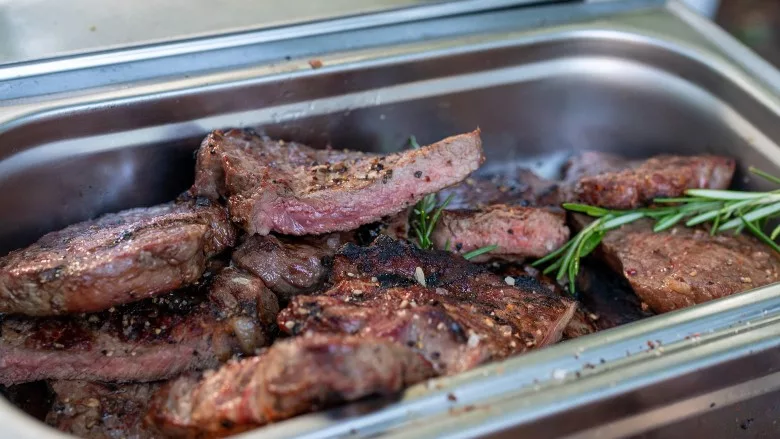
Courtesy of Pixabay
March 12, 2026

Batch cooking for fresh meal programs requires carefully balancing menu choices, ingredient selection and processes to ensure excellent taste, consistent flavor and the right texture. Batch cooking can be a time-saver, a helpful way to optimize costs, and a way to help maintain proper nutrition without a constant, everyday commitment to food prep. 

From daycare catering services to corporate events, the right strategy in advance minimizes costs while ensuring food people enjoy. For a fresh meal program, consider the following strategies that can significantly enhance product outcomes. 

Best practices for timing batch cooking

Timing matters when building a fresh meal program. Assess your unique situation to determine the available time. For example, most programs can incorporate a weekly schedule that allows for blocks of 90 minutes to multi-hour cooking to prepare meals. That may be done once or twice per week, depending on need. 

Once prepared, timing still matters. Use or freeze anything high-perishable within the first 48 hours of purchasing it. Implement a strict First-In, First-Out (FIFO) inventory system to ensure older products are used before newer ones. Follow recommended storage timelines for perishable ingredients, and clearly label all items with preparation and use-by dates. 

Best practice for texture 

One drawback of batch cooking is the change in texture. Overcooked, mushy food isn’t desirable. However, improved strategies eliminate this risk. Focus on the following:

  • Keep vegetables a bit firmer by undercooking them just slightly. They will finish softening when warmed prior to serving, while retaining their consistency.
  • Use component cooking when possible. That means cooking proteins and vegetables without any sauces or oils on them. This reduces the risk of sogginess developing. It also allows for quick preparation of different flavors and dishes by adding seasonings. 
  • Keep ingredients separate, especially sauces and dressings. Make them as expected, but store them in airtight containers instead of placing them with the dish.

An important rule is to ensure all products come down to room temperature before storing them in the refrigerator. Placing hot, just-cooked products in the fridge or freezer can cause texture changes. 

Best practices for holding batch cooked products 

There are many ways to hold batch-cooked products to ensure they are served properly at the right temperature and with the desired balance of flavors.

  • After prepping, allow all stews, soups and other hot foods to come to room temperature. Then cover and refrigerate.
  • Always store in airtight containers. Consider the use of easy-to-warm options. For large groups, this might include a pan that can go right into the oven to heat and serve. For small groups, choose covered, microwave-safe bowls.
  • Use proper holding equipment, including holding cabinets specifically designed for the humidity, heat, and overall use of your location.
  • For long-term storage, use vacuum sealing, especially for proteins. This extends their shelf life when combined with proper refrigeration or freezing.  

Be sure proper labeling is followed. That includes the date prepared and cooked, as well as the labeling of what is included. When ready to use frozen products, bring them out of the freezer to allow them to thaw in the refrigerator overnight before cooking in the oven. This preserves both flavor and texture. Temp food to ensure it reaches a safe temperature to kill any bacteria before serving. 

Turn to professionals to help 

These strategies prioritize not only good food but safe food. Investing in a process that’s laid out and structured to address the unique needs of your location is essential. That may mean moving to a third-party resource. 

In many situations, organizations can use a third party to prepare their food, handle the entire batch cooking process, and then have it delivered right to the door, ready to serve. If you take this step, be sure you’ve researched to choose a trusted partner capable of customized solutions for your program. 

KEYWORDS: best practices fresh foods

Share This Story

Looking for a reprint of this article?
From high-res PDFs to custom plaques, order your copy today!


Sean Hennessy is the president of Delicious Unlimited, a catering and meal delivery company that provides fresh, nutritious meals and snacks — especially for children — to schools, elder care facilities and other institutions in the Chicagoland and Southern Wisconsin regions. Sean has years of leadership and operational experience in the food service and hospitality sectors. He focuses on growing Delicious Unlimited’s reach, maintaining high standards for quality and innovation, and ensuring the company reliably serves more than 30,000 meals daily across 250+ locations.

Recommended Content

JOIN TODAY
to unlock your recommendations.

Already have an account? Sign In

  • Double Charburger

    Premiumization drives burger category

    Shoppers seek out premium meat offerings to fulfill...
    Ingredients
    By: Sammy Bredar
  • JJS Adult Pekin duck

    Poultry Report 2025: Convenience propels poultry at retail

    Despite continued economic pressures, the poultry...
    Meat and Poultry Industry News
    By: Sammy Bredar
You must login or register in order to post a comment.

Report Abusive Comment

Manage My Account
  • eMagazine Subscriptions
  • Manage My Preferences
  • Newsletters
  • Online Registration
  • Subscription Customer Service
  • Connect with The National Provisioner

More Videos

Sponsored Content

Sponsored Content is a special paid section where industry companies provide high quality, objective, non-commercial content around topics of interest to the The National Provisioner audience. All Sponsored Content is supplied by the advertising company and any opinions expressed in this article are those of the author and not necessarily reflect the views of The National Provisioner or its parent company, BNP Media. Interested in participating in our Sponsored Content section? Contact your local rep!

close
  • A smiling man carrying a grocery basket is reaching down to pick up a package of meat in a grocery store.
    Sponsored byPIC

    The Green Light: New Data Shows 12-to-1 Support for Pork from PRRS-Resistant Pigs

  • Close up of a grocery cart full of groceries, a cropped image of a couple pushing the cart and a blurred background of the vegetable aisle.
    Sponsored byPIC

    New Market Research Finds Consumers in Eight Key Pork Markets Are Likely to Purchase Pork from Gene-Edited Pigs

  • Close up of a young pig with a blurred background.
    Sponsored byPIC

    New Research Forecasts Significant Economic and Market Impacts with PRRS-Resistant Pig Adoption

Popular Stories

Spam Dog

Hormel rolls out Spam hot dog for foodservice applications

Various new Primal snack sticks on a table amongst pencils, apples, a pair of glasses, lunch bags and a water bottle.

Protein demand drives snacking occasions

Several cuts of beef, pork and chicken on a wooden board, cast iron pan and salt.

Validated thermal lethality data and a new tool for ensuring safety of RTE meats

2026 Top 100 Meat & Poultry Processors Report

Events

June 11, 2026

From Fresh to Frozen in 3 Minutes Flat: Unlocking the Secrets to Temperature Control

Join Tony Vacaro, Foods Industry Manager, and Emile Klein, Foods Market Strategy Manager at Air Products and Chemicals, Inc. , as they tackle key questions surrounding heat removal in food processing. 

January 1, 2030

Webinar Sponsorship Information

For webinar sponsorship information, visit www.bnpevents.com/webinars or email webinars@bnpmedia.com.

View All Submit An Event

Products

Food Crime: An Introduction to Deviance in the Food Industry

Food Crime: An Introduction to Deviance in the Food Industry

See More Products
From Fresh to Frozen in 3 Minutes Flat: Unlocking the Secrets to Temperature Control Webinar Sponsored by Air Products

Related Articles

  • USDA Logo

    USDA provides $1.5 billion to strengthen school meal programs

    See More
  • Tyson meal kits

    New Tyson Brand fresh meal shortcuts offer comfort food classics without the effort

    See More
  • OCEASOFT Loading ABench program 900.jpg

    OCEASOFT creates two automation tools to optimize cold-chain monitoring management for shipping

    See More

Related Products

See More Products
  • GlobalData_logo_blue_header.png

    Fresh Meat (Counter) (Meat) Market in the United States of America - Outlook to 2023...

  • advanced tech.jpg

    Advanced Technologies for Meat Processing

  • meat.jpg

    Non-Thermal Processing Technologies for the Meat, Fish, and Poultry Industries

See More Products

Events

View AllSubmit An Event
  • November 7, 2013

    Food Plant of the Future: The Future of Wastewater Management

    Available On-Demand Effective management of wastewater is becoming increasingly critical to food and beverage processors as the cost for incoming water increases...
View AllSubmit An Event

Related Directories

  • HBC Holdings LLC (DBA) Sadex

    HBC Holdings LLC dba Sadex is a commercial contract electron beam irradiation service center providing Ebeam irradiation to treat meat, poultry, animal feed, pet food and treats, fresh produce, and agricultural products. Sadex operates under USDA, FSIS, APHIS, and FDA regulatory authority processing food and feed products under a HACCP program to reduce foodborne pathogens to undetectable levels, extend shelf life, and eliminate harmful pests.
  • Cook King Inc.

    Cook King Inc. is a unique and innovative designer and manufacturer of a superior line of food processing equipment. Over 30 years of experience in manufacturing Broiler/Ovens, Searing Unit, Free Standing Branders, Fryer Systems, Conveyor Systems and additional ancillary equipment has kept us on the leading edge of technology. Our unique patented systems and advanced manufacturing technology allows us to offer premium products at the lowest possible price.
×

Stay ahead of the curve. Unlock a dose of cutting-edge insights.

Receive our premium content directly to your inbox.

SIGN-UP TODAY
  • RESOURCES
    • Advertise
    • Contact Us
    • Directories
    • Store
    • Want More
  • SIGN UP TODAY
    • Create Account
    • eMagazine
    • Newsletter
    • Customer Service
    • Manage Preferences
  • SERVICES
    • Marketing Services
    • Reprints
    • Market Research
    • List Rental
    • Survey/Respondent Access
  • STAY CONNECTED
    • LinkedIn
    • Facebook
    • YouTube
    • X (Twitter)
  • PRIVACY
    • PRIVACY POLICY
    • TERMS & CONDITIONS
    • DO NOT SELL MY PERSONAL INFORMATION
    • PRIVACY REQUEST
    • ACCESSIBILITY

Copyright ©2026. All Rights Reserved BNP Media, Inc. and BNP Media II, LLC.

Design, CMS, Hosting & Web Development :: ePublishing