Provisioner logo
Provisioner logo
search
cart
facebook twitter linkedin youtube
  • Sign In
  • Create Account
  • Sign Out
  • My Account
Provisioner logo
Provisioner logo
  • NEWS
    • Industry News
    • Supplier News
    • Case Studies
    • Recalls
    • Regulations
    • New Consumer Products
  • EXCLUSIVES
    • Newsletters
    • Source Book
    • Sponsored Insights
    • Events
    • Webinars
    • Classifieds
    • White Papers
    • Provisioner Store
    • Market Research
  • MEAT PROCESSING
    • SUSTAINABILITY
    • Processing
    • Packaging
    • Ingredients
    • Formulation
    • Food Safety
    • Special Reports
    • Commentary
  • PROFILES
    • Processor Profiles
    • Processor of the Year
    • Top 100 Processors
  • MEDIA
    • Videos
    • Podcasts
  • DIRECTORY
  • MIHOF
  • INDEPENDENT PROCESSOR
  • EMAG
    • eMagazine
    • ARCHIVE ISSUES
    • Contact
    • Advertise
  • JOIN!

Establishment micro testing — some observations

By Dennis R. Johnson
August 2, 2012

It is an important fact of life that establishments conduct microbiological testing. Virtually all beef slaughter establishments test trim for E. coli O157:H7; poultry slaughter operations test for Salmonella and Campylobacter; and manufacturers of ready-to-eat product test for Listeria. In addition, many customers have micro-specifications for product quality.

A valid, well-thought-out sampling program provides necessary feedback to an establishment’s food-safety system. Conversely, a flawed sampling program can be detrimental: It can give a false sense of security, waste resources and provide a basis for adverse regulatory action.

Each establishment should periodically review its programs to ensure they are serving the intended function. What follows are some areas an establishment may wish to review.

Purpose — Every sampling program must have a purpose; why is the sampling conducted? The program could be ongoing or limited in scope. It could be used to verify the system is operating as intended or simply could be a customer or regulatory requirement. If an establishment cannot articulate precisely why a sampling program is conducted, it should consider eliminating that program.

Relationship of sampling to the purpose — The design of the sampling program, e.g., frequency of sampling, sampling procedures, laboratory method, and analytical sample size, should provide information to achieve the purpose. For example, total plate count on product taken in the cooler would provide insight into the cold-chain management, but such analysis would provide no information on whether the product has been contaminated with Listeria monocytogenes.

Review results — The only thing worse than not having a sampling program is to have one and ignore the results. Not only does this waste money, the data may show a problem, which the establishment would not catch but a regulatory official would during a Food Safety Assessment or a Hazard Analysis Verification procedure. Establishments should ensure the results are reviewed (and trended). Putting unreviewed results in a file drawer for the regulator to find has led to regulatory entanglements, up to and including criminal prosecution.

Validity of results — If an establishment runs a testing program, it should use an analytical method that has been validated for the product being sampled and the analytical sample size run. For example, if the establishment only analyzes 25 g of product when the method is validated for 325 g of product, the results may not be reliable and likely will not be recognized by a regulatory agency.

Note on companion samples — There are establishments that always draw a companion sample — a sample drawn in conjunction with an agency sample and taken solely because the agency took a sample. If the establishment believes its companion sample can be used to challenge a regulator’s result in the case of adulterant testing, the establishment is sadly mistaken. In such cases, if the regulator’s sample is positive, an establishment negative will not trump the agency positive. However, if the regulator’s sample is negative and the establishment’s is positive, the establishment’s result governs. In short, there is no true benefit to taking a companion sample for the purpose of challenging a regulator’s result.

That said, establishment testing in conjunction with a regulatory sample may serve other purposes. In the case of periodic verification sampling for an adulterant, if an establishment samples the same time as the regulator, it can minimize the number of times it has to hold product. If the analysis is for a non-adulterant, such as Salmonella in raw products, sampling together will allow an establishment to correlate its sample results with the agency’s results. As noted above, testing should be undertaken only when there is a meaningful benefit/purpose.

KEYWORDS: sampling program

Share This Story

Looking for a reprint of this article?
From high-res PDFs to custom plaques, order your copy today!

Dennis R. Johnson is a principal with Olsson Frank Weeda Terman Matz PC in Washington, D.C. Mr. Johnson has 30 years experience in food-safety law and regulation, representing large and small meat and poultry companies.

Recommended Content

JOIN TODAY
to unlock your recommendations.

Already have an account? Sign In

  • Double Charburger

    Premiumization drives burger category

    Shoppers seek out premium meat offerings to fulfill...
    Burgers
    By: Sammy Bredar
  • JJS Adult Pekin duck

    Poultry Report 2025: Convenience propels poultry at retail

    Despite continued economic pressures, the poultry...
    Turkey
    By: Sammy Bredar
You must login or register in order to post a comment.

Report Abusive Comment

Manage My Account
  • eMagazine Subscriptions
  • Manage My Preferences
  • Newsletters
  • Online Registration
  • Subscription Customer Service
  • Connect with The National Provisioner

More Videos

Sponsored Content

Sponsored Content is a special paid section where industry companies provide high quality, objective, non-commercial content around topics of interest to the The National Provisioner audience. All Sponsored Content is supplied by the advertising company and any opinions expressed in this article are those of the author and not necessarily reflect the views of The National Provisioner or its parent company, BNP Media. Interested in participating in our Sponsored Content section? Contact your local rep!

close
  • A smiling man carrying a grocery basket is reaching down to pick up a package of meat in a grocery store.
    Sponsored byPIC

    The Green Light: New Data Shows 12-to-1 Support for Pork from PRRS-Resistant Pigs

  • Close up of a grocery cart full of groceries, a cropped image of a couple pushing the cart and a blurred background of the vegetable aisle.
    Sponsored byPIC

    New Market Research Finds Consumers in Eight Key Pork Markets Are Likely to Purchase Pork from Gene-Edited Pigs

  • Close up of a young pig with a blurred background.
    Sponsored byPIC

    New Research Forecasts Significant Economic and Market Impacts with PRRS-Resistant Pig Adoption

Popular Stories

Spam Dog

Hormel rolls out Spam hot dog for foodservice applications

Various new Primal snack sticks on a table amongst pencils, apples, a pair of glasses, lunch bags and a water bottle.

Protein demand drives snacking occasions

Several cuts of beef, pork and chicken on a wooden board, cast iron pan and salt.

Validated thermal lethality data and a new tool for ensuring safety of RTE meats

2026 Top 100 Meat & Poultry Processors Report

Events

June 11, 2026

From Fresh to Frozen in 3 Minutes Flat: Unlocking the Secrets to Temperature Control

Join Tony Vacaro, Foods Industry Manager, and Emile Klein, Foods Market Strategy Manager at Air Products and Chemicals, Inc. , as they tackle key questions surrounding heat removal in food processing. 

January 1, 2030

Webinar Sponsorship Information

For webinar sponsorship information, visit www.bnpevents.com/webinars or email webinars@bnpmedia.com.

View All Submit An Event

Products

Food Crime: An Introduction to Deviance in the Food Industry

Food Crime: An Introduction to Deviance in the Food Industry

See More Products
From Fresh to Frozen in 3 Minutes Flat: Unlocking the Secrets to Temperature Control Webinar Sponsored by Air Products

Related Articles

  • Comment now on FSIS plan to release establishment-specific data

    See More
  • Prepare for more, not less, third-party ground beef testing

    See More
  • Non-O157 testing of raw ground beef and ground beef components

    See More

Related Products

See More Products
  • Food Plant Sanitation: Design, Maintenance, and Good Manufacturing Practices, Second Edition

  • seafood.jpg

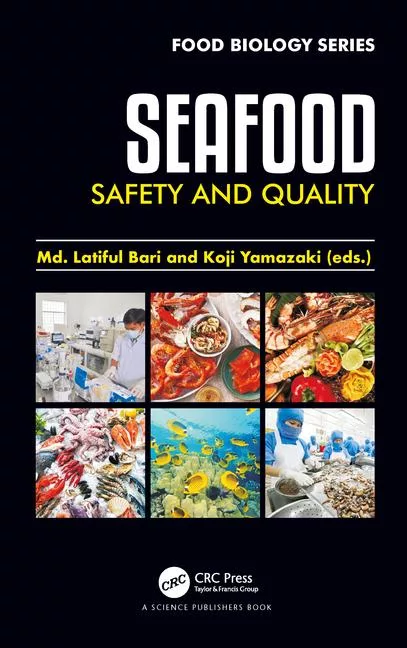
    Seafood Safety and Quality

  • handbookseafood.jpg

    Handbook of Seafood and Seafood Products Analysis

See More Products

Events

View AllSubmit An Event
  • October 18, 2011

    NEW COURSE! Micro 101 One day course $499

    FSNS now offers a course to provide companies who are interested in training and continuing education with an introduction course to microbiology.
View AllSubmit An Event
×

Stay ahead of the curve. Unlock a dose of cutting-edge insights.

Receive our premium content directly to your inbox.

SIGN-UP TODAY
  • RESOURCES
    • Advertise
    • Contact Us
    • Directories
    • Store
    • Want More
  • SIGN UP TODAY
    • Create Account
    • eMagazine
    • Newsletter
    • Customer Service
    • Manage Preferences
  • SERVICES
    • Marketing Services
    • Reprints
    • Market Research
    • List Rental
    • Survey/Respondent Access
  • STAY CONNECTED
    • LinkedIn
    • Facebook
    • YouTube
    • X (Twitter)
  • PRIVACY
    • PRIVACY POLICY
    • TERMS & CONDITIONS
    • DO NOT SELL MY PERSONAL INFORMATION
    • PRIVACY REQUEST
    • ACCESSIBILITY

Copyright ©2026. All Rights Reserved BNP Media, Inc. and BNP Media II, LLC.

Design, CMS, Hosting & Web Development :: ePublishing