Provisioner logo
Provisioner logo
search
cart
facebook twitter linkedin youtube
  • Sign In
  • Create Account
  • Sign Out
  • My Account
Provisioner logo
Provisioner logo
  • NEWS
    • Industry News
    • Supplier News
    • Case Studies
    • Recalls
    • Regulations
    • New Consumer Products
  • EXCLUSIVES
    • Newsletters
    • Source Book
    • Sponsored Insights
    • Events
    • Webinars
    • Classifieds
    • White Papers
    • Provisioner Store
    • Market Research
  • MEAT PROCESSING
    • SUSTAINABILITY
    • Processing
    • Packaging
    • Ingredients
    • Formulation
    • Food Safety
    • Special Reports
    • Commentary
  • PROFILES
    • Processor Profiles
    • Processor of the Year
    • Top 100 Processors
  • MEDIA
    • Videos
    • Podcasts
  • DIRECTORY
  • MIHOF
  • INDEPENDENT PROCESSOR
  • EMAG
    • eMagazine
    • ARCHIVE ISSUES
    • Contact
    • Advertise
  • JOIN!
Meat and Poultry Industry News

In drought, watch fall-calving cows early, says MU vet

News Brief Feature
Image credit: Perdue
September 7, 2012

Owners of fall-calving cow herds should start watching early as calving time approaches, says a University of Missouri veterinarian. Drought stress and high nitrate levels in a cow’s forage ration can trigger early calving, stillbirths and abortions.

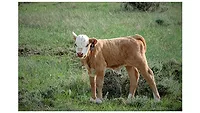
“Nitrates may be causing itty-bitty calves,” says Tim Evans of the MU Veterinary Diagnostic Lab, Columbia.

Evans wants the word out, he says, even though there have been many alerts about dangers of nitrates in drought-stricken feeds, particularly cornstalks, sorghum-sudangrass, millet and even fescue pastures. While many crop-and-cow farmers may recognize nitrate dangers, those who have not seen a drought this severe or are part-time farmers may not know the dangers, Evans says.

“We received a sample of millet hay that was just off the charts,” Evans says of samples submitted for nitrate testing. “Test results vary widely, from less than 100 parts per million to over 30,000 for the millet.” The latter was twice the level considered toxic.

Forages with less than 2,500 ppm nitrates are considered safe to use. “But I don’t know what you could do with the toxic millet,” Evans says.

While cows can die from eating high-nitrate rations, the unseen economic impact will come from lost calves. Nitrates can cause premature births and abortions as the oxygen supply to the fetus is reduced.

“Cows in late gestation are at high risk,” Evans says. “The unborn calf depends on oxygen in the mother’s blood flow. Such stress can trigger labor.”

In the cow’s rumen, where forage digests, nitrates can convert to nitrites, which are deadly. Nitrites change hemoglobin that normally carries oxygen. The color of blood turns from red to chocolate brown as the blood cells take on toxic nitrites. Hypoxia, a shortage of blood oxygen, might kill a fetus but show mild symptoms, such as lethargy, in the cow.

“When blood oxygen drops, that starts a cascade of events leading to parturition,” Evans says. In earlier stages of pregnancy, that stress leads to abortion or stillbirth. Later, premature births may result in tiny calves that need extra care to survive.

At higher risk are anemic cows. “When you stack stresses, the risk of loss increases,” Evans says.

The main point, Evans says: “You won’t know the nitrate content in forage unless you test.” A test is a small investment to prevent loss of cow or calf.

Evans recommended testing forages going into silos or plastic bags. Now he urges testing silage coming out, before feeding.

The ensiling process can reduce nitrate content 25 to 50 percent. Reduction depends on effectiveness of the ensiling process and on how long the process is allowed to work.

“Sixty days is safer, but 45 days is iffy,” Evan says. “Again, the only way to know is to test.”

A good many forage samples have tested 10,000 ppm, in the “danger” zone. If ensiling reduces nitrates to below 5,000 ppm, the “caution” level, the producer will need nitrate-free forages to mix in the ration to dilute toxicity. A nitrate level above 2,500 ppm should not be fed to pregnant cows or very young calves. Nonreproductive cattle, including steers, can be fed higher levels.

Any forage with more than 15,000 ppm nitrates should not be fed under any circumstance, he warns.

The rumen can adapt to higher levels of nitrates. However, that takes a gradual buildup as rumen microbes adapt to high-nitrate feeds.

A guide on safe use of toxic forages was written by Evans with Rob Kallenbach, MU Extension forage specialist. The guide is available online at vmdl.missouri.edu. Click on “Nitrate Facts” in the right column. Details on samples and testing are listed there.

Source: University of Missouri

KEYWORDS: cows nitrates

Share This Story

Looking for a reprint of this article?
From high-res PDFs to custom plaques, order your copy today!


Recommended Content

JOIN TODAY
to unlock your recommendations.

Already have an account? Sign In

  • Double Charburger

    Premiumization drives burger category

    Shoppers seek out premium meat offerings to fulfill...
    Ingredients
    By: Sammy Bredar
  • JJS Adult Pekin duck

    Poultry Report 2025: Convenience propels poultry at retail

    Despite continued economic pressures, the poultry...
    Chicken
    By: Sammy Bredar
You must login or register in order to post a comment.

Report Abusive Comment

Manage My Account
  • eMagazine Subscriptions
  • Manage My Preferences
  • Newsletters
  • Online Registration
  • Subscription Customer Service
  • Connect with The National Provisioner

More Videos

Sponsored Content

Sponsored Content is a special paid section where industry companies provide high quality, objective, non-commercial content around topics of interest to the The National Provisioner audience. All Sponsored Content is supplied by the advertising company and any opinions expressed in this article are those of the author and not necessarily reflect the views of The National Provisioner or its parent company, BNP Media. Interested in participating in our Sponsored Content section? Contact your local rep!

close
  • A smiling man carrying a grocery basket is reaching down to pick up a package of meat in a grocery store.
    Sponsored byPIC

    The Green Light: New Data Shows 12-to-1 Support for Pork from PRRS-Resistant Pigs

  • Close up of a grocery cart full of groceries, a cropped image of a couple pushing the cart and a blurred background of the vegetable aisle.
    Sponsored byPIC

    New Market Research Finds Consumers in Eight Key Pork Markets Are Likely to Purchase Pork from Gene-Edited Pigs

  • Close up of a young pig with a blurred background.
    Sponsored byPIC

    New Research Forecasts Significant Economic and Market Impacts with PRRS-Resistant Pig Adoption

Popular Stories

Spam Dog

Hormel rolls out Spam hot dog for foodservice applications

Various new Primal snack sticks on a table amongst pencils, apples, a pair of glasses, lunch bags and a water bottle.

Protein demand drives snacking occasions

Several cuts of beef, pork and chicken on a wooden board, cast iron pan and salt.

Validated thermal lethality data and a new tool for ensuring safety of RTE meats

2026 Top 100 Meat & Poultry Processors Report

Events

June 11, 2026

From Fresh to Frozen in 3 Minutes Flat: Unlocking the Secrets to Temperature Control

Join Tony Vacaro, Foods Industry Manager, and Emile Klein, Foods Market Strategy Manager at Air Products and Chemicals, Inc. , as they tackle key questions surrounding heat removal in food processing. 

January 1, 2030

Webinar Sponsorship Information

For webinar sponsorship information, visit www.bnpevents.com/webinars or email webinars@bnpmedia.com.

View All Submit An Event

Products

Food Crime: An Introduction to Deviance in the Food Industry

Food Crime: An Introduction to Deviance in the Food Industry

See More Products
From Fresh to Frozen in 3 Minutes Flat: Unlocking the Secrets to Temperature Control Webinar Sponsored by Air Products

Related Articles

  • MU Extension logo

    MU videos share cattle management practices in drought

    See More
  • MU Extension logo

    MU researcher says volatility in farm input costs are here to stay

    See More
  • USDA: Benefits of early calving are increasing due to late winter warming

    USDA: Benefits of early calving are increasing due to late winter warming

    See More

Events

View AllSubmit An Event
  • August 28, 2025

    The Future of Smoke: Trends, Tech & Safety in Smoked Meats

    On-Demand Join us for an inside look at the latest innovations and emerging trends transforming smoked meat production. Gain expert insight from Dr. Jonathan Campbell, who brings a wealth of experience from his dynamic career focused on enhancing the quality, safety, and efficiency of processed meats.
View AllSubmit An Event
×

Stay ahead of the curve. Unlock a dose of cutting-edge insights.

Receive our premium content directly to your inbox.

SIGN-UP TODAY
  • RESOURCES
    • Advertise
    • Contact Us
    • Directories
    • Store
    • Want More
  • SIGN UP TODAY
    • Create Account
    • eMagazine
    • Newsletter
    • Customer Service
    • Manage Preferences
  • SERVICES
    • Marketing Services
    • Reprints
    • Market Research
    • List Rental
    • Survey/Respondent Access
  • STAY CONNECTED
    • LinkedIn
    • Facebook
    • YouTube
    • X (Twitter)
  • PRIVACY
    • PRIVACY POLICY
    • TERMS & CONDITIONS
    • DO NOT SELL MY PERSONAL INFORMATION
    • PRIVACY REQUEST
    • ACCESSIBILITY

Copyright ©2026. All Rights Reserved BNP Media, Inc. and BNP Media II, LLC.

Design, CMS, Hosting & Web Development :: ePublishing