Provisioner logo
Provisioner logo
search
cart
facebook twitter linkedin youtube
  • Sign In
  • Create Account
  • Sign Out
  • My Account
Provisioner logo
Provisioner logo
  • NEWS
    • Industry News
    • Supplier News
    • Case Studies
    • Recalls
    • Regulations
    • New Consumer Products
  • EXCLUSIVES
    • Newsletters
    • Source Book
    • Sponsored Insights
    • Events
    • Webinars
    • Classifieds
    • White Papers
    • Provisioner Store
    • Market Research
  • MEAT PROCESSING
    • SUSTAINABILITY
    • Processing
    • Packaging
    • Ingredients
    • Formulation
    • Food Safety
    • Special Reports
    • Commentary
  • PROFILES
    • Processor Profiles
    • Processor of the Year
    • Top 100 Processors
  • MEDIA
    • Videos
    • Podcasts
  • DIRECTORY
  • MIHOF
  • INDEPENDENT PROCESSOR
  • EMAG
    • eMagazine
    • ARCHIVE ISSUES
    • Contact
    • Advertise
  • JOIN!
Food Safety

Automating safety through clean-in-place systems

Clean-in-place and open-plant cleaning systems are utilizing automation and improved chemicals to improve sanitation and sustainability.
By Megan Pellegrini
September 13, 2012
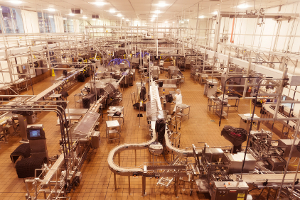
general food plant floorHistorically, clean-in-place and open-plant cleaning systems haven’t changed much in decades, perhaps even 40 to 50 years. However, change is coming as these systems embrace sustainability measures and add more automation.

Clean-in-place (CIP) is usually utilized in closed process systems with tanks or other vessels and pipelines to clean fluid product lines, such as dairy products and beverages or liquid foods such as sauces and dressings.

Open-plant cleaning is typically a manual process, though many aspects can be automated with custom-engineered cleaning systems.

“CIP does a good job cleaning pipes and closed systems, but if the chemicals aren’t strong enough then a buildup of biofilm can form which employees wouldn’t see,” notes Scott Russell, Ph.D., professor of poultry processing and products microbiology, University of Georgia, Athens, Ga.

According to sources, increased automation in cleaning processes helps processors realize improved and consistent cleaning and sanitizing results, which consequently leads to improved food safety, less opportunity for operator error and precise dosing of sanitation chemicals to improve cost efficiencies and help reduce effluent impacts.

Another benefit of automation is, of course, less cleaning time and labor for staff.

Automation can also lead to water and energy savings through automated controls that are programmed to optimize water and energy usage and water reconditioning and water reuse technologies that can help to reduce water usage.

After all, every gallon of water that is saved is another gallon that doesn’t have to be heated, treated with chemicals and disposed of by plants.

Improved reporting and documentation also provide product usage reports that are available on demand.

Improving food safety

Every time a microbial contamination or product recall occurs, all processors review their standard food-safety procedures and cleaning systems.

“Anyone producing high risk product like refrigerated, ready-to-eat items should be aware, make changes and incorporate the latest technologies into their operations,” says Kevin Keener, Ph.D., professor of food science, Purdue University, West Lafayette, Ind. “At the same time, there isn’t a magic bullet; we have to recognize that bacteria will make its way into the process.”

Last year, Cargill twice recalled its ground turkey products due to a Salmonella Heidelberg outbreak. As a result of the ground turkey recalls and a subsequent review of its food-safety measures, Cargill has adopted an even more stringent sampling and monitoring program, but still faced a ground beef recall this summer from a Salmonella outbreak.

“As a vertically integrated turkey processor, we enhanced our turkey food-safety interventions across the supply chain from feed mills to the grind area, which has helped us become better and stronger in our approach to food safety,” says Michael Martin, director of communications, Cargill. “We continue to search for better ways to address naturally and randomly occurring bacteria such as E. coli and Salmonella, which have thousands of strains and are found throughout the natural environment.”

Recently, allergen control has also become top of mind during further processing because of its impact on young children.

Automated cleaning systems can certainly validate plant cleaning efforts and monitor the right chemical concentrations and flow rates.

Indeed, experts say that an effective food-safety program requires a total plant approach, including a comprehensive cleaning and sanitizing program, continuous conveyor belt-treatment program to help reduce counts during the production day, plant environment care, personnel hygiene and comprehensive pest elimination.

In USDA-approved plants, processors still need to be able to dissemble their pipes and vessels for visual inspections, notes Lee Johnson, Ph.D., vice president of technical services, West Liberty Foods, West Liberty, Iowa.

“We use CIP with our liquid-based ingredients like brines, in our chillers and filtration,” he says. “The ability to be able to take apart and clean CIP systems increases food safety tremendously.”

Preventing wear and tear

All of that disassembly takes its toll on equipment parts though, notes Johnson.

“The biggest challenge with CIP is definitely that dissembling the pipes — in a somewhat fast timeframe — takes its toll,” he says. “The key is making sure you’re careful and having an ‘everything has a home’ mindset when putting the pipes down so they can be reassembled correctly.”

The whole idea behind CIP is that processors wouldn’t have to break down their machines every night for cleaning, notes Russell, but the worry then is that processors won’t know if their chemical solutions aren’t removing biofilms, which will happily grow unnoticed and later become resistant to chemicals.

Also, in meat and poultry processing, there are always junctions and corners joined by gaskets in machines to consider that are vulnerable to biofilm development.

“Peracetic acids are becoming a popular, effective and ‘new’ — from the last 10 years — chemical for breaking down biofilms, and are catching on,” he notes. This solution is an alternative to another method: processors increasing their chlorine levels until they work more effectively.

Certainly, it is important that equipment manufacturers design new systems with “cleanability” in mind. It may sound simple, but ultimately processors need to understand how their new equipment works and needs to be cleaned.

“There is a certain underlying assumption in the industry sometimes that once they buy the equipment, it will work as it should,” says Keener. “And the complexity of the system and the importance of cleaning it is overlooked.”

KEYWORDS: CIP systems Clean-in-place

Share This Story

Looking for a reprint of this article?
From high-res PDFs to custom plaques, order your copy today!


Megan pellegrini
Megan Pellegrini is a contributing writer.

Recommended Content

JOIN TODAY
to unlock your recommendations.

Already have an account? Sign In

  • Double Charburger

    Premiumization drives burger category

    Shoppers seek out premium meat offerings to fulfill...
    Ingredients
    By: Sammy Bredar
  • JJS Adult Pekin duck

    Poultry Report 2025: Convenience propels poultry at retail

    Despite continued economic pressures, the poultry...
    Meat and Poultry Industry News
    By: Sammy Bredar
You must login or register in order to post a comment.

Report Abusive Comment

Manage My Account
  • eMagazine Subscriptions
  • Manage My Preferences
  • Newsletters
  • Online Registration
  • Subscription Customer Service
  • Connect with The National Provisioner

More Videos

Sponsored Content

Sponsored Content is a special paid section where industry companies provide high quality, objective, non-commercial content around topics of interest to the The National Provisioner audience. All Sponsored Content is supplied by the advertising company and any opinions expressed in this article are those of the author and not necessarily reflect the views of The National Provisioner or its parent company, BNP Media. Interested in participating in our Sponsored Content section? Contact your local rep!

close
  • A smiling man carrying a grocery basket is reaching down to pick up a package of meat in a grocery store.
    Sponsored byPIC

    The Green Light: New Data Shows 12-to-1 Support for Pork from PRRS-Resistant Pigs

  • Close up of a grocery cart full of groceries, a cropped image of a couple pushing the cart and a blurred background of the vegetable aisle.
    Sponsored byPIC

    New Market Research Finds Consumers in Eight Key Pork Markets Are Likely to Purchase Pork from Gene-Edited Pigs

  • Close up of a young pig with a blurred background.
    Sponsored byPIC

    New Research Forecasts Significant Economic and Market Impacts with PRRS-Resistant Pig Adoption

Popular Stories

Spam Dog

Hormel rolls out Spam hot dog for foodservice applications

Various new Primal snack sticks on a table amongst pencils, apples, a pair of glasses, lunch bags and a water bottle.

Protein demand drives snacking occasions

Several cuts of beef, pork and chicken on a wooden board, cast iron pan and salt.

Validated thermal lethality data and a new tool for ensuring safety of RTE meats

2026 Top 100 Meat & Poultry Processors Report

Events

June 11, 2026

From Fresh to Frozen in 3 Minutes Flat: Unlocking the Secrets to Temperature Control

Join Tony Vacaro, Foods Industry Manager, and Emile Klein, Foods Market Strategy Manager at Air Products and Chemicals, Inc. , as they tackle key questions surrounding heat removal in food processing. 

January 1, 2030

Webinar Sponsorship Information

For webinar sponsorship information, visit www.bnpevents.com/webinars or email webinars@bnpmedia.com.

View All Submit An Event

Products

Food Crime: An Introduction to Deviance in the Food Industry

Food Crime: An Introduction to Deviance in the Food Industry

See More Products
From Fresh to Frozen in 3 Minutes Flat: Unlocking the Secrets to Temperature Control Webinar Sponsored by Air Products

Related Articles

  • Clean-in-place systems: Cleaning made easy

    See More
  • Advancing food safety through innovation and the Safe-Food Training Hub

    See More
  • A&B Process Systems CIP solution

    A&B Process Systems unveils digitally controlled clean-in-place solution

    See More

Related Products

See More Products
  • food safety.jpg

    Food Safety in the Seafood Industry: A Practical Guide for ISO 22000 and FSSC 22000 Implementation

  • meat inspection.jpg

    Meat Inspection and Control in the Slaughterhouse

  • food-crime.jpg

    Food Crime: An Introduction to Deviance in the Food Industry

See More Products

Events

View AllSubmit An Event
  • March 1, 2010

    Food Plant of the Future: Advancing Food Safety through Sanitary Design

    On demand Food and beverage companies work hard to consistently deliver safe products because they understand that the stakes are extremely high for the public and for their companies.
  • July 10, 2025

    Is Your Food Safety Plan Up to Date? Insights & Innovations Shaping Meat and Poultry Safety in 2025

    On-Demand Whether you're a processor, producer, or industry stakeholder, this is your chance to gain insider knowledge that will elevate your food safety practices from compliant to exemplary.
View AllSubmit An Event

Related Directories

  • Kemco Systems Inc.

    Kemco Systems, the industry leader since 1969, custom designs systems that are built to the highest standard of excellence. Whatever your water handling requirements, your savings begin with low installation costs and continue with significantly lower operating costs. Kemco Systems offers outstanding quality, exceptional reliability and top value for your energy dollar.
×

Stay ahead of the curve. Unlock a dose of cutting-edge insights.

Receive our premium content directly to your inbox.

SIGN-UP TODAY
  • RESOURCES
    • Advertise
    • Contact Us
    • Directories
    • Store
    • Want More
  • SIGN UP TODAY
    • Create Account
    • eMagazine
    • Newsletter
    • Customer Service
    • Manage Preferences
  • SERVICES
    • Marketing Services
    • Reprints
    • Market Research
    • List Rental
    • Survey/Respondent Access
  • STAY CONNECTED
    • LinkedIn
    • Facebook
    • YouTube
    • X (Twitter)
  • PRIVACY
    • PRIVACY POLICY
    • TERMS & CONDITIONS
    • DO NOT SELL MY PERSONAL INFORMATION
    • PRIVACY REQUEST
    • ACCESSIBILITY

Copyright ©2026. All Rights Reserved BNP Media, Inc. and BNP Media II, LLC.

Design, CMS, Hosting & Web Development :: ePublishing