These science-based revisions incorporate recommendations from the National Academies of Science, Engineering, and Medicine (NASEM) and the Dietary Guidelines for Americans, 2020-2025.
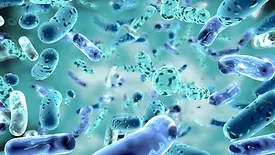
NARMS findings help public health partners continually assess the nature and magnitude of bacterial antimicrobial resistance at different points along the farm-to-fork continuum.
The National Antimicrobial Resistance Monitoring System tracks changes in the antimicrobial susceptibility of select foodborne bacteria found in ill people (CDC), retail meats (FDA) and food animals (FSIS).
If the allegations are admitted or proven in a hearing, Scott Sanders and Cathryn Sanders may be ordered to cease and desist from continuing to violate the P&S Act, and they may be assessed a civil penalty.
Both Sanders, in connection with their livestock dealer operations, failed to keep and maintain records which fully and correctly disclosed all the transactions involved in their businesses.
An investigation by USDA’s Agricultural Marketing Service revealed that from May 2021 through July 2021 and February 2022 through April 2022, Walnut created false and misleading records in connection with its livestock selling activities.
The investment is part of the National Institute of Food and Agriculture’s Small Business Innovation Research program that targets early-stage private-sector projects.
USDA Chief Scientist Chavonda Jacobs-Young is announcing a nearly $24 million investment across 45 organizations and institutions that teach and train beginning farmers and ranchers.
The P&S Act is a fair trade practice and payment protection law that promotes fair and competitive marketing environments for the livestock, meat, and poultry industries.

.webp?height=168&t=1666223298&width=275 "USDA logo")