Get REAL with Beef
Beef cuts: What's in a name?
As a meat scientist, I try to be precise in referring to beef cuts. But at the same time, I must be aware of the alternative names for those cuts which may have historical, regional or marketing significance. These common names could make them more identifiable to certain folks in certain scenarios.
To be precise in the nomenclature, I gravitate to the U.S. Department of Agriculture’s (USDA) Institutional Meat Purchase Specifications (IMPS) as the standard in North American meat cut parameters and names. A companion piece that compiles the IMPS text and adds a pictorial guide is the more popular North American Meat Institute Meat Buyer’s Guide (MBG). These two references are the gold standards for meat cut names, but over the years I have been pleased to learn a growing collection of other names that I am thrilled to share now. Here’s a snapshot of some alternative names for our main middle-meat items.
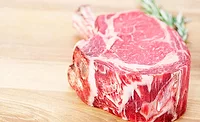
One would be remiss to explore the beef carcass and its mighty gems without first recognizing the regal ribeye, anything but unassuming — and also known by many names. The bone-in and whole subprimal form can be called an “Export Style” Rib. Regardless of how it got that name, you’ll also hear purveyors refer to this fine subprimal as simply an “Export.” Its kissing cousin is the boneless version, called a “Lip-on” Ribeye. Both cuts usually include a 2-inch “lip” of fat at the edge of the ribeye muscle and are devoid of the major accessory muscles found on the rib primal.
That leaves three main muscles: the Longissimus dorsi (ribeye muscle), Spinalis dorsi (ribeye cap — pure deliciousness) and the Complexus (small muscle that will eventually be the “chuck eye” as one proceeds toward the anterior). The Export Rib and the Lip-on Ribeye can both be considered a “Prime Rib,” depending on what the customer wants. Interestingly, this is the only cut that, when marketed as a roast, can carry a name synonymous with the highest level of quality in the USDA beef grading system (Prime) regardless of whether it earned that grade as a carcass. This cut is regaled as the epitome of beef eating magnificence, but consumers can still tell differences in grade. Steaks from the Export Rib are often considered “cowboy steaks.” The boneless ribeye can yield a steak simply known as a ribeye steak or, in certain areas, the “Delmonico” steak. Any way you cut it or name it, the ribeye will continue to be one of my favorites.
The striploin may be the cut with the most names. As a bone-in roast, the striploin is often known as a “Shell Roast” and a subsequent cut from it a “Shell Steak.” However, some argue the bone-in roast can further produce steaks known as “Kansas City Strip Steaks.” An obscure term for the bone-in striploin steak is an “L-bone Steak,” an inverted play on the “T-bone Steak” minus the tenderloin side. Think about it: Boneless, the striploin steak is very commonly called a “New York Strip,” but classic terminology gives it the moniker “Top Loin Steak,” especially in the academic community.
Alternative merchandising techniques for the boneless striploin will find it cut in half, lengthwise, and then subsequently cut into steaks resembling tenderloin filets. These are sometimes called “Split Strip Steak” or “Strip Filets,” but more creatively “Manhattan Strip” or “California Cut Strip Steaks” also represent the further merchandised boneless striploin. It’s curious how both coasts get credit for this unconventional cut.
The delectable tenderloin has its share of substitutable names. In the meat business, it’s often shortened to “tender,” but I try to steer clear of this abbreviated descriptor. There are a few other “tender”-named items in the carcass, and I would hate for the majestic tenderloin to be confused with the stumpy and not-really-tender Chuck Tender. In proper context, most understand “tender” refers to the tenderloin, but I still prefer cautious precision.
The tenderloin is a fancy piece of meat, so it has some pretty fancy alternative names in the restaurant community. In fine dining, ordering the “Filet Mignon,” although a very fancy French cut, would not turn many heads. That term is almost as common as its proper name, tenderloin steak. But to take it a step further, or maybe simply a step back, leave the tenderloin in a roast form and one could order a lesser-known “Chateaubriand.” Have it carved tableside to enhance the presentation and pageantry of the dining experience. No matter how you slice it, the tenderloin will always impress.
Finally, within the middle section of the beef, we mustn’t forget the top sirloin. Over the years, there has been a plethora of ways to cut the top sirloin for the carnivorous connoisseur. Today, we see the top sirloin procured in boneless form. As a roast in its entirety, it sometimes can be purchased under the name “top butt.” As a California native, I know a unique name for this less costly item in that part of the country is the “top block.”
In most cases now, and thankfully so, the subprimal is broken down into some of its smaller pieces. Removing some of the lean adjacent to where the hipbone was attached leaves two muscles: the top sirloin center-cut and the top sirloin cap. Smaller steaks can be fabricated from the top sirloin center-cut by following the natural seams and producing some very valuable, hearty and impressive steaks for the hard-core meat lover. Smaller steaks can be termed “Baseball-cut Sirloins,” and in the Great Lakes region it is common to hear of this cut as the “Trotter Steak.” The cap of the top sirloin has two names in North America: most commonly it is the “Coulotte,” but in Latin American cuisine it’s the “Picaña” in Spanish or “Picanha” in Portuguese. By any name, there are two distinctly different items from the top sirloin, both delicious in their own right.
Meat terminology can be confusing when cuts have numerous names. My advice is to be precise when talking about beef cuts, but never stop learning and compiling the unique names given to our favorite cuts. NP
Looking for a reprint of this article?
From high-res PDFs to custom plaques, order your copy today!