Ovens, fryers and smokehouses
Cooking meat and poultry: effectively, efficiently
Evolving cooking technologies enable meat and poultry plants to cut costs without sacrificing food quality and safety.
Efficiency is a key focus of meat and poultry plants. The ability to operate in a manner that saves time, money and effort is resulting in the leveraging of new strategies and equipment, with perhaps the greatest impact coming from state-of-the-art cooking technologies.
Many of the new generation cooking designs, including ovens and smokehouses, enable plants to operate with fewer workers with the equipment also taking up less space, utilizing less energy and producing greater yields while enhancing product quality.
“Plants are demanding and expecting new technologies from equipment manufacturers,” says Jeff Sindelar, associate professor and extension meat specialist in the department of animal sciences at the University of Wisconsin in Madison. “Manufacturers want to exceed expectations because there is a lot of competition among suppliers, and that is helping to drive innovation.”
Of particular importance are computer systems that enable operators to easily pinpoint and set cooking parameters and collect extensive cooking information for analysis, including time, temperature and moisture readings.
“The ultimate goal is to make the cooking process foolproof,” Sindelar says. “It is important to simplify the information on cooking operation so that the data is easy to read and comprehend.”
Cut costs but maintain outputs
Higher yields and energy savings are two of the most notable benefits from leveraging advanced cooking technologies, says Tim Bowser, professor of food engineering at Oklahoma State University in Stillwater.
“Newer ovens enable users to track product water and fat content more closely,” he says. “Operators can cook to a tighter moisture tolerance and that results in higher yields. Removing too much fat affects product weight and flavor.”
Some producers, particularly bacon processors, are seeing energy savings and also developing more attractive proteins by using newer combination ovens that include microwave and steam functions, Bowser says. By substituting some microwave use with lower-cost steam during cooking, plants are able to cut operating expenses while reducing fat loss and improving the texture and color of meats, he says.
Automation systems also are improving. Technologies electronically add and remove proteins from belts and conveyors during cooking operations, and use cameras to identify defects in food quality, Bowser adds.
Future enhancements will likely include the use of sensors and other components that monitor the color and texture of meat moving through cooking apparatus, he says, noting that such monitors will trigger adjustments to belt speed, temperature, air circulation and flame intensity as needed.
“Technology is changing and it will change a lot more,” he says. “There still is room for improvements.”
Keeping tabs on smokehouse activity
Changes already include enhancements to smokehouses, which feature technology that enables plants to identify optimal cooking times and produce greater yields,” says Scott Cooney, vice president of operations for Pederson’s Natural Farms Inc., a Hamilton, Texas-based producer of bacon, ham and sausage. Pederson’s is using a new smokehouse that contains computer technology that monitors airflow, heat and air balance.
“There is more engineering being built into the smokehouses,” Cooney says. “The control system enables easy measuring and monitoring of different parameters and provides information that lead to better decision-making.”
Computer monitoring allows Pederson’s to electronically record relative humidity, core temperature and other cooking criteria, he says.
“We could have gone the cheaper route and went for a smokehouse without the extra controls,” Cooney says. “But having data at our fingertips allows us to make quick and solid judgments.”
Chad Ondrusek, Pederson’s plant manager, says the company also is able to more accurately make adjustments to cooking processes on the fly.
“We can fine-tune the cooking, which results in greater consistency in product quality while enhancing throughput,” he says.
Pederson’s newer smokehouse gives device operators more control over humidity and dry and wet temperature levels, Ondrusek says, adding that cooking times are typically shorter and products can cook more evenly because of more consistent temperatures and air flow throughout the house.
The computer-driven systems also enable managers to access smokehouse data on their PCs or smart phones when away from plants, which results in quicker responses to production issues, Ondrusek says.
“Engineering in the process controls to improve yields can be worth hundreds of thousands or even millions of dollars over the course of a year,” Cooney says. “It is squeezing that last bit of optimization out of manufacturing operations.”
Operators are in a better position to maximize yields by maintaining control over cooking temperatures and leveraging equipment that supports the use of dry heat, steam or a combination of the two.
A new type of weight watcher
“It is important that the weight of meat coming out of a cooking system is a close as possible to the raw weight going in,” says Allan Samson, president of ESCA Enterprises Inc., a Glen Mill, Pa.-based product and process design company that primarily focuses on the meat and poultry sector. “It is dependent on the type of cooking systems that plants are using and the settings on their equipment,” he says.
The varying cooking components produce a variety of results. Dry heat often enhances meat color, while steam helps maintain product weight by cooking in a high-moisture atmosphere; however, because not all products are conducive to maximum moisture cooking, the more effective technologies give plants a mix of options.
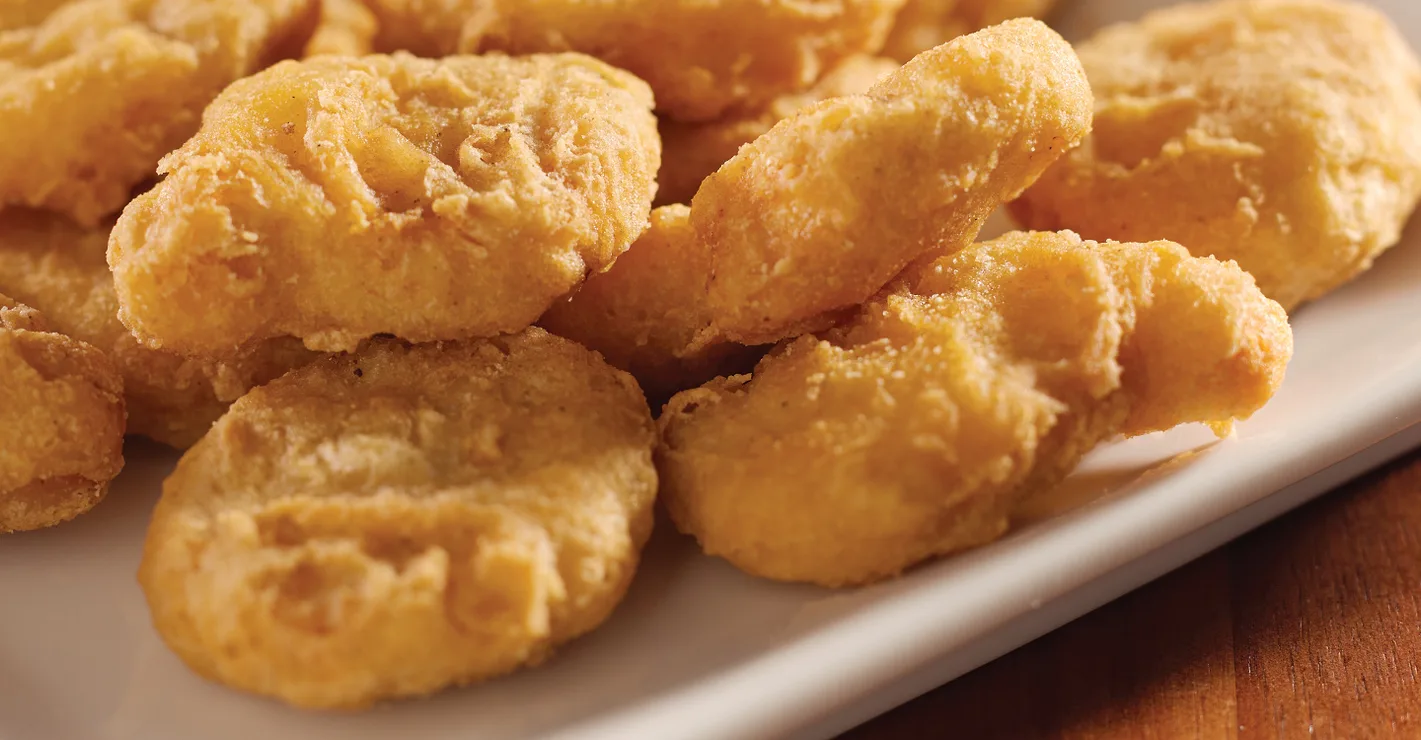
While standard chicken breasts should be cooked with maximum moisture to enhance yield and flavor, Samson notes that pieces coated with batter and breading have to be heated with less moisture to maintain the proper texture. Such items are best suited for zone cooking systems in which the meat cooks in steam on the front end, but is finished in a dryer setting.
Newer spiral ovens that cook vertically are also increasingly popular. The devices occupy less floor space and enable plants to cook two or three times the amount of meat in the same time frame as traditional horizontal equipment, Samson says.
Spiral ovens, which are particularly effective for ready-to-eat products, often can support the roasting, steaming, baking and broiling of meats in a single piece of equipment. Because products cook as they move upward in the oven, juices from meats baste the products below, which helps to enhance flavor and yield.
Running such equipment with computer controls, meanwhile, enables plants to reduce the personnel needed to operate the machinery, Samson says, adding that with just the touch of a button, a worker can easily set parameters for cooking time, temperature and moisture.
“It is enabling one person to operate the machine rather than the previous three or four,” he says. “Most of the newer equipment is computerized, and while not everyone has the technology because of cost concerns — particularly small processors — it will gradually come down in price.”
Yet, while cooking systems are becoming more efficient, there is still room for further technological enhancements, Samson says. That includes finding ways to more effectively cook items of varying sizes, shapes and densities.
The minimum temperature needed to cook a large piece of meat to meet food safety guidelines, for instance, can result in the overcooking of smaller proteins in the oven, he says, which will cause the smaller products to lose moisture, which has an impact on taste and yield.
“Every chicken or meat carcass is different,” Samson says. “The challenge is combining the efficiency of the machine with the variability of meats to produce the most effective product. It is a struggle. The current technology does not allow for the individual cooking of pieces.”
Focus on food safety
Equipment developers, however, are seeking to upgrade operating capabilities, says Christy Bratcher, associate professor of meat science in the department of animal sciences at Auburn University in Auburn, Ala.
Efforts include a focus on technologies that enable companies to cook proteins at the proper time and temperature to kill bacteria while not affecting product quality, she says.
In addition, technology providers are likely to respond to plant operators’ interest in equipment that is easier to clean in order to further lower production costs and strengthen sanitation, Bratcher says.
Food safety, meanwhile, already is a major target of equipment manufacturers. Newer device features include double-door smokehouses in which raw and cooked products enter and exit through different routes to reduce the possibility of contamination.
“Computer technologies are making oven, baking and heating systems highly sophisticated to where operators can control temperatures to one half of a degree,” says Keith Belk, a professor in the department of animal sciences at Colorado State University in Fort Collins. “They need such capabilities to address food safety requirements. More companies are willing to invest in the equipment to avoid the potential liability from outbreaks. That includes Listeria monocytogenes which has high mortality rates.”
To make it easier to clean cooking devices, newer designs have fewer nooks, crannies and niches, says Dale Woerner, assistant professor in the department of animal sciences at Colorado State.
Such spots, he notes, are difficult to access and can harbor pathogens.
“There is a focus on yield and consistency of finished products in plants, but food safety should be paramount, which includes sanitary practices and the cleanability of equipment,” he says.
Future cooking technologies, meanwhile, will have systems that require lower quantities of chemicals and water for sanitation, along with more clean-in-place designs, Belk says. Clean-in-place technology enables users to clean the interior surfaces of plant equipment, including pipes and processing components, without disassembly.
In addition, there will be more processes in which plants are able to cook products in the final packages to reduce handling and the prospect of cross-contamination, Woerner says.
More ovens and smokehouses, meanwhile, also will have refrigeration coils so products cook and are fully chilled in the same environment, he says, adding that such configurations will likely result in smaller machine footprints, along with energy savings and lower contamination threats.
Further elements that enable plants to operate more effectively also will likely be commonplace in future cooking technologies, says Mark Gwin, research and development manager for value-added products at Wooster, Ohio-based Certified Angus Beef LLC.
A question of quality
“We should expect to see continuous movement toward efficiencies from energy source to throughput and quality perspectives,” he says. “Progression will be driven by consumer needs and costs, and secondarily by regulations.”
He says it is important for meat plants to obtain optimal throughput and yield levels without sacrificing product quality.
“All operations are looking to increase efficiencies; however, quality must be at the top for requirements of any system. If throughputs are the sole objective, then other factors will diminish,” Gwin says.
Improvements in cooking technologies, he adds, will likely lead to the production of new products at a seemingly lower cost, along with reduced energy use and even greater food safety.
“Quality must always be a factor in any decision related to product cooking,” Gwin says. “Newer ovens provide more controls for more even heating to assure the products are fully cooked but not overcooked.”
While pinpointing the optimal cooking system for their specific operations is an important issue for meat and poultry plants, leveraging new technologies also creates additional challenges.
That includes having to remove the old equipment and install new designs while minimizing production downtime and updating operating processes, Auburn’s Bratcher says.
“Plants may have to change their entire production systems if they are incorporating completely new technologies,” she says. “They also might need to locate adequate space for a new oven footprint and deal with the expense of obtaining the technologies. None of the cooking equipment is cheap.”
Nevertheless, ovens, smokehouses and other cooking systems will continue to evolve as manufactures work to keep pace with changing plant and consumer demands, Samson says.
“We will start to see more flexibility in designs, which might include more combination systems, such as a spiral oven that automatically dispenses products in pouches,” he says. “There also will be further computerizing of technologies so there is no chance for human error in cooking systems. The price we pay for human error that compromises food safety will be high.” NP
Looking for a reprint of this article?
From high-res PDFs to custom plaques, order your copy today!