Provisioner logo
Provisioner logo
search
cart
facebook twitter linkedin youtube
  • Sign In
  • Create Account
  • Sign Out
  • My Account
Provisioner logo
Provisioner logo
  • NEWS
    • Industry News
    • Supplier News
    • Case Studies
    • Recalls
    • Regulations
    • New Consumer Products
  • EXCLUSIVES
    • Newsletters
    • Source Book
    • Sponsored Insights
    • Events
    • Webinars
    • Classifieds
    • White Papers
    • Provisioner Store
    • Market Research
  • MEAT PROCESSING
    • SUSTAINABILITY
    • Processing
    • Packaging
    • Ingredients
    • Formulation
    • Food Safety
    • Special Reports
    • Commentary
  • PROFILES
    • Processor Profiles
    • Processor of the Year
    • Top 100 Processors
  • MEDIA
    • Videos
    • Podcasts
  • DIRECTORY
  • MIHOF
  • INDEPENDENT PROCESSOR
  • EMAG
    • eMagazine
    • ARCHIVE ISSUES
    • Contact
    • Advertise
  • JOIN!
SustainabilityBeef

Meat Science Review

Does native-grass grazing affect beef quality?

The effect of feeding native warm season grasses in the stocker phase on the carcass quality, meat quality and sensory attributes of beef loin steaks from grain-finished cattle.

By V. P. Kurve, P. Joseph, J. B. Williams, T. J. Kim, H. Boland, T. Smith, M. W. Schilling
A Mississippi State University study indicates that native warm season grasses can be incorporated in the stocker phase of cattle

The outcome of the study indicates that native warm season grasses can be incorporated in the stocker phase of cattle when finished on grain without compromising the quality of beef.

August 17, 2016

Increasing consumer interest in forage-fed/finished beef in the United States has led to several research investigations pertaining to the effect of forage quality on carcass characteristics, meat quality and sensorial acceptance.

In the southern United States, Bermudagrass is one of the most common warm-season grasses used to graze cattle because of its large biomass production and forage quality. This introduced grass provides few benefits to wildlife when compared with native warm-season grasses (NWSG), such as Indiangrass and Bluestem. NWSG are drought tolerant and provide superior wildlife habitat, but meat quality from cattle that graze on native forages is not well documented.

The present manuscript describes the results of one of the two such studies conducted at Mississippi State University and authored by AMSA members Dr. Wes Schilling, Dr. Poulson Joseph and Dr. Byron Williams. The objective of the first study was a comparative evaluation of the carcass quality and meat quality attributes of cattle that were fed NWSG (Indiangrass monoculture, IND; and mixed forages of Indiangrass, Big Bluestem and Little Bluestem, MIX) vs. Bermudagrass (BER) during the stocker phase and finished on grain.

Researchers randomly assigned 72 steers to nine pasture plots with three different forage treatments, which included IND, MIX and BER, during the stocker phase.  The animals were finished at the feedlot and harvested to determine carcass characteristics. Beef quality was determined by evaluating loin steaks from each treatment for color, pH, instrumental tenderness, lipid oxidation, cooking loss, consumer acceptability and descriptive sensory characteristics. Differences in chemical composition between loin steaks were determined through proximate composition and fatty acid profile analyses.

The percentage of choice carcasses from each treatment was 100 percent, 95.8 percent and 87 percent for MIX, BER, and IND, respectively. No differences existed between treatments with respect to quality and yield grade as well as pH, cooking loss and shear force. Steaks from the BER treatment had greater fat content than steaks from IND and MIX treatments. All treatments exhibited similar color stability for steaks under simulated retail display, with redness decreasing as storage time increased. Lipid oxidation was influenced by the feeding regimen with steaks from NWSG treatments showing less susceptibility to lipid oxidation over six days of retail display in comparison to steaks from the BER treatment.

Consumers (n=180) rated the beef steaks between like slightly and like moderately on a nine-point hedonic scale, and no differences existed among treatments with respect to appearance, aroma, flavor, texture and overall acceptability. Consumers were grouped into clusters based on preference and liking of steaks which revealed mixed results on their preference. Descriptive sensory analysis of steaks also indicated that there were no sensory differences between treatments during retail display storage at each storage time that was evaluated.

The outcome of the study indicates that native warm season grasses can be incorporated in the stocker phase of cattle when finished on grain without compromising the quality of beef. In addition, feeding mixed native warm season grasses yielded similar quality grades and meat with lesser susceptibility to lipid oxidation and lower total fat percentage compared to cattle that were fed Bermudagrass. NP

KEYWORDS: American Meat Science Association (AMSA) beef quality meat science review

Share This Story

Looking for a reprint of this article?
From high-res PDFs to custom plaques, order your copy today!


V.P. Kurve is with Mississippi State University.

P. Joseph is with Mississippi State University.

J.B. Williams is with Mississippi State University.

T.J. Kim is with Mississippi State University.

H. Boland is with Mississippi State University.

T. Smith is with Mississippi State University.

M.W. Schilling is with Mississippi State University.

Recommended Content

JOIN TODAY
to unlock your recommendations.

Already have an account? Sign In

  • Double Charburger

    Premiumization drives burger category

    Shoppers seek out premium meat offerings to fulfill...
    Special Reports
    By: Sammy Bredar
  • JJS Adult Pekin duck

    Poultry Report 2025: Convenience propels poultry at retail

    Despite continued economic pressures, the poultry...
    Turkey
    By: Sammy Bredar
You must login or register in order to post a comment.

Report Abusive Comment

Manage My Account
  • eMagazine Subscriptions
  • Manage My Preferences
  • Newsletters
  • Online Registration
  • Subscription Customer Service
  • Connect with The National Provisioner

More Videos

Sponsored Content

Sponsored Content is a special paid section where industry companies provide high quality, objective, non-commercial content around topics of interest to the The National Provisioner audience. All Sponsored Content is supplied by the advertising company and any opinions expressed in this article are those of the author and not necessarily reflect the views of The National Provisioner or its parent company, BNP Media. Interested in participating in our Sponsored Content section? Contact your local rep!

close
  • A smiling man carrying a grocery basket is reaching down to pick up a package of meat in a grocery store.
    Sponsored byPIC

    The Green Light: New Data Shows 12-to-1 Support for Pork from PRRS-Resistant Pigs

  • Close up of a grocery cart full of groceries, a cropped image of a couple pushing the cart and a blurred background of the vegetable aisle.
    Sponsored byPIC

    New Market Research Finds Consumers in Eight Key Pork Markets Are Likely to Purchase Pork from Gene-Edited Pigs

  • Close up of a young pig with a blurred background.
    Sponsored byPIC

    New Research Forecasts Significant Economic and Market Impacts with PRRS-Resistant Pig Adoption

Popular Stories

Various new Primal snack sticks on a table amongst pencils, apples, a pair of glasses, lunch bags and a water bottle.

Protein demand drives snacking occasions

Several cuts of beef, pork and chicken on a wooden board, cast iron pan and salt.

Validated thermal lethality data and a new tool for ensuring safety of RTE meats

Cargill logo

Cargill initiates lockout at Fort Morgan beef plant after union rejects contract

2026 Top 100 Meat & Poultry Processors Report

Events

January 1, 2030

Webinar Sponsorship Information

For webinar sponsorship information, visit www.bnpevents.com/webinars or email webinars@bnpmedia.com.

View All Submit An Event

Products

Food Crime: An Introduction to Deviance in the Food Industry

Food Crime: An Introduction to Deviance in the Food Industry

See More Products
From Fresh to Frozen in 3 Minutes Flat: Unlocking the Secrets to Temperature Control Webinar Sponsored by Air Products

Related Articles

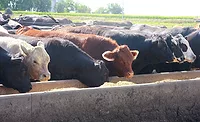
  • Cattle Eating

    Does feeding RFMDGS decrease beef quality?

    See More
  • Meat Science Review: Beef quality and mid-gestational energy restriction

    See More
  • Mulitple-hurdle antimicrobial interventions and ground beef quality

    See More

Related Products

See More Products
  • Handbook of Meat, Poultry and Seafood Quality, second edition

  • meat quality.jpg

    Meat Quality: Genetic and Environmental Factors

  • seafood.jpg

    Seafood Safety and Quality

See More Products
×

Stay ahead of the curve. Unlock a dose of cutting-edge insights.

Receive our premium content directly to your inbox.

SIGN-UP TODAY
  • RESOURCES
    • Advertise
    • Contact Us
    • Directories
    • Store
    • Want More
  • SIGN UP TODAY
    • Create Account
    • eMagazine
    • Newsletter
    • Customer Service
    • Manage Preferences
  • SERVICES
    • Marketing Services
    • Reprints
    • Market Research
    • List Rental
    • Survey/Respondent Access
  • STAY CONNECTED
    • LinkedIn
    • Facebook
    • YouTube
    • X (Twitter)
  • PRIVACY
    • PRIVACY POLICY
    • TERMS & CONDITIONS
    • DO NOT SELL MY PERSONAL INFORMATION
    • PRIVACY REQUEST
    • ACCESSIBILITY

Copyright ©2026. All Rights Reserved BNP Media, Inc. and BNP Media II, LLC.

Design, CMS, Hosting & Web Development :: ePublishing