Provisioner logo
Provisioner logo
search
cart
facebook twitter linkedin youtube
  • Sign In
  • Create Account
  • Sign Out
  • My Account
Provisioner logo
Provisioner logo
  • NEWS
    • Industry News
    • Supplier News
    • Case Studies
    • Recalls
    • Regulations
    • New Consumer Products
  • EXCLUSIVES
    • Newsletters
    • Source Book
    • Sponsored Insights
    • Events
    • Webinars
    • Classifieds
    • White Papers
    • Provisioner Store
    • Market Research
  • MEAT PROCESSING
    • SUSTAINABILITY
    • Processing
    • Packaging
    • Ingredients
    • Formulation
    • Food Safety
    • Special Reports
    • Commentary
  • PROFILES
    • Processor Profiles
    • Processor of the Year
    • Top 100 Processors
  • MEDIA
    • Videos
    • Podcasts
  • DIRECTORY
  • MIHOF
  • INDEPENDENT PROCESSOR
  • EMAG
    • eMagazine
    • ARCHIVE ISSUES
    • Contact
    • Advertise
  • JOIN!
Packaging

Packaging Tech

Barrier materials: Few barriers to growth
By Hallie Forcinio
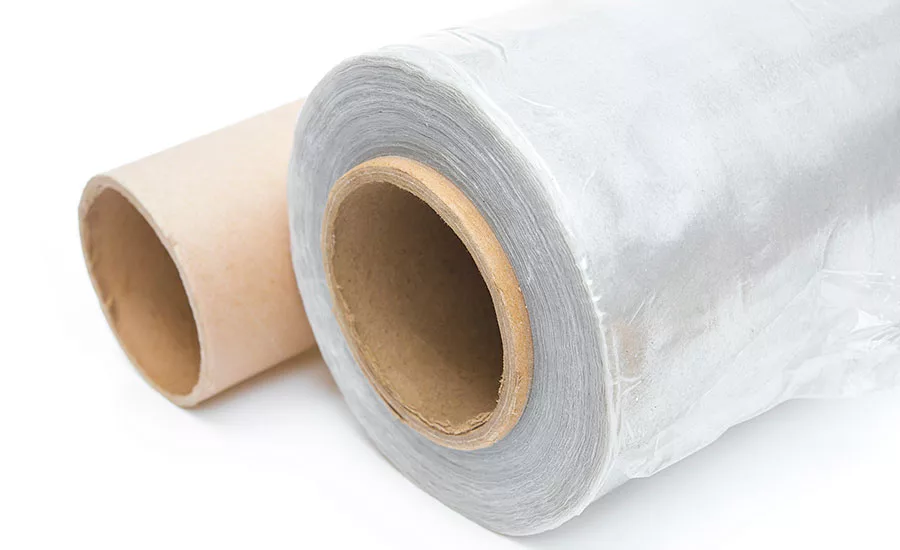
Flexible packaging barrier materials

The market for barrier materials is projected to grow both nationally and globally.

November 24, 2016

As use of flexible packaging expands, so does the demand for barrier materials. In fact, the market for barrier materials is projected to grow 2.7 percent per year to reach $13 billion in 2020, according to Barrier Materials for Flexible Packaging 2016-2020, a market study published in January by Allied Development Corp., Burnsville, Minn.

Another study, The Future of Functional Additives and Barrier Coatings for Plastic Packaging to 2021, published in August by Smithers Pira, Leatherhead, U.K., also forecasts a healthy growth rate globally. It attributes the expansion to economic, social, demographic and lifestyle changes; brand owners’ increasing focus on source reduction and sustainable packaging; consumer demand for convenience food; and a growing requirement from large retail chains for packaging that offers extended shelf life and less food waste.

Barrier properties are needed to maximize product shelf life and generally are imparted by a passive barrier layer consisting of ethylene vinyl alcohol, foil, polyvinylidene chloride or a coating such as metallization or transparent aluminum oxide or silicon oxide. The barrier layer often is sandwiched between layers of common packaging polymers such as polyethylene (PE), polyethylene terephthalate (PET) or polypropylene, but also can be part of a more complex structure with five, nine, 11 or more layers.

For more stringent barrier needs, an active barrier can be delivered by a built-in oxygen absorber, or scavenger. Potential applications for barrier technology include vacuum packaging, trays and lidstock and pouches. Packages designed to serve as the cooking vessel for the product may require additional features such as dual ovenability and/or self-venting. Self-venting not only maximizes consumer convenience, but also enhances food safety because there’s no need to pierce the package before the product goes into the oven.

Interest in retorted and high-pressure-pasteurized products in pouches is driving demand for packaging materials that combine high barrier properties with robust, leak-free seal integrity without creating a package that’s impossible to open. Clarity for product visibility is important too, as are convenience features.

Consumer convenience also continues to spur interest in features such as straight tear propagation at a tear notch to ensure mess-free opening and peelable and peel/reseal films. To deliver peelability, sealability and barrier properties, structures may rely on seal layers based on metallocene grades of PE. Advantages include greater contact clarity and lower seal initiation temperature. Because sealing requires less heat, there are environmental and cost benefits because less energy is needed. 

Sustainability and economics remain important considerations when specifying barrier structures and other flexible packaging materials. Printability is on many brand owner wish lists because printed film enhances brand identity, and potentially reduces or eliminates the need for label application and secondary packaging, reducing material consumption and costs.

Another path to an improved environmental profile is the use of structures with recycled or bioplastic content. One food-grade material combines toughness and barrier with an outer layer of recycled PET, a barrier layer of EVOH and an inner layer of PE. Applications include modified-atmosphere and form-fill-seal packaging.

Bioplastics also may enhance sustainability. A bioplastic layer in a PE or PET barrier lamination reduces reliance on petroleum-based plastics and may lower overall greenhouse gas emissions associated with the packaging.  NP

KEYWORDS: barrier films packaging technology

Share This Story

Looking for a reprint of this article?
From high-res PDFs to custom plaques, order your copy today!


Hallie Forcinio is a contributing writer.

Recommended Content

JOIN TODAY
to unlock your recommendations.

Already have an account? Sign In

  • Double Charburger

    Premiumization drives burger category

    Shoppers seek out premium meat offerings to fulfill...
    Beef
    By: Sammy Bredar
  • JJS Adult Pekin duck

    Poultry Report 2025: Convenience propels poultry at retail

    Despite continued economic pressures, the poultry...
    Meat and Poultry Industry News
    By: Sammy Bredar
You must login or register in order to post a comment.

Report Abusive Comment

Manage My Account
  • eMagazine Subscriptions
  • Manage My Preferences
  • Newsletters
  • Online Registration
  • Subscription Customer Service
  • Connect with The National Provisioner

More Videos

Sponsored Content

Sponsored Content is a special paid section where industry companies provide high quality, objective, non-commercial content around topics of interest to the The National Provisioner audience. All Sponsored Content is supplied by the advertising company and any opinions expressed in this article are those of the author and not necessarily reflect the views of The National Provisioner or its parent company, BNP Media. Interested in participating in our Sponsored Content section? Contact your local rep!

close
  • A smiling man carrying a grocery basket is reaching down to pick up a package of meat in a grocery store.
    Sponsored byPIC

    The Green Light: New Data Shows 12-to-1 Support for Pork from PRRS-Resistant Pigs

  • Close up of a grocery cart full of groceries, a cropped image of a couple pushing the cart and a blurred background of the vegetable aisle.
    Sponsored byPIC

    New Market Research Finds Consumers in Eight Key Pork Markets Are Likely to Purchase Pork from Gene-Edited Pigs

  • Close up of a young pig with a blurred background.
    Sponsored byPIC

    New Research Forecasts Significant Economic and Market Impacts with PRRS-Resistant Pig Adoption

Popular Stories

Various new Primal snack sticks on a table amongst pencils, apples, a pair of glasses, lunch bags and a water bottle.

Protein demand drives snacking occasions

Spam Dog

Hormel rolls out Spam hot dog for foodservice applications

Several cuts of beef, pork and chicken on a wooden board, cast iron pan and salt.

Validated thermal lethality data and a new tool for ensuring safety of RTE meats

2026 Top 100 Meat & Poultry Processors Report

Events

January 1, 2030

Webinar Sponsorship Information

For webinar sponsorship information, visit www.bnpevents.com/webinars or email webinars@bnpmedia.com.

View All Submit An Event

Products

Food Crime: An Introduction to Deviance in the Food Industry

Food Crime: An Introduction to Deviance in the Food Industry

See More Products
From Fresh to Frozen in 3 Minutes Flat: Unlocking the Secrets to Temperature Control Webinar Sponsored by Air Products

Related Articles

  • ‘Natural’ barriers to shelf-life extension

    See More
  • American lamb is a prominent protein in upscale restaurants

    State of lamb: On the road to growth

    See More
  • The National Provisioner Supplier News

    Eriez appoints regional sales director in response to growth in Europe, the Middle East, India and Northern Africa

    See More

Events

View AllSubmit An Event
  • November 8, 2012

    Food Plant of the Future: Hazardous Materials Storage and Use

    On demand Concerns over food safety, reliability, and traceability get a great deal of attention within plants.  Yet the highly regulated – but often-overlooked – concern for the storage and use of hazardous materials is also important.
  • June 11, 2026

    From Fresh to Frozen in 3 Minutes Flat: Unlocking the Secrets to Temperature Control

    On Demand Join Tony Vacaro, Foods Industry Manager, and Emile Klein, Foods Market Strategy Manager at Air Products and Chemicals, Inc. , as they tackle key questions surrounding heat removal in food processing. 
View AllSubmit An Event
×

Stay ahead of the curve. Unlock a dose of cutting-edge insights.

Receive our premium content directly to your inbox.

SIGN-UP TODAY
  • RESOURCES
    • Advertise
    • Contact Us
    • Directories
    • Store
    • Want More
  • SIGN UP TODAY
    • Create Account
    • eMagazine
    • Newsletter
    • Customer Service
    • Manage Preferences
  • SERVICES
    • Marketing Services
    • Reprints
    • Market Research
    • List Rental
    • Survey/Respondent Access
  • STAY CONNECTED
    • LinkedIn
    • Facebook
    • YouTube
    • X (Twitter)
  • PRIVACY
    • PRIVACY POLICY
    • TERMS & CONDITIONS
    • DO NOT SELL MY PERSONAL INFORMATION
    • PRIVACY REQUEST
    • ACCESSIBILITY

Copyright ©2026. All Rights Reserved BNP Media, Inc. and BNP Media II, LLC.

Design, CMS, Hosting & Web Development :: ePublishing