Supply Chain
The refrigerated and frozen foods supply chain
Innovate today for safer tomorrow
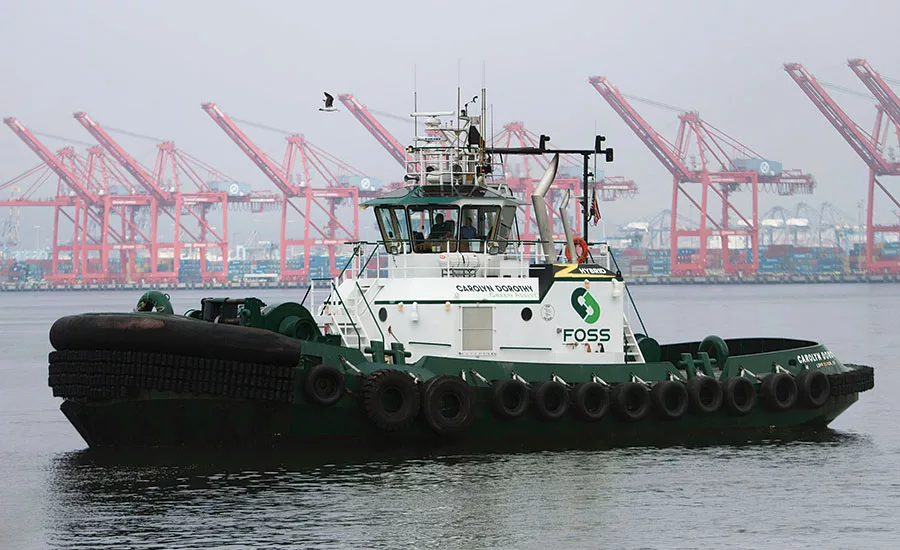
According to Lee Peterson, spokesman for Port of Long Beach, “We have invested in hybrid tugboat development, and we are looking at several zero-emission truck proposals as well.”
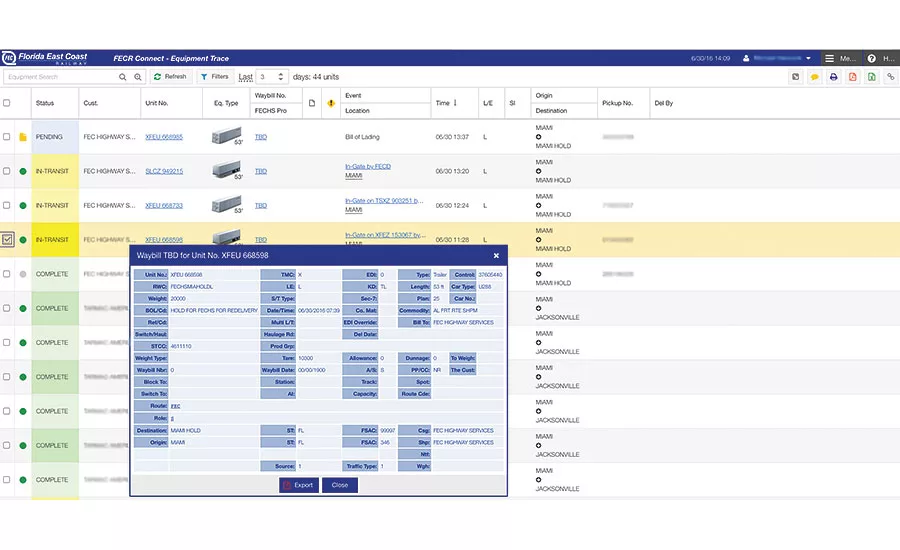
Florida East Coast Railway’s FECR Connect is an online portal that offers features such as order entry and real-time equipment track and trace.
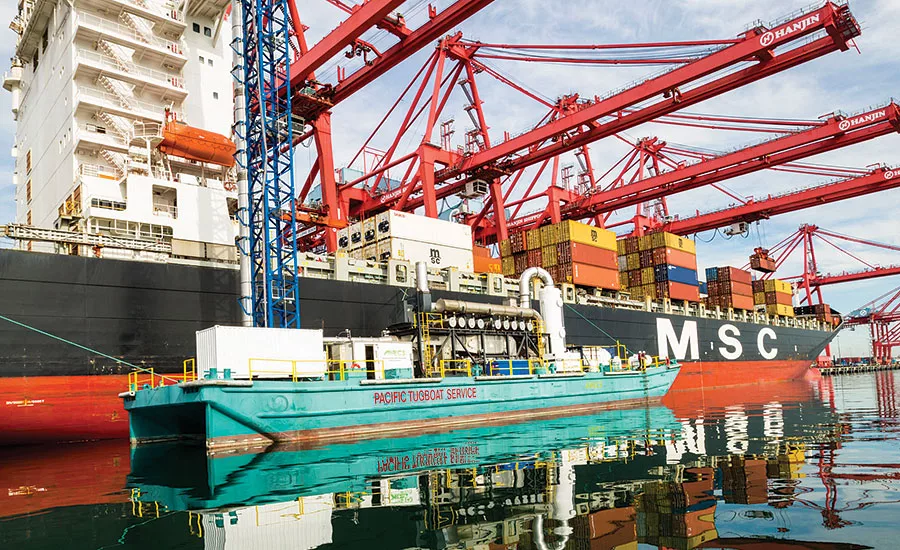
Port of Long Beach supports the Advanced Maritime Emissions Control System (AMECS), which eliminates at-berth emissions from ships by connecting to exhaust stacks and filtering that exhaust with a “clean air barge.”

Union Pacific’s refrigerated boxcars are CARB-compliant, equipped with built-in sensors that control car temperature and feature GPS monitoring to track shipments’ progress.
For many of today’s food and beverage processors, it’s not business as usual. Port workers can (and do) go on strike, cargo theft and cybersecurity are not a thing of the past and increasing federal mandates provide for costly and time-consuming updates.
However, despite these challenges, the completion of the Panama Canal Expansion, the proposed Trans-Pacific Partnership (TPP) and improved technologies such as Internet of Things (IoT) help shippers, ocean carriers and rail, trucking and logistics providers innovate for a safer, more efficient future.
“Big data and the Internet of Things are the most recent technologies that will have significant impact on the refrigerated and frozen foods supply chain,” says Peter Touesnard, chief commercial officer for OmniTRAX, Inc., Denver, Colo. “As more and more relevant data across historically disparate systems is collected, combined and analyzed, the supply chain will be transformed to improve safety, performance and efficiency at an increased rate.”
Railroads undergo safer infrastructure
There are many ways railroads are working to make operations safer and more efficient, ranging from railroad tie X-rays to drones for bridge inspections to energy efficient lighting at grade crossings to apps that allow railroad workers to conduct electronic inspections, says Linda Bauer Darr, president of American Short Line and Regional Railroad Association (ASLRRA), Washington, D.C.
But, from a technology perspective, the big focus is positive train control (PTC), which is technology that remotely stops a train in case of imminent danger.
“Unlike trucks or container ships, trains are made up of often more than 100 freight-carrying conveyances in addition to the power unit or units. So, the physics are very complicated,” Bauer Darr says.
Likewise, using alternative fuel sources can pose a great impact on supply chain efficiency.
For example, Florida East Coast Railway (FECR), Jacksonville, Fla., is said to be the first North American railroad to convert its mainline locomotive fleet to run on liquefied natural gas (LNG). FECR also re-established on-dock intermodal rail and built a 43-acre, state-of-the-art, near-dock intermodal container facility to provide expedited movement of goods between South Florida and Eastern U.S. markets, says Adam Bridges, senior vice president of marketing and strategic planning.
“A key advantage to shipping by rail is on-time performance to key consumption and distribution hubs and the ability to leverage the advantages of backhaul economics,” adds Bridges. “In Florida, through providing carload and intermodal vs. a solely over-the-road solution, FECR helps reduce road congestion and greenhouse gas emissions across the state.”
To improve rail safety, the Short Line Safety Institute (SLSI), Washington, D.C., completed the pilot phase of its project that assesses and addresses safety gaps in the short line and regional rail industry. During the pilot phase, SLSI developed tools and processes for measuring and evaluating 10 core elements of safety culture on railroads, created and implemented processes for sharing results with management, developed a training program for on-boarded assessors, completed six assessments on industry representative railroads and developed a plan for training, research and education going forward.
“We now have a tried-and-tested comprehensive program for evaluating and offering guidance to short lines on safety culture on their railroads,” says Ron Hynes, executive director. “Results generated from the pilot program provided a road map for progress.”
Meanwhile, Union Pacific, Omaha, Neb., developed the Food Train Network, a premium service dedicated to the on-time shipping of food and beverage products from California to the Pacific Northwest to the East Coast.
“We are identifying the industry’s densest markets to reach the largest production and distribution routes across our network,” says Sam Hughes, assistant vice president, food and refrigerated products. “By handling only food commodities, the Food Train Network provides an ideal transportation option for this important customer base, delivering food at its freshest.”
Additionally, Union Pacific’s refrigerated boxcars are compliant with the California Air Resource Board (CARB) standards, and are equipped with built-in sensors that control temperate and GPS monitoring to track shipments’ progress.
Furthermore, CSX, Jacksonville, Fla., developed a major freight rail infrastructure project in Salem, N.C. Called the Carolina Connector, this state-of-the-art facility serves as the intermodal transportation hub in the South.
How Panama Canal changes the way ports do business
The Panama Canal Expansion changed the way cargo is shipped worldwide. The new set of locks, which opened in June, is said to triple the capacity of ships moving through the canal, capable of carrying up to 14,000 containers.
“Now that larger ships are able to transit the canal, investments in infrastructure and harbor deepening that allow ports to accommodate the ships become more important,” says Michelle Ganon, vice president public affairs for Port of New Orleans, New Orleans, La.
That’s why Port of New Orleans is piloting a smartphone-based GPS app for trucking companies to address truck congestion issues between terminals and nearby expressways.
In October, Port of Long Beach, Long Beach, Calif., opened the Port of Long Beach Academy of Global Logistics at Cabrillo High School, Long Beach, Calif. This 4-year academy brings together college prep academics, technical education and work-based training opportunities to prepare students for careers in the supply chain sector.
Port of Long Beach also installed a plug-in capacity, which allows terminals to handle refrigerated containers. It also provides support to the Advanced Maritime Emissions Control System (AMECS), which eliminates at-berth emissions from ships by connecting them to exhaust stacks and filtering the exhaust with a “clean air barge.” And, its trying out a “traffic portal,” where trucking companies can access certain webcams in the port to see how long queues are in real-time.
“We are always looking for new environmental technologies that can help this and other ports reduce their impact on the environment,” says Lee Peterson, spokesman for Port of Long Beach. “We have invested in hybrid tugboat development, and we are looking at several zero-emission truck proposals as well.”
In April 2015, Oregon Governor Kate Brown launched the Trade and Logistics Initiative to identify trade-related freight logistics solutions to help small- and medium-sized businesses in Oregon stay competitive.
“More than 88% of Oregon exporters are small- and medium-sized businesses,” says Kenny Macdonald, media relations manager for Port of Portland, Portland, Ore. “Many of these businesses are experiencing increased transportation costs, longer transit times, reduced reliability and loss of markets and market share. Support to shippers currently underway includes the restart of an upriver barge-rail shuttle to connect with farmers, and exploration of a container re-use pilot and intermodal rail facility for valley shippers.”
JAXPORT’s ongoing investment in building the port of the future continues with the opening of an on-dock rail facility. The Intermodal Container Transfer Facility (ICTF) at Dames Point connects to CSX’s main line, allowing for two unit trains a day carrying up to 200 containers each. JAXPORT also welcomed three state-of-the-art 100-gauge electric container cranes equipped to service wider, post-Panamax vessels. Each electric crane works on regenerative power.
The Jacksonville, Fla.-based port also constructed a recycled back-up generator using surplus crane parts, including an engine and electrical generator. The unit, housed in a recycled shipping container, provided the port with 30,000 continuous hours of backup power during Hurricane Matthew.
Trucking industry faces tiring challenges
The most significant immediate threat to global growth is the record overhang of debt in China, a country that has not experienced a real economic downturn in over 30 years, according to Noel Perry, economist for FTR Transportation Intelligence, Bloomington, Ind. At its annual conference, FTR identified three important changes affecting the trucking and transportation market.
“The first is the structural decline in the rail traffic base, led by the shifts from coal to natural gas as a utility fuel,” he adds. “Second, FTR quantified the likely effects of the developing wave of regulatory changes. These changes have the potential to increase trucking hiring by a third or more in the critical quarters. The final big trend is the inexorable automation of transport operations, a development that could easily halve trucking costs at maturity.”
Likewise, the American Transportation Research Institute (ATRI), Arlington, Va., unveiled the Top 10 critical issues facing the North American trucking industry. Issues include the implementation date of electronic logging devices, hours of service, costly regulatory requirements, lack of available truck parking and the state of the nation’s economy.
Despite some industry challenges looming ahead of one the nation’s most important elections, shippers, ocean carriers and rail, trucking and logistics providers continue to innovate for a safer, more efficient future. NP
Editor’s Note: This article originally appeared in the Nov. 2016 issue of Refrigerated & Frozen Foods, a sister publication of The National Provisioner at BNP Media. For more information, visit www.refrigeratedfrozenfood.com.
Looking for a reprint of this article?
From high-res PDFs to custom plaques, order your copy today!