Provisioner logo
Provisioner logo
search
cart
facebook twitter linkedin youtube
  • Sign In
  • Create Account
  • Sign Out
  • My Account
Provisioner logo
Provisioner logo
  • NEWS
    • Industry News
    • Supplier News
    • Case Studies
    • Recalls
    • Regulations
    • New Consumer Products
  • EXCLUSIVES
    • Newsletters
    • Source Book
    • Sponsored Insights
    • Events
    • Webinars
    • Classifieds
    • White Papers
    • Provisioner Store
    • Market Research
  • MEAT PROCESSING
    • SUSTAINABILITY
    • Processing
    • Packaging
    • Ingredients
    • Formulation
    • Food Safety
    • Special Reports
    • Commentary
  • PROFILES
    • Processor Profiles
    • Processor of the Year
    • Top 100 Processors
  • MEDIA
    • Videos
    • Podcasts
  • DIRECTORY
  • MIHOF
  • INDEPENDENT PROCESSOR
  • EMAG
    • eMagazine
    • ARCHIVE ISSUES
    • Contact
    • Advertise
  • JOIN!
Meat and Poultry ProcessingPlant Design/Management

Processing Tech

Collaborate on conveyors
By Dr. John E. Johnson
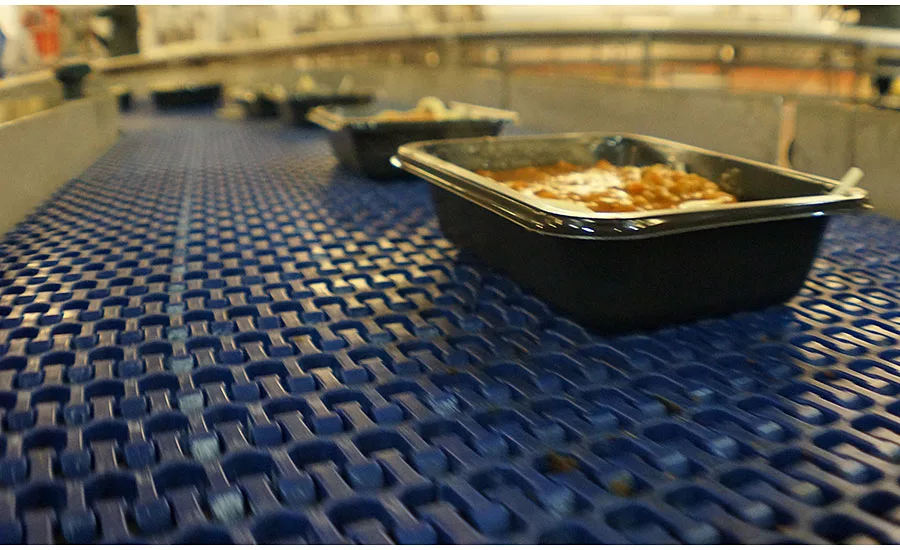
Conveyor with food packages
November 9, 2017

Recently, I managed a brownfield project that included a significant amount of demolition. In the decommission phase of the project, older equipment was inventoried and assessed for repurposing. While evaluating the conveyors, I was amazed at the variety of designs, belting, fabrication and, unfortunately, poor sanitary design.

Additionally, in a previous role as a director of process automation and technology for a major processor, my team and I had an interesting discussion about the possibility of creating a generic conveyor design. This design would use common parts, construction, drives and belting. It would be a “clean” design and save on fabrication and reduce spare-parts inventories.

Although great in concept, the generic conveyor never materialized. Why? Simply looking at the role conveyors play in meat processing can be overwhelming because different stages require unique applications of functionality. Each application requires customizing conveyors based on process needs, equipment manufacturer and belting.

Few companies manufacture belting. One can’t go to the superstore and buy a conveyor or belting. These manufacturers continue to develop a variety of belts to meet customer needs and their processes.

While evaluating the belting on those old conveyors mentioned above, I noticed opportunities to improve the belt engagement, travel bed and cleanability. Belting company representatives have discussed improving belting performance and cleanability to a microbial level. But designing a “clean” conveyor and using a proper belt cannot ensure proper fabrication.

Designing a conveyor is not easy and fabrication can be made more difficult by complicated designs. Each conveyor and equipment manufacturer has a fabrication process. Some manufacturers will follow methods that have been passed down over decades while others follow a documented and formal process. In either case, the end results will be the processors’ responsibility to maintain and clean for the life of the conveyor. 

For these conveyor projects, one can look to the iron triangle of project management defined in the Project Management Book of Knowledge (PMBOK) (Project Management Institute, 2013). The triangle is composed of cost, time and quality. Changes to the original design affect these areas.

If a conveyor is needed more quickly than originally committed, quality and cost may be compromised. You may have heard the statement, “I don’t care what it costs; we need that conveyor installed this weekend.”

Rushing a job may lead to poor quality welds, missed welds and, of course, higher costs. Yet, fabricating conveyors doesn’t need to be a processor’s Achilles’ heel. Proper design, appropriate belting and consistent fabrication can provide a lasting asset for a facility.

Of course, there is always room for continued improvement. Some manufacturers continue to explore and implement methods for improving the designs, fabrication and sanitation of conveyors.

It has been more than 15 years since the first Guidelines for Sanitary Design Principles were developed, and more than three years since the revised guidelines were published. Is it too early to look for Sanitary Design Principles 3.0? Perhaps not.

Looking to the future, more conveyors are being used, which means more food surface contact and transfer points. Working with conveyor manufacturers can improve your facility’s overall performance and cost of ownership. A number of manufacturers are highly advanced and are progressing to eventually get to the “perfect conveyor” design. NP

KEYWORDS: belting conveyor conveyor systems material handling systems

Share This Story

Looking for a reprint of this article?
From high-res PDFs to custom plaques, order your copy today!

Dr. John E. Johnson, PMP, CPE is an adjunct professor of business and managing director of Epsilon Industries. Johnson has been in the agricultural and meat industry for 30 years, holding various roles in engineering, safety, ergonomics and operations. He holds 10 patents for food-processing equipment, is a Senior Member of the Institute of Industrial and Systems Engineers, Board Certified Professional Ergonomist, Project Management Professional, member of The National Provisioner's Editorial Board and manages the family grain farm.

Recommended Content

JOIN TODAY
to unlock your recommendations.

Already have an account? Sign In

  • Double Charburger

    Premiumization drives burger category

    Shoppers seek out premium meat offerings to fulfill...
    Meat and Poultry Industry News
    By: Sammy Bredar
  • JJS Adult Pekin duck

    Poultry Report 2025: Convenience propels poultry at retail

    Despite continued economic pressures, the poultry...
    Chicken
    By: Sammy Bredar
You must login or register in order to post a comment.

Report Abusive Comment

Manage My Account
  • eMagazine Subscriptions
  • Manage My Preferences
  • Newsletters
  • Online Registration
  • Subscription Customer Service
  • Connect with The National Provisioner

More Videos

Sponsored Content

Sponsored Content is a special paid section where industry companies provide high quality, objective, non-commercial content around topics of interest to the The National Provisioner audience. All Sponsored Content is supplied by the advertising company and any opinions expressed in this article are those of the author and not necessarily reflect the views of The National Provisioner or its parent company, BNP Media. Interested in participating in our Sponsored Content section? Contact your local rep!

close
  • A smiling man carrying a grocery basket is reaching down to pick up a package of meat in a grocery store.
    Sponsored byPIC

    The Green Light: New Data Shows 12-to-1 Support for Pork from PRRS-Resistant Pigs

  • Close up of a grocery cart full of groceries, a cropped image of a couple pushing the cart and a blurred background of the vegetable aisle.
    Sponsored byPIC

    New Market Research Finds Consumers in Eight Key Pork Markets Are Likely to Purchase Pork from Gene-Edited Pigs

  • Close up of a young pig with a blurred background.
    Sponsored byPIC

    New Research Forecasts Significant Economic and Market Impacts with PRRS-Resistant Pig Adoption

Popular Stories

JBS USA logo

JBS USA closing pair of processing facilities

Various new Primal snack sticks on a table amongst pencils, apples, a pair of glasses, lunch bags and a water bottle.

Protein demand drives snacking occasions

Several cuts of beef, pork and chicken on a wooden board, cast iron pan and salt.

Validated thermal lethality data and a new tool for ensuring safety of RTE meats

2026 Top 100 Meat & Poultry Processors Report

Events

January 1, 2030

Webinar Sponsorship Information

For webinar sponsorship information, visit www.bnpevents.com/webinars or email webinars@bnpmedia.com.

View All Submit An Event

Products

Food Crime: An Introduction to Deviance in the Food Industry

Food Crime: An Introduction to Deviance in the Food Industry

See More Products
From Fresh to Frozen in 3 Minutes Flat: Unlocking the Secrets to Temperature Control Webinar Sponsored by Air Products

Related Articles

  • Conveying the Message

    See More
  • Protein Plant of the Future!

    See More
  • Workers in Food Safety Apparel

    Overcoming the human element of food safety

    See More

Related Products

See More Products
  • Food Plant Sanitation: Design, Maintenance, and Good Manufacturing Practices, Second Edition

  • Handbook of Food Products Manufacturing: Health, Meat, Milk, Poultry, Seafood, and Vegetables, Volume 2

See More Products

Events

View AllSubmit An Event
  • April 26, 2012

    Food Plant of the Future: Raising the Bar on Plant Air Quality

    On demand Exclusively for thought-leaders in food and beverage processing facility management, Food Plant of the Future webinars are presented by Hixson, a leading design and engineering firm of food processing facilities in North America.
  • April 25, 2013

    Food Plant of the Future: Global Food Safety Impact on Facilities

    On demand SQF 2000, FSMA, ISO 22000/PAS220 and other standards continue to gain traction in an attempt to create safer foods and beverages.
View AllSubmit An Event
×

Stay ahead of the curve. Unlock a dose of cutting-edge insights.

Receive our premium content directly to your inbox.

SIGN-UP TODAY
  • RESOURCES
    • Advertise
    • Contact Us
    • Directories
    • Store
    • Want More
  • SIGN UP TODAY
    • Create Account
    • eMagazine
    • Newsletter
    • Customer Service
    • Manage Preferences
  • SERVICES
    • Marketing Services
    • Reprints
    • Market Research
    • List Rental
    • Survey/Respondent Access
  • STAY CONNECTED
    • LinkedIn
    • Facebook
    • YouTube
    • X (Twitter)
  • PRIVACY
    • PRIVACY POLICY
    • TERMS & CONDITIONS
    • DO NOT SELL MY PERSONAL INFORMATION
    • PRIVACY REQUEST
    • ACCESSIBILITY

Copyright ©2026. All Rights Reserved BNP Media, Inc. and BNP Media II, LLC.

Design, CMS, Hosting & Web Development :: ePublishing