Processing Tech
Process controls: a measure of success
Meat and poultry processors should design systems that encourage workers to meet company operating standards.
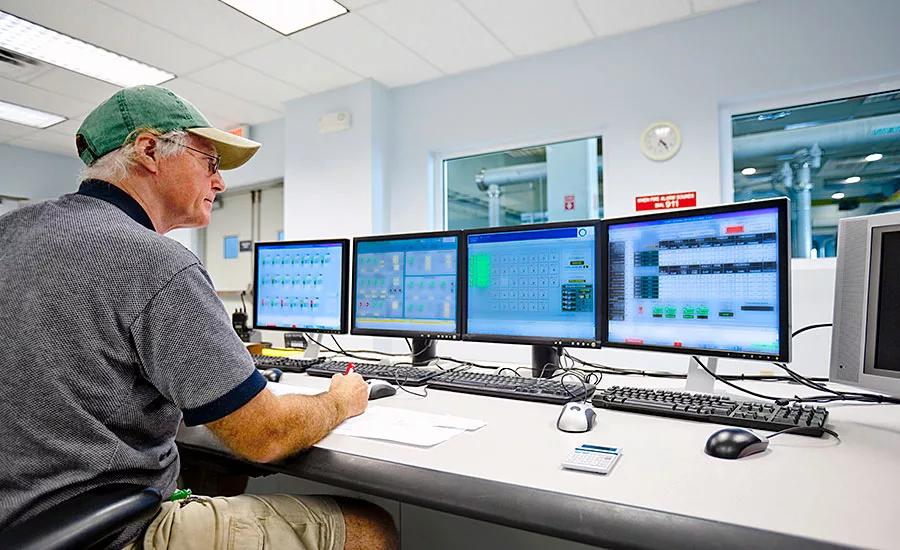
Process controls play a key role in the effective operation of meat and poultry plants. By setting performance targets for workers and having a system that identifies whether the objectives are being met, processors can quickly gauge plant efficiencies and identify areas for improvement.
Controls can address areas such as production rates and food and worker safety, and a potent program often demands the use of leading-edge technologies, record-keeping methodologies and employee training programs, analysts say.
Yet designing, implementing and maintaining such systems can be challenging.
“Legacy processing equipment that is not fitted with digital process monitoring requires a significant investment, both in upgrading equipment and installing electrical and physical infrastructure to support live process data collection,” says Carey Allen, business manager in supply chain food safety for NSF International, an Ann Arbor, Mich.-based food safety auditing firm and standards developer. “If the monitoring procedures require human intervention in the process, there also can be interference with process efficiency and people or product safety.”
Operators that are unable to incorporate high-end technologies, she says, can use simpler data collection methods, such manual data entry. That can include having a PC-based interface with software or “cloud” services with predetermined graphical reporting tools, which minimizes the required amount of training and equipment changes, she says.
Communicate effectively
Other challenges arise when the complexity of monitoring methods or instruments is beyond the skill set of available employees, Allen states.
In such instances, operators can develop new process control specifications or utilize new tools to improve performance, she says, adding that companies also should invest in multi-language documentation and training on the new procedures and tools that are used to control and monitor the process.
Companies that alter their process controls should communicate to workers the reasons for the adjustments and the subsequent benefits from the changes and be ready to answer questions to allay employee concerns, Allen says.
“It is important that employees comprehend how they fit within their particular jobs and their overall roles in the company,” says Robert Delmore, a professor and director of undergraduate programs in the Department of Animal Sciences at Colorado State University, in Fort Collins. “To have buy-in, employees need to know that they are part of the solution in solving concerns.”
Worker attitudes and performance are highly dependent on employees’ understanding of company objectives, he says, noting “it is crucial for employees to see the bigger picture rather than being told to just ‘do this’ and ‘do that’ with no other direction.”
Efficient process control systems often include key performance indicators (KPI), a measurable value that demonstrates how effectively a company is achieving its main objectives. For optimal tracking, it is important that processors have solid record-keeping systems to monitor activity, Allen says.
“Regular consistent data collection for the KPI and logging data in an electronic, statistical analysis-enabled platform can reveal trends in performance and is key for making the data useful,” she says. “Live trending allows for data-driven process optimization and rapid correction of any deviation from the target. Data analysis results should be displayed and the business performance impact regularly communicated to employees.”
Detailed record keeping enables operators to easily compare current performance levels with past measurements. This is an important first step in pinpointing the causes of plant inefficiencies, says Dennis Burson, a professor and extension meat specialist and food safety specialist in the Department of Animal Science at the University of Nebraska in Lincoln.
A pick of parameters
Companies can quickly identify KPIs by basing their targets on such measures as customer specifications, regulatory limits and International Organization for Standardization (ISO) or Global Food Safety Initiative (GFSI)-based industry standards, Allen says.
The KPIs, meanwhile, can serve as process controls for such areas as food safety (including time, temperature and pressure); quality (color and flavor scores, defect count, line speeds and rework volume); and food safety system compliance (supplier quality ratings and internal/external audit scores), she says.
“Establishing performance targets should focus on those that are key to achieving business objectives,” Allen says. “A continuous improvement mindset and effectively communicating the benefits to the individual, the organization and the customer helps to motivate employees to perform up to the selected standard.”
Following commonly accepted industry standards, meanwhile, helps protect workers from harm, and businesses have the potential to thrive when buyers can put their trust in organizations that hold themselves high standards, she says.
To motivate employees to adhere to the standards, operators should include them in planning and developing systems and give them responsibility and accountability, Allen says.
“Continue to communicate the positive impact on the business and reward the team for positive outcomes regularly,” she says. “Work together on solutions where improvement is needed.”
Delmore emphasizes that employee engagement is crucial in successful process control systems.
“Workers are a lot more apt to understand why they have to do something differently if there is an explanation from the bosses on their vision of a new mandate,” he says. “And it doesn’t have to be a five-hour PowerPoint presentation. It can simply occur at a group meeting.”
If workers’ performance deviates from the standards, meanwhile, operators need to re-evaluate parameters and determine whether adjustments are appropriate, Allen says.
Such evaluations also should occur if performances result in poor product quality or product and process safety, even if KPI targets are being met, she says.
“It is important to validate that controls are working,” Burson says, adding that such analysis often is done by coordinators at the plant level as well as by the corporate executives who frequently design and implement the process control systems.
Evolving operations
Processing controls at meat and poultry plants, however, will continuously be changing as new technologies become available, says Norman Marriott, emeritus professor in the College of Agriculture and Life Sciences at Virginia Polytechnic Institute and State University (Virginia Tech) in Blacksburg.
“We already are seeing improvements in the rapid testing of different microorganisms and pathogens by workers who are using laptop computers and smart phones for record-keeping,” he says.
Because record keeping is vital in process controls, Marriott stresses the importance of workers using the most effective tools, which include computer-based systems rather than pen and pad.
Adherence to process controls in meat and poultry facilities, meanwhile, will become more prevalent as additional operators replace workers with robotic systems, Marriott says.
“We’re in the early stages of the robotics revolution and it will help processors from a productivity and sanitation standpoint,” he says. “Over time, it will be increasingly more difficult to find people who are willing to work in meat plants as it is a hard job and they often must pass a blood test (that screens for drugs and alcohol).” NP
Looking for a reprint of this article?
From high-res PDFs to custom plaques, order your copy today!