Food Safety
Research continues to explore additional possibilities for rapid testing
Covering more ground
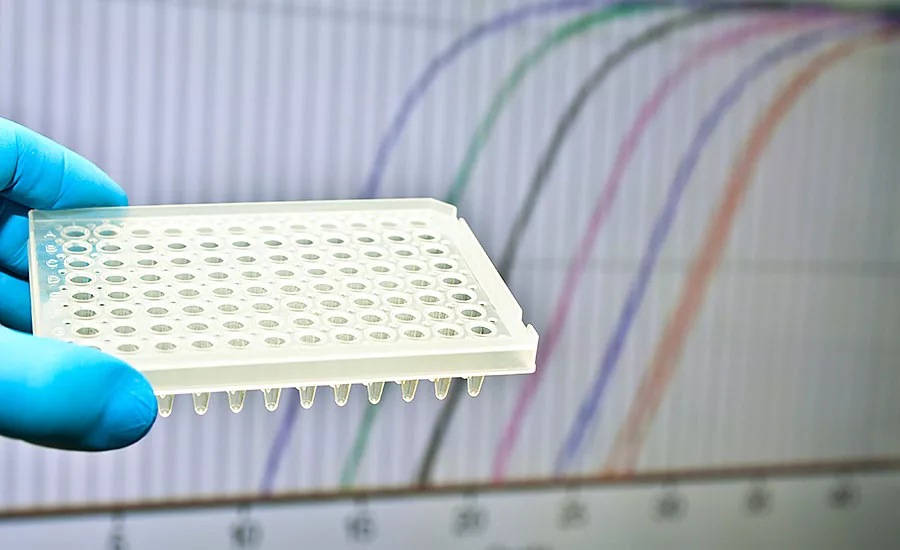
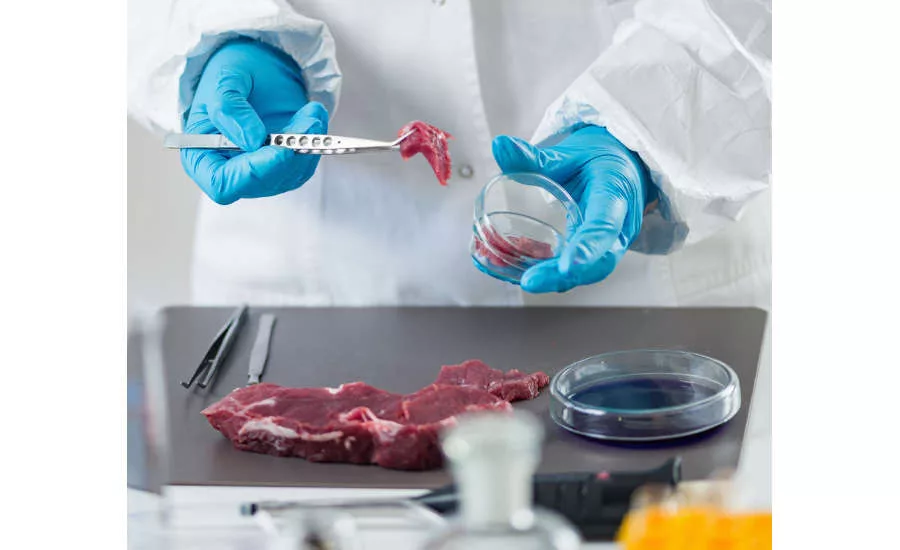
Detecting foodborne pathogens for meat and poultry producers is challenging in and of itself, and detecting pathogens quickly is even more problematic.
“The current methods adopted by meat and poultry producers are very time consuming, with a minimum of 24 hours from sampling to result,” says Carmen Gomes, associate professor in the Department of Mechanical Engineering at Iowa State University in Ames, and co-founder of NanoSpy. “They also require trained personnel in microbiology analysis and laboratory settings to perform the test. Either the producers have their lab in house or they need to send samples out for analysis, consequently affecting product distribution throughout the food chain.”
Many efforts have been put into developing rapid testing for foodborne pathogens in recent years. Some already are available commercially that are capable of detecting specific types of pathogens, e.g. Listeria, in shorter time periods, such as six hours and more recently less than an hour, Gomes says. The ability of these rapid tests to achieve the same level of selectivity, for example, one foodborne pathogen in a 25-gram sample, of the current methods in a short period of time, such as less than one hour, and the lack of portability of the device are major challenges.
“Most of the tests available still require about 18-hour sample incubation in a media to allow the pathogen to grow under optimum conditions to have a larger population of bacteria in order to be detected,” she explains. “Moreover, the current rapid testing devices available require trained personnel in a laboratory setting to run the test, they are not designed for in-field test that allow for testing in the plant floor with minimum sample preparation.”
Gome’s company NanoSpy focuses on developing electrochemical sensors, a technology created by and licensed from Jonathan Claussen, assistant professor in the department of mechanical engineering at Iowa State University and co-founder of NanoSpy. These sensors are electrodes fabricated with inkjet-printed graphene that are laser treated to increase the surface area and conductivity of the sensor. NanoSpy can enable the surface to detect numerous targets, but specifically for foodborne pathogens, it uses antibodies to detect Salmonella in pork and poultry and Listeria in dairy and produce wash water. The device NanoSpy is currently developing allows for detection of these pathogens in less than 30 minutes from sampling to result, and the test can be performed at the processing plant with minimal training.
Lab-based rapid testing
In regard to lab-based rapid testing, Jianfa Bai, director of molecular research and development for Kansas State Veterinary Diagnostic Laboratory (KSVDL) in Manhattan, Kan., is working on several areas, one of which is syndromic panel testing, which is real-time polymerase chain reaction (PCR) based. Traditionally, labs would test for one pathogen at a time, but, for example, bovine respiratory disease has between 10 to 13 major pathogens for which samples need to be tested. Instead, Bai’s laboratory has developed syndromic panels that can detect all major pathogens involved in a syndrome simultaneously. Data is available next day for all the pathogens that may be involved.
“If you test one at a time, sequentially, then it will take longer and cost more,” Bai explains.
In addition, KSVDL has developed a digital PCR test for Shiga toxin-producing Escherichia coli (STEC) detection in beef. Currently, the U.S. Department of Agriculture’s recommended STEC identification procedure for beef is at least a week long. While digital PCR is still lab based, results are available next day.
KSVDL also is building internal controls to include in each rapid test to act as quality control. The internal control monitors nucleic acid extractions.
“For PCR testing, if you have a positive it’s great, but if you have a negative you’re not sure if the extraction or if the PCR is working,” Bai says. “This internal control can tell you if your reactions are working. If the internal control is working, you know it’s a true negative.”
Another rapid testing method, KSVDL is working with is magnetic-based detection using the Luminex system with the major advantage being able to detect a few dozen pathogens in a single reaction. KSVDL’s real-time PCR syndromic test can only detect three to four targets in a reaction, which would require multiple reactions to test for 10 to 12 pathogens. Hypothetically, the system could test 500 targets in a reaction, which is the machine’s capacity. But most people can only test about 60 targets at a time because of primer interactions, Bai says. While magnetic-based detection has been available for more than a decade, it traditionally has been used for antibody detection. Only recently has a method of using the system for nucleic acid detection as well.
“Instead of running three or four reactions, we can just run a single reaction to cover the full panel,” Bai says. “Those are the most flexible to add new pathogens or new genotypes of an existing pathogen like PRRS [Porcine Reproductive and Respiratory Syndrome].”
KSVDL has national support to develop a PRRS vaccine differentiation test. The lab is trying to detect the majority of PRRS strains in addition to differentiating the four major vaccine strains used in the United States. The lab has preliminary data indicating testing is working, and KSVDL is expanding the panel slowly to include other major pathogens.
Further development
While rapid testing development continues to advance, researchers face many challenges. One is rare pathogens, such as tick-borne pathogens, or pathogens with limited genetic information. “If there are not too many sequences available, for example, you have only 10 or 20 sequences, it’s really very questionable if a design based on 10 or 20 sequences can cover everything in the field,” Bai says. “So if you have limited genetic information, then the design might not be as reliable.”
On the other hand, for some viruses the problem is too many sequences exist to design an assay that can cover the majority of the pathogens in the field.
“If you have 10,000 sequences, then it’s very difficult to find a conserved region, which means a piece of DNA or RNA, that is the same for every single strain and can be used for primer design,” Bai says.
In addition, rapid test developers face an ever-mutating viral genome, Bai says. As such, KSVDL even follows human diagnostic laboratories’ practices to recheck their design assays periodically.
Even with these challenges, all the rapid tests KSVDL develops have at least 95 percent coverage with most supporting above 98 percent coverage to available pathogen sequences.
In the future, Gomes expects foodborne pathogen testing will be simplified with minimal training and with the ability to perform the test in the field with accurate results in less than 30 minutes at an affordable price per test.
“This will allow for multiple tests during food processing at different stages of production in the processing plant,” she says. “Consequently, contamination by foodborne pathogens will be detected while the food is being processed and intervention steps will be implemented before final production, avoiding product recalls and foodborne disease outbreaks. Idealistically, testing for foodborne pathogens in the future will be as simple as measuring temperature using a thermometer.” NP
Looking for a reprint of this article?
From high-res PDFs to custom plaques, order your copy today!