Provisioner logo
Provisioner logo
search
cart
facebook twitter linkedin youtube
  • Sign In
  • Create Account
  • Sign Out
  • My Account
Provisioner logo
Provisioner logo
  • NEWS
    • Industry News
    • Supplier News
    • Case Studies
    • Recalls
    • Regulations
    • New Consumer Products
  • EXCLUSIVES
    • Newsletters
    • Source Book
    • Sponsored Insights
    • Events
    • Webinars
    • Classifieds
    • White Papers
    • Provisioner Store
    • Market Research
  • MEAT PROCESSING
    • SUSTAINABILITY
    • Processing
    • Packaging
    • Ingredients
    • Formulation
    • Food Safety
    • Special Reports
    • Commentary
  • PROFILES
    • Processor Profiles
    • Processor of the Year
    • Top 100 Processors
  • MEDIA
    • Videos
    • Podcasts
  • DIRECTORY
  • MIHOF
  • INDEPENDENT PROCESSOR
  • EMAG
    • eMagazine
    • ARCHIVE ISSUES
    • Contact
    • Advertise
  • JOIN!
Supplier News

Heat exchanger selection tips for food producers
By Industry News
HRS Heat Exchangers Unicus
February 27, 2019

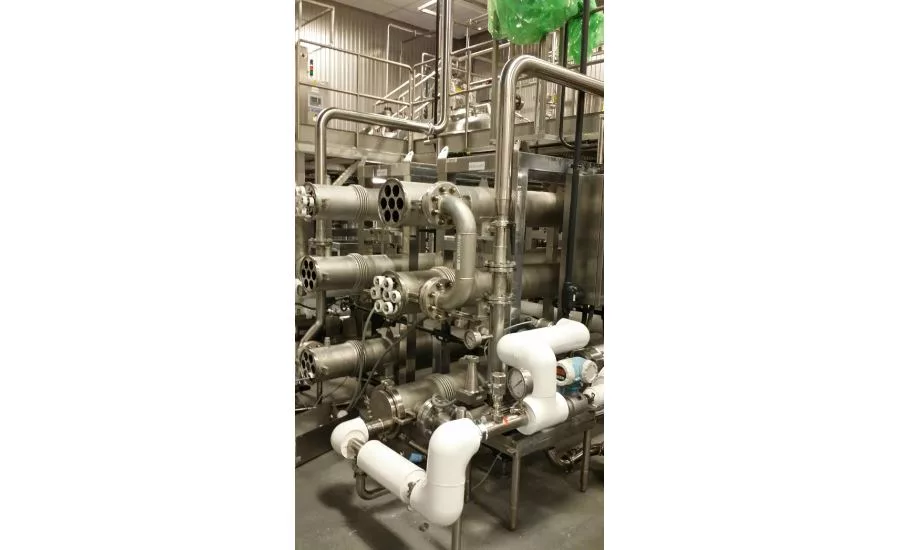
When it comes to choosing the right heat exchanger for a particular situation, there is no substitute for professional advice, but you will have a better handle on the process if you have a basic understanding of the factors which need to be considered. These can be broadly divided into commercial considerations and technical considerations. Using the questions discussed below will provide you with a good starting point with which to begin a tender process or a basis on which to compare different proposals.

  1. Is a heat exchanger the right technology?

It may seem an odd question for an article about heat exchangers, but the first question you should ask is whether you need one in the first place. There is no doubt that heat exchangers can be relatively complex and expensive. While they are eminently preferable in many situations, particularly where a cooling or heating source is already available or is required for more than one process, they may be over-kill for simple situations where a straightforward heating element or simpler refrigeration system is sufficient.

  1. What type of heat exchanger do I need?

The simplest forms of heat exchangers are so-called plate heat exchangers, which consist of combinations of plates and gaskets through which the product and the heating or cooling medium move. They are relatively simple and cost effective and can do a very good job with simple Newtonian fluids like milk and thin oils. However, for more viscous substances, non-Newtonian fluids and processes requiring high levels of heat transfer, tube-in-tube heat exchangers may be a better option.

These come in different forms including those with corrugated tubes to increase product turbulence, which prevents fouling and improves operating efficiency. For high fouling and viscous fluids, scraped surface heat exchangers are available. Reciprocating and rotary versions are available, allowing different products to be handled carefully, so that key quality characteristics can be maintained or mixing increased, while providing maximum operating efficiency.

  1. Will the system cope with my products?

There are several things to consider. Firstly, the heat exchanger must be capable of providing the right amount of heat transfer. Different materials will have different thermal properties which must be considered when designing a heat exchanger. Factors such as viscosity, solids content and texture will need to be assessed alongside product flow rates to ensure that the product receives the correct treatment. For example, if the heat exchanger does not deliver sufficient heat it may result in an incomplete process, which could have severe implications for product safety.

At the same time, if the system does not handle certain products correctly it can change or damage their quality; for example, rough handling of viscous sauces can have a negative effect on their texture.

Finally, the heat exchanger set-up should be capable of handling the maximum amount of product required at any time. While there will be physical constraints on the size of individual heat exchanger elements, in most cases it is possible to combine multiple units into suitable arrays in order to increase treatment capacity.

  1. What other benefits could the system deliver?

One benefit of some heat exchangers is their ability to recover heat from the end of the process and re-use it. In many cases this feature enables the system to be more efficient, reducing the amount of heat which needs to be supplied in the first place. However, in some situations – for example, where the heat source is plentiful – then the recaptured heat can be used for another process or for something else altogether, such as heating offices or buildings.

In such cases, these additional cost savings need to be offset against the capital and running costs of the heat exchanger.

  1. What are the maintenance requirements?

These will vary according to the type of heat exchanger chosen, its design, and the environment in which it is used. However, more important than the actual maintenance requirements is how easy maintenance is. For example, how complicated is it to access key components and what are the costs of routine spare parts such as seals and gaskets?

For double- and triple-tube heat exchangers, is it possible to remove individual tubes without dismantling the entire unit, and is it possible to service parts of the unit without shutting down the whole process? These factors will have a key impact on how much the heat exchanger costs to service, both financially and in regard to the time and resources required.

  1. How much will the system cost?

For many people, cost will be one of the most important factors in making an investment decision. However, it is important to compare both the capital cost of different units and their anticipated operating costs and service life. For example, a 25% higher purchase price may easily be recouped by greater operating efficiency and reduced serving costs over the same, or even longer, working life. Only by considering all the associated costs will you be able to make an accurate investment decision.

  1. How will the system be designed?

Does the supplying company use the very latest scientific information on energy and heat transfer, or is it relying on papers and data which may be half a century or more old? While it is imperative that the heat exchanger performs correctly in terms of thermal transfer, other considerations, such as ease of installation and maintenance, are also important.

  1. What back-up and support is there?

Not only is it important to have back-up in the event of a problem, but does your supplier offer features such as extended maintenance and servicing? Would you be able to take advantage of any future upgrades, such as improvement in tube design? It may not be essential to deal with a company which is based locally, but you should investigate how well they deal with other clients in similar circumstances.

It is obviously impossible to cover every potential situation in an article such as this, but this article highlights some of the most common issues which apply to nearly every heat exchanger purchase or installation. Your individual circumstances will be unique and another key consideration when making your final decision should be how well your chosen supplier appreciates this.

For more information visit www.hrs-heatexchangers.com.

KEYWORDS: heat exchangers hrs heat exchangers

Share This Story

Looking for a reprint of this article?
From high-res PDFs to custom plaques, order your copy today!


Recommended Content

JOIN TODAY
to unlock your recommendations.

Already have an account? Sign In

  • Double Charburger

    Premiumization drives burger category

    Shoppers seek out premium meat offerings to fulfill...
    Meat and Poultry Industry News
    By: Sammy Bredar
  • JJS Adult Pekin duck

    Poultry Report 2025: Convenience propels poultry at retail

    Despite continued economic pressures, the poultry...
    Chicken
    By: Sammy Bredar
You must login or register in order to post a comment.

Report Abusive Comment

Manage My Account
  • eMagazine Subscriptions
  • Manage My Preferences
  • Newsletters
  • Online Registration
  • Subscription Customer Service
  • Connect with The National Provisioner

More Videos

Sponsored Content

Sponsored Content is a special paid section where industry companies provide high quality, objective, non-commercial content around topics of interest to the The National Provisioner audience. All Sponsored Content is supplied by the advertising company and any opinions expressed in this article are those of the author and not necessarily reflect the views of The National Provisioner or its parent company, BNP Media. Interested in participating in our Sponsored Content section? Contact your local rep!

close
  • A smiling man carrying a grocery basket is reaching down to pick up a package of meat in a grocery store.
    Sponsored byPIC

    The Green Light: New Data Shows 12-to-1 Support for Pork from PRRS-Resistant Pigs

  • Close up of a grocery cart full of groceries, a cropped image of a couple pushing the cart and a blurred background of the vegetable aisle.
    Sponsored byPIC

    New Market Research Finds Consumers in Eight Key Pork Markets Are Likely to Purchase Pork from Gene-Edited Pigs

  • Close up of a young pig with a blurred background.
    Sponsored byPIC

    New Research Forecasts Significant Economic and Market Impacts with PRRS-Resistant Pig Adoption

Popular Stories

Spam Dog

Hormel rolls out Spam hot dog for foodservice applications

Various new Primal snack sticks on a table amongst pencils, apples, a pair of glasses, lunch bags and a water bottle.

Protein demand drives snacking occasions

Several cuts of beef, pork and chicken on a wooden board, cast iron pan and salt.

Validated thermal lethality data and a new tool for ensuring safety of RTE meats

2026 Top 100 Meat & Poultry Processors Report

Events

June 11, 2026

From Fresh to Frozen in 3 Minutes Flat: Unlocking the Secrets to Temperature Control

Join Tony Vacaro, Foods Industry Manager, and Emile Klein, Foods Market Strategy Manager at Air Products and Chemicals, Inc. , as they tackle key questions surrounding heat removal in food processing. 

January 1, 2030

Webinar Sponsorship Information

For webinar sponsorship information, visit www.bnpevents.com/webinars or email webinars@bnpmedia.com.

View All Submit An Event

Products

Food Crime: An Introduction to Deviance in the Food Industry

Food Crime: An Introduction to Deviance in the Food Industry

See More Products
From Fresh to Frozen in 3 Minutes Flat: Unlocking the Secrets to Temperature Control Webinar Sponsored by Air Products

Related Articles

  • Selecting the best heat exchanger for food pasteurization

    See More
  • X-ray rentals.png

    ABM Equipment announces X-ray rentals for food producers

    See More
  • Goodway Technologies offers simple tips for food and beverage facility maintenance professionals to reduce the threat of influenza

    See More

Related Products

See More Products
  • food safety.jpg

    Food Safety in the Seafood Industry: A Practical Guide for ISO 22000 and FSSC 22000 Implementation

  • food-crime.jpg

    Food Crime: An Introduction to Deviance in the Food Industry

  • Food Plant Sanitation: Design, Maintenance, and Good Manufacturing Practices, Second Edition

See More Products

Related Directories

  • International Assn. for Food Protection

    The International Association for Food Protection (IAFP) represents a broad range of members with a singular focus — protecting the global food supply. Within the association, you will find educators, government officials, microbiologists, food industry executives and quality control professionals who are involved in all aspects of growing, storing, transporting, processing and preparing all types of foods.
  • Heat and Control Inc.

    Heat and Control®, a world-leading equipment manufacturer, offers the latest technology and highest quality equipment for processing, coating, seasoning, conveying, weighing, packaging, and inspection systems and develops innovative solutions for production challenges. With a global team of engineers, technicians, tradespeople, and support teams, they help manufacturers to achieve production goals.
×

Stay ahead of the curve. Unlock a dose of cutting-edge insights.

Receive our premium content directly to your inbox.

SIGN-UP TODAY
  • RESOURCES
    • Advertise
    • Contact Us
    • Directories
    • Store
    • Want More
  • SIGN UP TODAY
    • Create Account
    • eMagazine
    • Newsletter
    • Customer Service
    • Manage Preferences
  • SERVICES
    • Marketing Services
    • Reprints
    • Market Research
    • List Rental
    • Survey/Respondent Access
  • STAY CONNECTED
    • LinkedIn
    • Facebook
    • YouTube
    • X (Twitter)
  • PRIVACY
    • PRIVACY POLICY
    • TERMS & CONDITIONS
    • DO NOT SELL MY PERSONAL INFORMATION
    • PRIVACY REQUEST
    • ACCESSIBILITY

Copyright ©2026. All Rights Reserved BNP Media, Inc. and BNP Media II, LLC.

Design, CMS, Hosting & Web Development :: ePublishing