Why traceability in food production and processing is also a profit opportunity
By Geoff Furniss, Head of BBC Technologies within TOMRA
Every step of the food supply chain, from farm to table, is under pressure to improve traceability. Regulators, retailers and consumers increasingly demand traceability, and by helping to prevent food scandals, brand reputations can depend on it. But there’s more to this story than meets the eye.
It is widely understood that traceability is important for food safety, but less well known that traceability can also help food producers and processors improve profitability. At this stage in the supply chain, sorting machines – important for ensuring traceability, food quality, and food safety – can also help reduce food waste, analyze yield, and optimize operating efficiencies. Moreover, sorting technologies can help food producers and processors win business by ensuring that their products attain a quality standard appealing to retailers.
The core need for traceability is trust. Just think of food-related news headlines in recent years: melamine in dairy products, salmonella in peanut butter, wood pulp bulking-out parmesan cheese, horsemeat passing as beef, E. coli bacteria in romaine lettuce, Listeria bacteria found inside an apple processing plant, and so many other scandals too. Bad news spreads far and fast, amplified by consumers on social media, and shoppers come to regard food suppliers with suspicion.
Whether these scandals are caused through fraud or by accident, higher levels of traceability in the food supply chain would prevent many from ever happening. If food scandals do occur, traceability can make it easier to track down the sources of contamination or adulteration. In the case of E. coli in romaine lettuce, for example, the cause was quickly found to be water in a canal in Arizona, but it was impossible to trace back all affected products because bagged salads contained ingredients from multiple ranches and their records of origin were not thorough enough. More detailed and standardized record-keeping is essential.
Consumers want this complete story, and they want to access it through digital channels such as websites and smartphone apps. This matters because consumers increasingly make food purchasing decisions based on the detailed product information available to them. Brands and products perceived as trustworthy can win customer loyalty and command price premiums, and that perception strengthens in consumers’ minds when retailers share information about food origins, ingredients, and processing. Recognizing this, Walmart China last year launched a traceability project which gives shoppers detailed information about the provenance of fresh packaged vegetables, accessed through a QR code scanned by a smartphone.
This is just the start of a big trend which market researchers anticipated several years ago. According to the 2016 Label Insight Transparency ROI Study, which surveyed 2,000 consumers, 73% of all respondents (and 86% of mothers aged 18 to 34) are prepared to pay more for food which has information ‘transparency’. More than half of all consumers – 56% – are more likely to trust a brand which gives additional information about how their food is produced, handled and sourced. Retailers know this, of course – which means that food producers and processors who want business from retail chains must find ways to gather and standardize the data.
As confirmation of this need, the multinational grocery chain Walmart is again a good example: the brand’s Food Traceability Initiative, launched in September 2018, requires suppliers in the US to trace fresh, leafy produce from farm to table in real time. Initially suppliers have to provide one-step-back traceability, but by October 2019 there must be end-to-end traceability which goes all the way back to the farm. It won’t be long before this level of detail is also required by other retailers.
This may sound daunting, but food producers and processors can achieve accountability easily enough through technologies offered by TOMRA Food. As the leading manufacturer of sensor-based sorting machines for the food industry, TOMRA Food and its sister companies Compac and BBC Technologies are advancing the digital transformation of the fresh produce supply chain in a way which, among other benefits, will provide traceability.
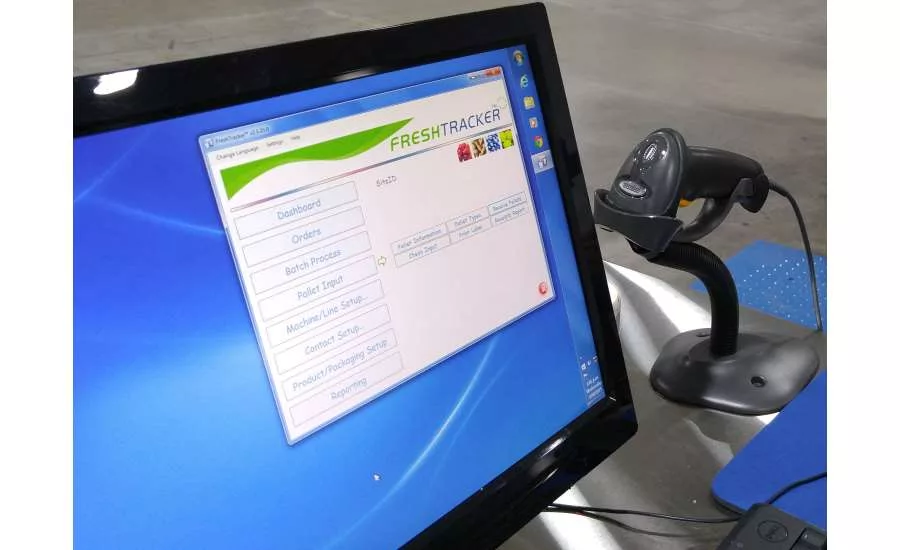
BBC Technology’s innovative FreshTracker software (http://freshtracker.com) enables traceability of the origins and characteristics of individual products, such as blueberries, from harvesting, processing and packaging, all the way through to point-of-sale. This means users can integrate the post-harvest supply chain and original point-of-harvest information. FreshTracker also provides real-time information on attributes of the yield and can compare and analyze yields to enhance production efficiency. This reporting additionally provides visibility for packers who are running another grower’s fruit. By having all product characteristics prepared by a third-party system and classified by lot and time, the grower can clearly see the result of harvest activities.
Complementing this technology, Compac’s pack tracking software traceability system records and stores information about produce as it moves through the packhouse. Barcode scanners track incoming bins, identifying them by variety, orchard block location, grower, bin weight, fullness, and picker details. Bins are then scanned into the sorting line at bin-tip and their information is recorded.
Then Compac’s sizer software tracks produce as it moves through the sorting machine, identifying the location of each individual piece of produce and which bag, box or carton it has been placed into. In addition to these traceability systems. One new development is the cloud-based data platform TOMRA Insight, developed by TOMRA Sorting and adapted for applications by TOMRA’s Recycling and Food divisions. By turning sorting machines into connected devices that generate process data, Insight unlocks valuable new opportunities for sorting equipment users. Insight obtains the data needed for traceability at the same time as transforming sorting from an operational process into a strategic management tool for fact-based decision-making at every step of the value production chain.
The workload associated with traceability, then, is more than just a necessity to meet retailers’ requirements and safeguard against food scandals. This is also an opportunity for food processors and pack houses to improve production efficiencies and, by doing so, incrementally increase profits. Sorting equipment can play an important role in achieving these gains and is precisely tailored to food processors’ applications, as TOMRA’s website explains.
For more information visit https://www.tomra.com/en-gb/sorting/food/your-produce.
Looking for a reprint of this article?
From high-res PDFs to custom plaques, order your copy today!