Special Report | Coronavirus (COVID-19)
Recommendations for the food industry-retail

Communication with your customers is critical! They must feel confident that you are providing outstanding service while at the same time implementing actions to protect them. Remember, perception is the key. You can be doing everything right; however, if they perceive that you are ignoring the issue — or the opposite, going overboard — they may not return.
As customers enter your retail space, they should see signage and/or a greeter who can explain and assist them with the different actions you have taken.
Upon entering your establishment:
- Have very clear posting directing those that are sick to place their orders online and/or have a way for them to create an order and pass it off to an employee who will then pull it and deliver it to their vehicle.
- If possible, provide hand sanitizer, masks (for those showing symptoms of the flu), and or gloves for them to use. They may not know how to properly use any of these items, so clear directions are a must.
- Have a poster or other directions on showing people how to cough or sneeze into their elbows or shoulder.
As your customers move around your retail space:
- When a customer enters your retail space, they should see an employee cleaning frequently touched objects, door handles, countertops, etc. Designate an employee to clean/sanitize said areas continuously (depending on the size and complexity of your retail space) or at a set frequency; again, you need to review your retail space and determine as to how often. The key is that your frequency should be rapid enough that the average customer will see them performing this task at least once.
- Have a short message prepared that explains what you are doing, for example having a designated employee who is performing increased sanitizing of frequently touched objects. Each employee should be on board and share the message!
- Provide stations with hand sanitizer, garbage receptacles, and tissues throughout your retail space, and encourage people to use them!
- If it is feasible, give them the ability to order and pay ahead with a car-hop type service. Have an employee load the products that they have purchased directly into their vehicle, preferably the trunk.
- Provide cooking instructions, explanations of how to use abundant but normally limited products. Many people will be shopping who do not have the knowledge of how to prepare products during shortages. For example: if you have a run on ground beef but have an abundance of ground pork, explain this to your customers and tell them how to prepare it.
- If you prepare your own products in the back room or are a restaurant facility, assure your customers that you are following safe handling and proper sanitation techniques. You can do this by, again, having them see employees continually cleaning and sanitizing in the retail space itself. Clean up and sanitizing can NOT be done exclusively after closing. It must be an ongoing event that is visible to your customers.
- For restaurants or other retail areas with seating: When seating customers, separate tables as much as possible. Remember to clean and sanitize condiments, menus, etc. between each group of customers that utilize them. If you have a bar area, consider removing chairs/stools to create additional separation.
- Minimize self-serve items, for example salt and pepper packets, as much as possible.
- Increase cleaning and sanitizing of self-service areas, for example salad bars, and reach-in cooler doors, etc. as much as possible.
Staff protection:
- You must be a leader. If you create rules and changes to your process your employees and your customers, they must see you following them!
- Employees who are sick MUST be excluded from the facility, there can be no exceptions! We all realize how hard it is to find good employees, and how hard it is for them to miss work; however, you must protect your core business!
- If an employee tests positive for COVID-19, you must restrict those employees that they have come in contact with from work as well, pending testing. It is extremely critical that you know that your active team is free from infection. If possible, separate your employees out into small teams. If one team member is found to be ill, you only must exclude a small number of employees (the small team) instead of an entire production or service crew. This isn’t always feasible; however, we strongly recommend it whenever possible. Teams should minimize interactions with other teams.
- Testing isn’t rolling out to the general public as fast as anyone would like. Having said that, make sure your employees know the signs and symptoms: COVID-19 symptoms include flu-like symptoms (fever (100° F or higher), cough or sore throat, headache or body aches, and in some cases diarrhea and vomiting) or symptoms of respiratory illness (fever (100° F or higher), cough, and shortness of breath). If employees show any of these, they must be excluded from work!
- Communicate clearly to your employees what actions you are taking to help them, maximize programs being offered by Federal, State, and local jurisdictions to assist employees who can’t work due to the illness.
- We strongly recommend that you identify a small core of managers to act as back up and move them offsite/work from home. If a key manager is then incapacitated, you have a reserve that you can bring in to cover and continue operations.
- Utilize counters and other barriers to add additional space between your employees and the customers they are serving. The key is utilizing your physical retail facility to maximize separation.
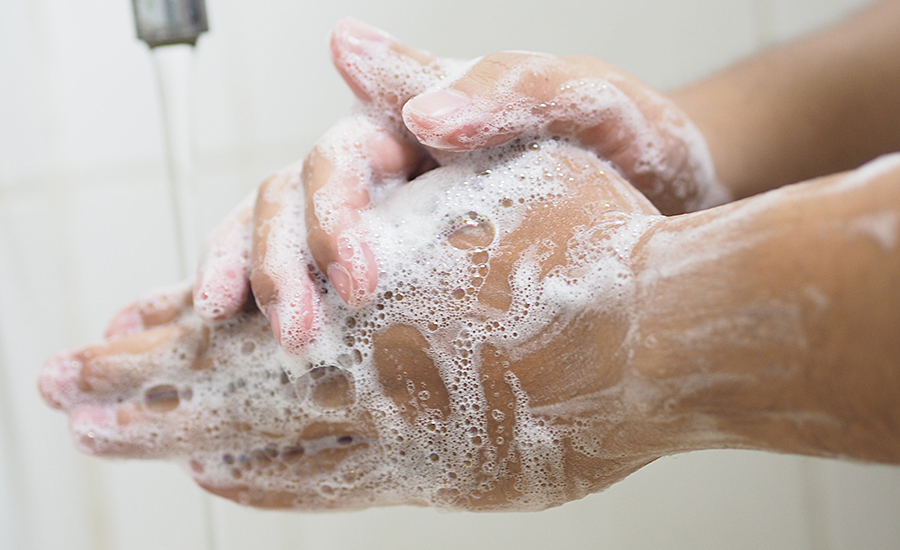
- Enforce hand washing between each transaction that results in an employee coming into contact with a customer or customer handled products.
- Limit production employees, retail employees, and office staff interactions by time and or space. Utilize hand-off locations for products going out to customers that are cleaned and sanitized on a continual basis. If you are a grocery, remember to include cart handles, basket handles, etc.
- Increase the cleaning and sanitizing frequency of breakrooms, bathrooms, office spaces, etc. For example, if you utilize shared break rooms, cleaning and sanitizing between retail employees and production employees is a must. In the restaurant setting, wait staff should be separated from cook staff as much as possible.
- Space registers or checkout lines as far apart as feasible.
- Minimize large gatherings of employees.
- Minimize or limit meetings in offices or small rooms, maximize telework for office staff.
- Restrict visitors to those that are essential, for example pest control.
- Delivery personnel should be restricted from entering the facility unless necessary. If possible, they drop off, and your team picks it up and pulls it in.
- Ultimately, separation by time and or space and proper sanitation will help protect your staff.
Business continuity operations:
- You must know your cash reserves; how long can you operate at a loss? Be prepared to temporarily close if necessary or ordered to do so.
- Stabilize your supply chain; make sure you have alternate suppliers.
- Be prepared to transition staff to delivery drivers, but remember, don’t lose money doing deliveries. Be creative!
- Utilize strategic alliances with other business owners to help one another. For example, one client is teamed up with a local pizzeria that does deliveries, the pizzeria now delivers meats and basic groceries. The meat shop now offers cooked pizza with call ahead pickups.
- Look to the future: Protect your employees, if you must go into layoff mode help them with unemployment filings, overcommunicate, make sure they know you want them back when this crisis passes!
Again, you must be the leader! IP
Looking for a reprint of this article?
From high-res PDFs to custom plaques, order your copy today!