Case Farms’ renovation and expansion: The Poultry Plant of the Future is now
Case Farms’ automation-driven renovation and expansion of its Winesburg, Ohio, processing plant sends a clear message that the Poultry Plant of the Future is NOW.
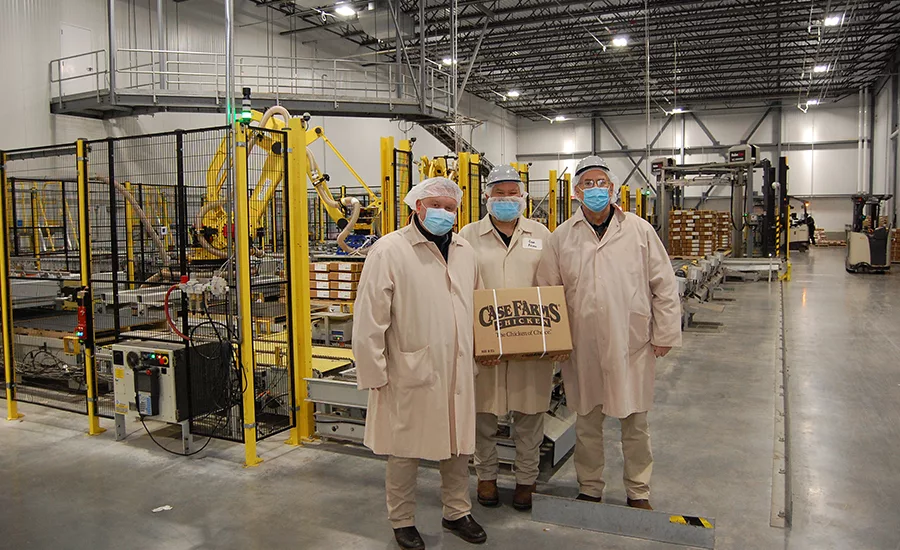
Adjustments — over the past two years, nearly no human nor company in this world has been able to maintain the status quo and avoid changing course if they’ve wanted to survive or find success. The COVID-19 pandemic has assured that things have changed permanently for many.
Yet, doing business successfully in the meat and poultry industries longer term requires the foresight and capability to recognize upcoming trends and execute against them to take advantage of the opportunities they bring — regardless of whether there’s a worldwide pandemic or smooth sailing.
Enter Troutman, N.C.-based chicken processor Case Farms. In the mid-2010s, Case Farms identified an opportunity to diversify its business by partnering with a major foodservice customer, requiring significant commitment and investment through expansion and renovation of its Winesburg, Ohio, processing facility.
Chairman Thomas Shelton explains that the company had designs on such a move, but hadn’t “taken the plunge” (see sidebar Q&A with Shelton for more). However, the time was right in 2018, and the project to make the Winesburg facility a true showcase plant began.
“We would be working with a customer that required a change in bird size, which required changing everything from the picking room on,” explains Sammy Caudle, general manager and vice president for Case Farms. “We were able to put in a new evisceration system, new chiller, rehang table, all the way through, to position ourselves for what we believe to be the market of the future.”
The first thing one notices, however, with the Winesburg facility is that its footprint more than doubled — and in a rural area such that it is located, one might wonder where all those extra employees live. Yet, even before the COVID-19 pandemic brought about the current workforce crisis, Case Farms acknowledged the labor recruitment issues and committed to investing in automation to meet the problem head-on. As such, Winesburg sets higher the bar on use of automation in chicken processing applications.

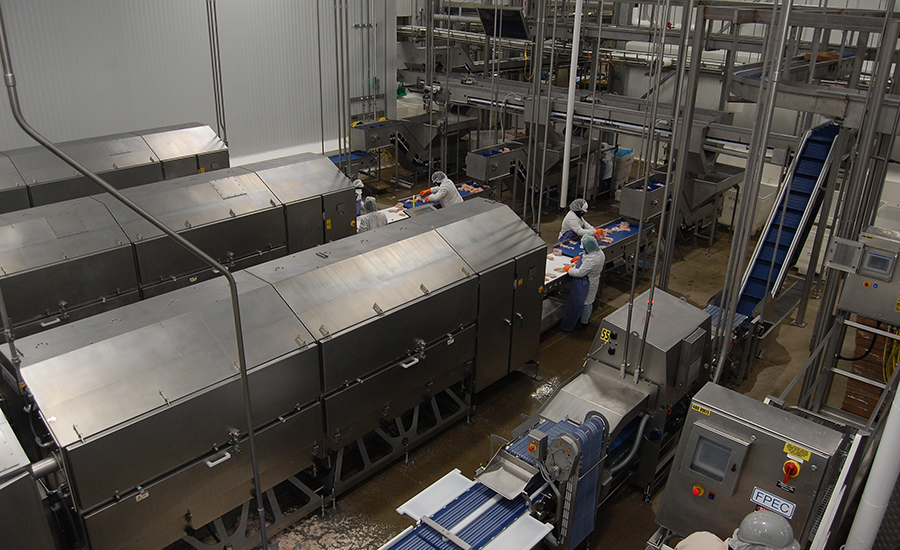
“COVID was starting to percolate a little bit, and the chicken business already was having trouble finding qualified plant employees, so we knew that if we didn't automate as much as possible, we were going to have a significant challenge on our hands here,” Caudle says. “Then, we had to attract employees with a nice, steady flow and a good environment — so we wanted to make this as pleasurable of a chicken plant as it could be.”
Automation at the level that Case Farms features in Winesburg makes it clear to employees that the company is concerned about their well-being and advancement, offering them an opportunity to take on tasks that aren’t as ergonomically taxing or mentally tedious, says Charles Rigdon, senior vice president of Operations for Case Farms.
“We went above and beyond on the technology and the product flow, and we tried to automate as much as possible,” he says. “To have our products go from processed to frozen and into storage with minimal human hands touching the box is amazing.”
In addition, Case Farms was able to eliminate approximately 90 percent of the knives, scissors and other assorted cutting tools from the plant floor, explains Daniel Hatcher, Winesburg plant manager.
“We took out all of that repetitive cutting, so, from an ergonomic standpoint, what we do now is far ahead of what we were doing before the expansion,” he says. “For example, workers who were doing tenders and deboning, the biggest change is the physicality of those jobs is gone. There’s no more working on a cone line. Now you become more of a grader or inspector to make sure quality is good or product is lined up on the conveyor correctly. It’s a lighter physical load.”
To that end, Caudle reports that the Winesburg plant now runs two automatic deboning systems with six employees overseeing that portion of the line — compared to more than 100 employees manning four cone lines featuring a variety of repetitive motion tasks before the renovation.
The expansion and renovation also focused on design that helped ensure food safety, says Rigdon, from overall plant layout to utility drops from the interstitial ceiling.
“The plant was laid out to handle the volumes so everything flows properly: straight to the freezer, out of the chiller, out of the chiller process to the freezer,” he explains. “That way, product temperatures are kept in check, because product isn’t sitting on the side in uncontrolled conditions, waiting to re-enter the product flow.”
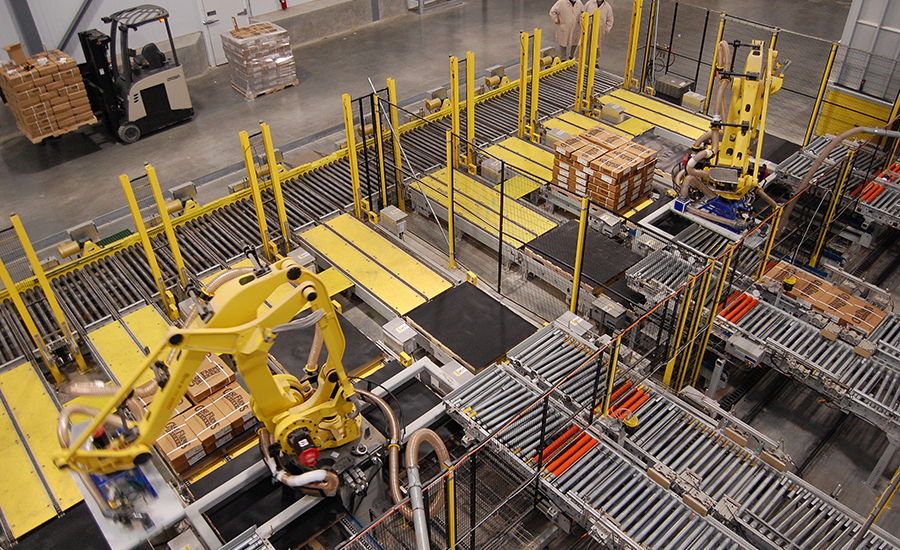
Case Farms also mandated equipment and structures use open-channel design, versus hollow tubing, etc., minimizing the risk of pathogen growth in potential harborage points and niches. Additionally, all water, power and other utility lines drop straight down from the ceiling to the equipment, without any horizontal runs where condensation, dust and other contaminants might collect without proper access or sanitation.
Moving forward, Case Farms will continue to look for ways to make the work of its employees easier and safer, watching for technology and automation that could help the company stay ahead of the trends. In the case of Winesburg, specifically, Hatcher says it will be all about “maximizing our processing volume, filling up this plant.”

Case Farms built the Winesburg plant to be state of the art, but also to handle projected growth from its foodservice customer, so the facility has plenty of room to expand capacity and increase line speed to match the growth the customer needs. It believes its investment in Winesburg not only represents the future of the industry, but positions it very nicely where the consumer trends have gone with regard to chicken consumption.
Caudle encapsulates the satisfaction the company has in Winesburg’s growth moving forward when he says, “Long term, I believe this plant is positioned where everybody in the chicken business wants to be.”
After decades of industry anticipating the day that automation could solve the challenges of poultry processing while addressing consumer demand without forcing them to pay through the nose for it, the archetypical poultry plant of the future has actually arrived.
It’s there for all to see, on display in Winesburg, Ohio.
Case Farms chairman updates NP after company’s 35th anniversary
By Andy Hanacek, editor-in-chief
As part of The National Provisioner’s visit to Case Farms’ Winesburg, Ohio, processing facility, Andy Hanacek, editor-in-chief, was invited to sit down with Thomas Shelton, chairman and owner of Case Farms, to get an update on where the company is headed and how it has successfully grown in 35 years. What follows is a portion of their conversation:
Hanacek: So, December of 2021 marked Case Farms’ 35th anniversary. Can you give your general opinion on where the company is now versus where you thought it might be at this point when you founded the company?
Shelton: Well, 35 years ago, …the early years were quite difficult but interesting, to say the least. We did some strategic meetings back then to kind of project but we never really looked that far in advance. I’ve always said I didn’t want to be the biggest company in the industry, I just want to be one of the best-managed. … We’ve continued to grow, and it’s been very steady growth.
Hanacek: Do you believe Case Farms has done a good job being among the best-managed, best-run chicken companies in the country?
Shelton: I do believe we have been, yes, and I feel better about it today than I did even five years ago. One of the things we’ve done in that time is reposition some of our product mix. We dedicated the plant that you visited (Winesburg) to [a major foodservice customer], and made a pretty significant capital investment, which was a move we had contemplated but hadn’t taken the plunge. Finally, the time was right, and we decided to make the investment, and I think it was the right thing to do, because it gives us some more diversity in our business. So yes, I think the company definitely is better run today than it’s ever been.
Hanacek: The Winesburg plant was definitely a significant investment, and readers will get to read about all the renovations and expansions you made there, but is there anything Case Farms did there that you’re particularly impressed by or proud of, that you wanted to mention?
Shelton: I think one thing is the environment that we’ve created for the employees. People love working there. It’s not the typical processing plant of the past in which working conditions were not good and employee facilities were not available. This is a place that people enjoy coming to work because it’s an atmosphere that’s different. Additionally, I want to mention that we built the rendering facility there a few years ago to solve an issue that had always been a challenge for us in Ohio. Prior to that facility, we had an outlet for the offal, but it wasn’t a great situation. So having that plant has been a big plus for us.
Looking for a reprint of this article?
From high-res PDFs to custom plaques, order your copy today!