Provisioner logo
Provisioner logo
search
cart
facebook twitter linkedin youtube
  • Sign In
  • Create Account
  • Sign Out
  • My Account
Provisioner logo
Provisioner logo
  • NEWS
    • Industry News
    • Supplier News
    • Case Studies
    • Recalls
    • Regulations
    • New Consumer Products
  • EXCLUSIVES
    • Newsletters
    • Source Book
    • Sponsored Insights
    • Events
    • Webinars
    • Classifieds
    • White Papers
    • Provisioner Store
    • Market Research
  • MEAT PROCESSING
    • SUSTAINABILITY
    • Processing
    • Packaging
    • Ingredients
    • Formulation
    • Food Safety
    • Special Reports
    • Commentary
  • PROFILES
    • Processor Profiles
    • Processor of the Year
    • Top 100 Processors
  • MEDIA
    • Videos
    • Podcasts
  • DIRECTORY
  • MIHOF
  • INDEPENDENT PROCESSOR
  • EMAG
    • eMagazine
    • ARCHIVE ISSUES
    • Contact
    • Advertise
  • JOIN!
Meat and Poultry Industry NewsMeat and Poultry ProcessingSustainabilityRegulations

How to set sustainability goals in meat production

Sustainable meat production requires cooperation between farmers, processors and retailers.

By Nicolle Portilla
A group of Angus beef cows
Getty Images/iStockphoto
October 27, 2022

Food waste and food insecurity are on the rise in the U.S., and the cost of meat is rising for consumers. Environmental concerns are also at the top of meat producers' minds. That's why it's so important to come up with a list of sustainability goals when it comes to meat production. While a great amount of food waste in the U.S. actually comes from homes and restaurants, about 18% of total food waste comes from the farms and food processors.

Additionally, food waste causes numerous environmental problems, including filling up landfills that go on to produce 11% of the world's greenhouse gases. Understanding where food waste comes from, how much food is produced and never consumed, and how food waste can be reduced can help mitigate environmental concerns, including food insecurity.

What is sustainable meat?

With all of the food that's thrown out at various points in the system from farm to consumer, it's even more important that farms are smart in their approaches to raising cows and other animals. One of the key components of having a sustainable plan for producing meat is to ensure that farms are raising livestock in ways that conserve water and re-nourish the land.

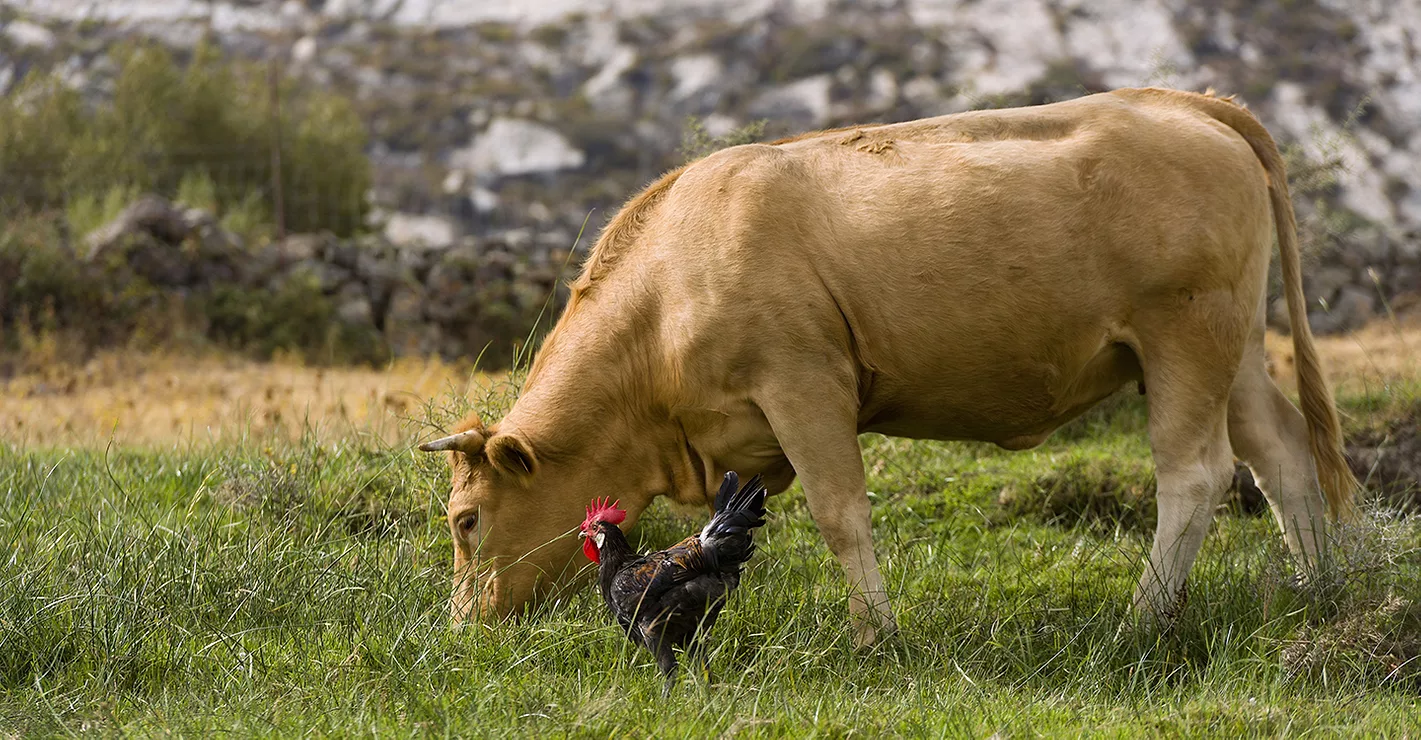
One of the most important parts of raising cows is to incorporate holistic grazing, which means that cows graze on one pasture and then move to the next so that each part of the grazing area has the opportunity to rebound naturally. Some other important parts of sustainably raising cows are having water recycling programs and using organic farming practices.

Other goals for sustainability in farming practices for meat production

While other types of meat production, such as the raising of chickens for meat consumption, are also important in terms of setting goals that will be better for the environment and the entire supply chain, cattle is one of the main focuses when making goals for greater sustainability because they require more resources to raise. They tend to require more resources because they're larger animals but also because they take more time to mature to an age and size where they can be harvested and processed.

In contrast, chickens can be raised in a carbon-neutral way because they’re an efficient way to convert feed to meat or eggs since they take less time and resources to raise. They can also be used for fertilizing the soil.

Some of the other practices that farmers need to implement to raise their cattle in more sustainable ways include using more organic farming practices, limiting pesticides, and grass-feeding livestock instead of grain-feeding them.

Manufacturers' roles in sustainable meat production

Along with having farms that are raising cows and other livestock using wise practices, it's also important that manufacturers that process the meat are involved in creating processes that decrease waste.

For instance, companies like JBS USA have made goals for the sourcing of their meat. JBS has goals set out for 2030 to 2040, and some of these goals include reducing water use by 15%, investing in emission reduction for the company's facilities, eliminating illegal deforestation in the Brazilian cattle supply chain, and investing in research and development projects that help support regenerative farming practices.

Work with retailers on meat options

Having retailers on board with making efforts to increase sustainability with meat production is also of paramount importance, and getting the large retailers is one of the best ways to do it. Without brick-and-mortar retailers, such as Walmart, distribution of meat products becomes more difficult and expensive, especially when considering shipping and packaging costs.

Major retailers and restaurants can help shape the way that manufacturers make their sustainability goals when manufacturers work with retailers to provide more and better quality meat offerings to the consumer.

Beyond Walmart, McDonald's is another major food company that has shown an interest in reducing its role in greenhouse gas emissions within the next several years.

Educating the public

One of the main hurdles to having less food waste and therefore providing a more sustainable food system is helping the public make good decisions when choosing when to keep and when to throw out food. Because of labels that are confusing to the public, many cans of food are thrown out even when they're still safe to eat because the public doesn't understand what the labels mean.

Labels that say “best by” mean something different from labels that say “use by,” but if the public doesn't understand that distinction it's more likely that they'll throw out raw meat that could be frozen until they were ready to use it.

Consumers are also more likely to throw out canned meat even if it's still consumable because they don't understand the labels. That's why part of the meat production process needs to involve the packaging and labeling of foods. It should also be aimed at ensuring that labels are clear to read and that consumers understand how to treat different labels.

In reality, many foods that are still viable for consumption but are no longer at their peak freshness can be donated to food pantries to help people who are in need of assistance, and both consumers and retailers can be involved in this process if they understand what to look for.

When coming up with a sustainability plan for meat production and consumption, it's important that all levels of meat production, manufacturing, sale, and consumption are taken into consideration to make the greatest positive impact on the environment and on people who are food insecure.

Coming up with a plan for the near future and for the next several decades out will take a lot of cooperation between farmers, manufacturers, and retailers so that we all can achieve the best possible outcomes for the environment and for consumers of meat.

Nicolle Portilla is RTS’s social media manager and contributes to the RTS blog, which serves to educate clients and industry players about RTS’ waste management technology and sustainability services.

KEYWORDS: supplier's perspective sustainability

Share This Story

Looking for a reprint of this article?
From high-res PDFs to custom plaques, order your copy today!

Nicolle Portilla is RTS’s social media manager and contributes to the RTS blog, which serves to educate clients and industry players about RTS’ waste management technology and sustainability services.

Recommended Content

JOIN TODAY
to unlock your recommendations.

Already have an account? Sign In

  • Double Charburger

    Premiumization drives burger category

    Shoppers seek out premium meat offerings to fulfill...
    Meat and Poultry Industry News
    By: Sammy Bredar
  • JJS Adult Pekin duck

    Poultry Report 2025: Convenience propels poultry at retail

    Despite continued economic pressures, the poultry...
    Chicken
    By: Sammy Bredar
You must login or register in order to post a comment.

Report Abusive Comment

Manage My Account
  • eMagazine Subscriptions
  • Manage My Preferences
  • Newsletters
  • Online Registration
  • Subscription Customer Service
  • Connect with The National Provisioner

More Videos

Sponsored Content

Sponsored Content is a special paid section where industry companies provide high quality, objective, non-commercial content around topics of interest to the The National Provisioner audience. All Sponsored Content is supplied by the advertising company and any opinions expressed in this article are those of the author and not necessarily reflect the views of The National Provisioner or its parent company, BNP Media. Interested in participating in our Sponsored Content section? Contact your local rep!

close
  • A smiling man carrying a grocery basket is reaching down to pick up a package of meat in a grocery store.
    Sponsored byPIC

    The Green Light: New Data Shows 12-to-1 Support for Pork from PRRS-Resistant Pigs

  • Close up of a grocery cart full of groceries, a cropped image of a couple pushing the cart and a blurred background of the vegetable aisle.
    Sponsored byPIC

    New Market Research Finds Consumers in Eight Key Pork Markets Are Likely to Purchase Pork from Gene-Edited Pigs

  • Close up of a young pig with a blurred background.
    Sponsored byPIC

    New Research Forecasts Significant Economic and Market Impacts with PRRS-Resistant Pig Adoption

Popular Stories

Spam Dog

Hormel rolls out Spam hot dog for foodservice applications

Niman Ranch Uncured Grass-Fed Beef Bacon

Niman Ranch introduces beef bacon

Various new Primal snack sticks on a table amongst pencils, apples, a pair of glasses, lunch bags and a water bottle.

Protein demand drives snacking occasions

2026 Top 100 Meat & Poultry Processors Report

Events

June 11, 2026

From Fresh to Frozen in 3 Minutes Flat: Unlocking the Secrets to Temperature Control

Join Tony Vacaro, Foods Industry Manager, and Emile Klein, Foods Market Strategy Manager at Air Products and Chemicals, Inc. , as they tackle key questions surrounding heat removal in food processing. 

January 1, 2030

Webinar Sponsorship Information

For webinar sponsorship information, visit www.bnpevents.com/webinars or email webinars@bnpmedia.com.

View All Submit An Event

Products

Food Crime: An Introduction to Deviance in the Food Industry

Food Crime: An Introduction to Deviance in the Food Industry

See More Products
From Fresh to Frozen in 3 Minutes Flat: Unlocking the Secrets to Temperature Control Webinar Sponsored by Air Products

Related Articles

  • Crown to set science-based sustainability targets in early 2020

    See More
  • Eight rules for setting meaningful and achievable sustainability goals

    See More
  • Pathogen Testing

    Rapid testing for pathogens in meat and poultry production

    See More

Related Products

See More Products
  • emerging.jpg

    Emerging Technologies in Meat Processing: Production, Processing and Technology

  • Organic Meat Production and Processing

  • advances.jpg

    Advances in Meat Processing Technology

See More Products

Events

View AllSubmit An Event
  • May 7, 2026

    Stop Plant-Floor Margin Leakage: How to Quantify and Eliminate Hidden Costs

    On-Demand WorkForge Advisor and veteran food production executive Tim Cook (Marlen International, LINXIS Group, Shick Esteve, AMF Bakery Systems) will share findings from The Hidden Costs of Inconsistent Employee Development in Food Manufacturing - research that outlines ten common, measurable, and fixable cost drivers that quietly hit your P&L.
View AllSubmit An Event

Related Directories

  • Jarvis Products Corp.

    At Jarvis, we’re balancing new technology with traditional craftsmanship to reinvent how humans access the world’s food supply. For over 100 years, we’ve continued to reimagine the food processing experience — making it easy, affordable, and enjoyable for our customers to provide more people with better nutrition. We achieve this mission through the design and manufacturing of the most reliable power tools and automated solutions for our industry. Everything we do is motivated by a fundamental belief in powering innovation for a healthier world.
  • Meat & Livestock Australia

    Meat & Livestock Australia is the marketing and research body for the Australian red meat industry. MLA's purpose is to deliver world-leading outcomes that fuel global competitiveness, sustainability and producer profitability.
×

Stay ahead of the curve. Unlock a dose of cutting-edge insights.

Receive our premium content directly to your inbox.

SIGN-UP TODAY
  • RESOURCES
    • Advertise
    • Contact Us
    • Directories
    • Store
    • Want More
  • SIGN UP TODAY
    • Create Account
    • eMagazine
    • Newsletter
    • Customer Service
    • Manage Preferences
  • SERVICES
    • Marketing Services
    • Reprints
    • Market Research
    • List Rental
    • Survey/Respondent Access
  • STAY CONNECTED
    • LinkedIn
    • Facebook
    • YouTube
    • X (Twitter)
  • PRIVACY
    • PRIVACY POLICY
    • TERMS & CONDITIONS
    • DO NOT SELL MY PERSONAL INFORMATION
    • PRIVACY REQUEST
    • ACCESSIBILITY

Copyright ©2026. All Rights Reserved BNP Media, Inc. and BNP Media II, LLC.

Design, CMS, Hosting & Web Development :: ePublishing