Stampede Culinary Partners rolls out Low-Temperature Processing technology
Stampede research uncovers HPP drawbacks that can impact product integrity and efficacy.
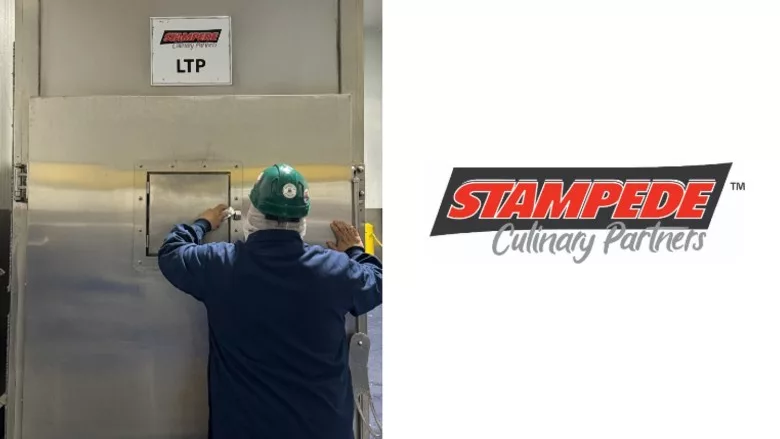
Low-Temperature Processing
Photo courtesy of Stampede Culinary Partners
Protein solutions company Stampede Culinary Partners is announcing an advancement in food safety and deli meat processing with its unique Low-Temperature Processing technology. Developed to enhance pasteurization outcomes without compromising product quality, Stampede's LTP process mirrors the pathogen reduction efficacy of high-pressure pasteurization while addressing the limitations that challenge traditional approaches.
"Our LTP technology represents a major step forward in food safety and quality for the fully cooked meat and meal industry," said Brock Furlong, CEO and president of Stampede Culinary Partners. "We're able to deliver products that are not only safer but maintain exceptional flavor, texture, and shelf life. This innovation underscores our commitment to setting new standards of safety in the industry and providing our customers with the best possible products."
According to the US Department of Agriculture's Food Safety and Inspection Service, pasteurization must achieve a minimum 5-log reduction of pathogens such as Salmonella, E-Coli and Listeria monocytogenes in ready-to-eat meat and meal products. While HPP is a validated and effective method, it presents several drawbacks that can impact product integrity and efficacy. Stampede's LTP innovation offers an alternative designed to overcome these obstacles.
Stampede's research highlighted key challenges with HPP, including limited efficacy against psychrophiles, potential impact on product color and texture and risks to packaging integrity. Determined to develop a more robust solution, Stampede's LTP technology was designed to achieve FSIS-defined pasteurization with enhanced efficacy and fewer drawbacks.
Key features of the LTP process include vacuum-sealed safety, humidity-controlled precision, enhanced efficacy and longer shelf life. LTP is performed in the final, vacuum-sealed packaging, ensuring product safety and integrity throughout the pasteurization process. The product is exposed to 100% humidity in an enclosed cabinet and gradually heated to a temperature of 132 degrees Fahrenheit for a minimum of 80 minutes, meeting the FSIS Appendix A cooking guidelines for pathogen reduction. Over 30 products have already been validated through Stampede's LTP process, achieving a proven 5-log reduction in pathogens. Each product undergoes testing to meet Stampede's exacting standards. On all 30 product validations, shelf life exceeded benchmarks for HPP processed products.
Unlike standard approaches, Stampede's LTP does more than ensure microbial safety; it extends the shelf life of refrigerated meats and meals to between 90 and 180 days based on taste and texture, not solely microbial growth. This approach prioritizes flavor consistency while maintaining strict safety standards.
Source: Stampede Culinary Partners
Looking for a reprint of this article?
From high-res PDFs to custom plaques, order your copy today!